

201. Sexual Assault Services:  Supporting Victims

201. Sexual Assault Services: Supporting Victims

This week we’re tackling the critical issue of child sexual abuse prevention. The conversation goes into various aspects, including the prevalence of sexual abuse among children and the different levels of sexual behaviors in children—normative, cautionary, and problematic. Understanding these distinctions is essential for proper management and intervention. Special guests, experts Dannielle Kostrab-Boyd and Sherri Killiah, who work with sexual assault services, share invaluable insights. They reveal alarming statistics and underscore the pediatricians' role in preventing abuse through early intervention. We also highlight the need for open communication on body safety, urging parents to create a safe and trusting environment for their children.

The episode provides an in-depth look at the services offered by Sexual Assault Nurse Examiners (SANE), covering the meticulous process of forensic examinations in child abuse cases. The discussion underscores the critical need for a compassionate and non-judgmental approach to both care and communication. By fostering open lines of communication and ensuring education on body autonomy for kids, we aim to arm parents, healthcare providers, and specialized services with the tools needed to effectively address and prevent child sexual abuse. To understand the collective effort required to support and protect the most vulnerable members of our society, just tap on “play”

[02:58-17:33 Importance of Recognizing Child Sexual Abuse

  • Prevalence of Child Sexual Abuse: 1 in 10 children will experience sexual abuse before the age of 18, a statistic likely underestimated.
  • Age Range of Affected Individuals: Victims can range from as young as 5-6 weeks to 96 years old.
  • Levels of Sexualized Behaviors:

- Normative: Voluntary, infrequent, easily redirected behaviors with familiar children.

- Cautionary: Behaviors occurring in inappropriate places, increasing in frequency and involving technology.

- Problematic: Behaviors involving self-harm, coercion, and inappropriate sexual content for the child’s age.

[17:34 - 32:25] Emotional and Psychological Impact of Abuse

  • Behavioral Changes: Indicators include regression, depression, anxiety, and fear.
  • Physical Symptoms: Nightmares, bedwetting, and advanced sexual knowledge are common signs.
  • Educational and Social Challenges: Difficulties in school performance and peer relationships.
  • Clinical Guidance: Clinicians should prioritize open communication, ask about behavioral changes, and provide a private space for discussions.

[32:26 - 48:19] The Role of Pediatricians in Prevention

  • Resource: Pediatricians should ensure prevention information is accessible in waiting rooms, including books and posters.
  • Building Trust: Establish a safe, trusting relationship with both caregivers and children.
  • Body Autonomy : Encourage expectations for body autonomy and offer choices during examinations, especially private areas.
  • Correct Terminology: Using correct medical terminology and explaining the necessity of examinations to create a safe space


[48:20 - 51:01] Available Resources and Support Services

  • SANE Program: Regional program providing specialized medical and forensic exams, victim advocacy, provides empowerment-based care, emotional support, and follow-up for survivors.
  • 24-Hour Crisis Line: Immediate support available through a crisis hotline.
  • Comprehensive Services: Individual, family, and group counseling, children’s advocacy center, and prevention programming.
  • National Resources: Accessing services through national organizations and text...

Denne episoden er hentet fra en åpen RSS-feed og er ikke publisert av Podme. Den kan derfor inneholde annonser.

Episoder(252)

250.  Hand in Hand Parenting

250. Hand in Hand Parenting

Is the true heart of pediatrics found in the connection between practitioner and family?In this powerful episode of Pediatric Meltdown, Dr. Lia Gaggino sits down with physician, educator, and hand-in-...

11 Jun 20251h 4min

249.  The Pediatric Meltdown Podcast:  Behind the Scenes

249. The Pediatric Meltdown Podcast: Behind the Scenes

Are you curious about what really happens behind the microphones of a successful pediatric podcast—and the unconventional journeys that brought an incredible team together?In this special milestone ep...

4 Jun 202549min

248.  Conversation with My Daughter:  Soft Body Baddie

248. Conversation with My Daughter: Soft Body Baddie

How do we help kids and teens when social media is fueling a resurgence of body image issues and eating disorders? In this special conversation, Lia’s daughter, Julia Parzyck shares her personal and p...

28 Mai 202535min

247.  Human Trafficking:  What Pediatric Clinicians Must Know

247. Human Trafficking: What Pediatric Clinicians Must Know

Have you ever considered that victims of human trafficking might be walking into your clinic, hidden in plain sight, longing for someone to notice their silent signals? In this episode of Pediatric Me...

21 Mai 20251h

246.  Pediatric Psychopharmacology:  Tips for Prescribers

246. Pediatric Psychopharmacology: Tips for Prescribers

Can medication truly transform the landscape of pediatric mental health, or are we oversimplifying the complexities of growing minds? In this episode of Pediatric Meltdown, Dr. Lia Gaggino welcomes D...

15 Mai 20251h 1min

245.  When Sadness Looks Like Anger: Rethinking Pediatric Depression and Behavioral Activation

245. When Sadness Looks Like Anger: Rethinking Pediatric Depression and Behavioral Activation

Are you struggling to support young patients—and maybe even yourself—with the emotional aftermath of our “new normal”? In this compelling episode of Pediatric Meltdown, Dr. Colleen Cullinan returns to...

7 Mai 20251h 14min

244.  Taming Pediatric Anxiety with Brain-Body-Behavior Strategies

244. Taming Pediatric Anxiety with Brain-Body-Behavior Strategies

Have you ever wondered why anxiety in children can look and feel so physical—and what we as pediatricians, parents, or caregivers can do about it? We’re visiting a fan favorite from Episode #26 of Pe...

30 Apr 202553min
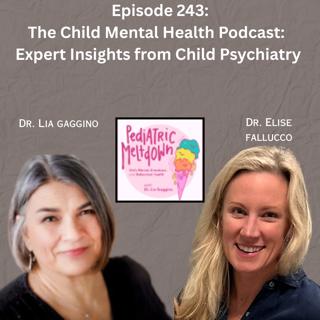
243.  The Child Mental Health Podcast: Expert Insights from Child Psychiatry

243. The Child Mental Health Podcast: Expert Insights from Child Psychiatry

Are pediatricians prepared for the mental health crisis that’s impacting so many of our children today?In this episode of Pediatric Meltdown, host Dr. Lia Gaggino sits down with nationally recognized ...

23 Apr 202546min

Populært innen For unge lyttere

min-barneoppdragelse
er-det-noe-liv-med-nora-angeltveit
foreldreradet
rss-skravla-gar
vitnemal
snipp-snapp-snute
gravid-uke-for-uke
rss-maren-mina
jordmorpodden-om-graviditet-fodsel-og-barseltid
plutselig-barneteater
fodselspodden
rss-fertilitetsradet
rss-det-ma-vi-snakke-om
familieliv
uroskolen
rss-gravidpodden-uke-for-uke
rss-lovepodden
fodepodden-2
trening-etter-fodsel
rss-hvorfor-det-da-mamma