#219 – Toby Ord on graphs AI companies would prefer you didn't (fully) understand

#219 – Toby Ord on graphs AI companies would prefer you didn't (fully) understand

The era of making AI smarter just by making it bigger is ending. But that doesn’t mean progress is slowing down — far from it. AI models continue to get much more powerful, just using very different methods, and those underlying technical changes force a big rethink of what coming years will look like.

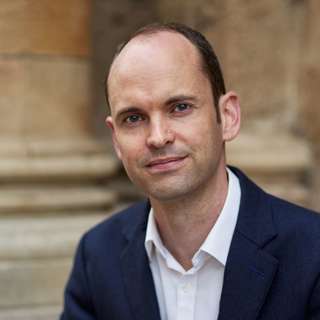
Toby Ord — Oxford philosopher and bestselling author of The Precipice — has been tracking these shifts and mapping out the implications both for governments and our lives.

Links to learn more, video, highlights, and full transcript: https://80k.info/to25

As he explains, until recently anyone can access the best AI in the world “for less than the price of a can of Coke.” But unfortunately, that’s over.

What changed? AI companies first made models smarter by throwing a million times as much computing power at them during training, to make them better at predicting the next word. But with high quality data drying up, that approach petered out in 2024.

So they pivoted to something radically different: instead of training smarter models, they’re giving existing models dramatically more time to think — leading to the rise in “reasoning models” that are at the frontier today.

The results are impressive but this extra computing time comes at a cost: OpenAI’s o3 reasoning model achieved stunning results on a famous AI test by writing an Encyclopedia Britannica’s worth of reasoning to solve individual problems at a cost of over $1,000 per question.

This isn’t just technical trivia: if this improvement method sticks, it will change much about how the AI revolution plays out, starting with the fact that we can expect the rich and powerful to get access to the best AI models well before the rest of us.

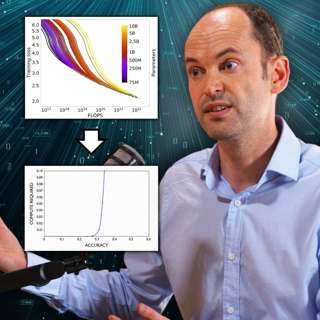
Toby and host Rob discuss the implications of all that, plus the return of reinforcement learning (and resulting increase in deception), and Toby's commitment to clarifying the misleading graphs coming out of AI companies — to separate the snake oil and fads from the reality of what's likely a "transformative moment in human history."

Recorded on May 23, 2025.

Chapters:

  • Cold open (00:00:00)
  • Toby Ord is back — for a 4th time! (00:01:20)
  • Everything has changed (and changed again) since 2020 (00:01:37)
  • Is x-risk up or down? (00:07:47)
  • The new scaling era: compute at inference (00:09:12)
  • Inference scaling means less concentration (00:31:21)
  • Will rich people get access to AGI first? Will the rest of us even know? (00:35:11)
  • The new regime makes 'compute governance' harder (00:41:08)
  • How 'IDA' might let AI blast past human level — or not (00:50:14)
  • Reinforcement learning brings back 'reward hacking' agents (01:04:56)
  • Will we get warning shots? Will they even help? (01:14:41)
  • The scaling paradox (01:22:09)
  • Misleading charts from AI companies (01:30:55)
  • Policy debates should dream much bigger (01:43:04)
  • Scientific moratoriums have worked before (01:56:04)
  • Might AI 'go rogue' early on? (02:13:16)
  • Lamps are regulated much more than AI (02:20:55)
  • Companies made a strategic error shooting down SB 1047 (02:29:57)
  • Companies should build in emergency brakes for their AI (02:35:49)
  • Toby's bottom lines (02:44:32)


Tell us what you thought! https://forms.gle/enUSk8HXiCrqSA9J8

Video editing: Simon Monsour
Audio engineering: Ben Cordell, Milo McGuire, Simon Monsour, and Dominic Armstrong
Music: Ben Cordell
Camera operator: Jeremy Chevillotte
Transcriptions and web: Katy Moore

Episoder(321)

#153 – Elie Hassenfeld on 2 big picture critiques of GiveWell's approach, and 6 lessons from their recent work

#153 – Elie Hassenfeld on 2 big picture critiques of GiveWell's approach, and 6 lessons from their recent work

GiveWell is one of the world's best-known charity evaluators, with the goal of "searching for the charities that save or improve lives the most per dollar." It mostly recommends projects that help the...

2 Jun 20232h 56min

#152 – Joe Carlsmith on navigating serious philosophical confusion

#152 – Joe Carlsmith on navigating serious philosophical confusion

What is the nature of the universe? How do we make decisions correctly? What differentiates right actions from wrong ones?Such fundamental questions have been the subject of philosophical and theologi...

19 Mai 20233h 26min

#151 – Ajeya Cotra on accidentally teaching AI models to deceive us

#151 – Ajeya Cotra on accidentally teaching AI models to deceive us

Imagine you are an orphaned eight-year-old whose parents left you a $1 trillion company, and no trusted adult to serve as your guide to the world. You have to hire a smart adult to run that company, g...

12 Mai 20232h 49min

#150 – Tom Davidson on how quickly AI could transform the world

#150 – Tom Davidson on how quickly AI could transform the world

It’s easy to dismiss alarming AI-related predictions when you don’t know where the numbers came from.For example: what if we told you that within 15 years, it’s likely that we’ll see a 1,000x improvem...

5 Mai 20233h 1min

Andrés Jiménez Zorrilla on the Shrimp Welfare Project (80k After Hours)

Andrés Jiménez Zorrilla on the Shrimp Welfare Project (80k After Hours)

In this episode from our second show, 80k After Hours, Rob Wiblin interviews Andrés Jiménez Zorrilla about the Shrimp Welfare Project, which he cofounded in 2021. It's the first project in the world f...

22 Apr 20231h 17min

#149 – Tim LeBon on how altruistic perfectionism is self-defeating

#149 – Tim LeBon on how altruistic perfectionism is self-defeating

Being a good and successful person is core to your identity. You place great importance on meeting the high moral, professional, or academic standards you set yourself. But inevitably, something goes ...

12 Apr 20233h 11min

#148 – Johannes Ackva on unfashionable climate interventions that work, and fashionable ones that don't

#148 – Johannes Ackva on unfashionable climate interventions that work, and fashionable ones that don't

If you want to work to tackle climate change, you should try to reduce expected carbon emissions by as much as possible, right? Strangely, no. Today's guest, Johannes Ackva — the climate research lead...

3 Apr 20232h 17min

#147 – Spencer Greenberg on stopping valueless papers from getting into top journals

#147 – Spencer Greenberg on stopping valueless papers from getting into top journals

Can you trust the things you read in published scientific research? Not really. About 40% of experiments in top social science journals don't get the same result if the experiments are repeated.Two ke...

24 Mar 20232h 38min

Populært innen Fakta

fastlegen
dine-penger-pengeradet
relasjonspodden-med-dora-thorhallsdottir-kjersti-idem
treningspodden
rss-strid-de-norske-borgerkrigene
foreldreradet
jakt-og-fiskepodden
rss-sunn-okonomi
merry-quizmas
hverdagspsyken
rss-mann-i-krise-med-sagen
gravid-uke-for-uke
sinnsyn
generasjonspodden
fryktlos
rss-kunsten-a-leve
rss-impressions-2
hagespiren-podcast
teknologi-og-mennesker
rss-ifengsel-podden