The Village Well's Ed Center, Part 1 (S7E17)

The Village Well's Ed Center, Part 1 (S7E17)

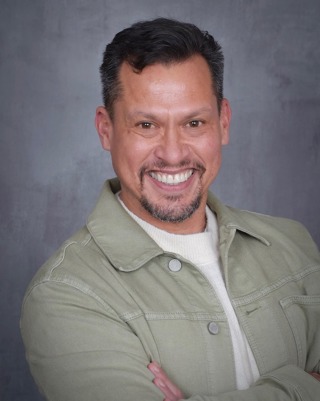
Ed Center and I begin this podcast with a toast.

I'm proud to call Ed my friend. I met him a couple years at The Social Study, where we recorded this episode and where my wife, Erin Lim, bartends. From the first time I spoke with Ed, I knew I liked him. His energy and humor and intellect and heart are all boundless. I'm hella drawn to people like Ed.

His story begins in Cebu in the Philippines, with his maternal grandmother. Her family was poor and her parents died in the Spanish Flu of the 1910s. That loss plunged the surviving family members into what Ed describes as destitute poverty.

Following that tragedy, her older brother signed up to work for the Dole company in Hawaii. Ed's grandmother was 13 at this time, but still, it was decided that she would accompany her brother to the islands to help care for him while he worked the pineapple fields and earned a wage.

Ed points out that the Dole Food Company (as it was known at the time) intended these migrant workers to honor their contracts and then go back to their home countries. To that end, the company only hired young men. But Ed's family paid a stranger on their boat $20 to marry his grandmother so that she could join her brother in Hawaii.

Ed goes on a sidebar here about the tendency in his family to exaggerate their own history. "Don't let the truth get in the way of a good story," or so the family saying goes.

He returns to the story of his maternal grandmother to share the tale of her younger sister being so distraught about the departure, she hugged her so hard that her flip-flop broke. It was her only pair of shoes.

In the Filipino community on Oahu at the time, there was an outsize number of men in relation to women. When Ed's grandfather first set eyes on his grandma, he began to court her. A year later, they asked her older brother if they could get married, and he said no, that she was too young (14 at the time). But they got married anyway, with the understanding that they would wait two more years to live together.

They moved in and Ed's grandmother had a new baby, including his mom, every other year for the next 20 years.

Like her brother, his grandmother's new husband worked in the pineapple fields for Dole, doing incredibly hard labor. His grandma washed clothes for bachelor workers. The two saved their money and bought plantation property from Dole. The property was affordable enough that they were able to build multiple shacks for the kids to eventually live in.

At this point, Ed launches into what he calls "the shadow story" of his family. He learned that shadow story when he was a kid and his mom and aunties were cooking in the kitchen. He'd sit just outside the room pretending to read a book, eavesdropping. There, he learned things like which family members were smoking pot or getting into trouble. But there are more serious elements, which prompts Ed to issue a trigger warning to readers and listeners.

His grandmother didn't quite agree to go to Hawaii. When she told her brother no to the idea, he beat her. He did this repeatedly until she acquiesced. But it was in one of these violent melees that his grandmother's flip-flop broke.

All this to say that Ed's grandmother didn't have much agency in her life decisions. The last two of her 10 children almost killed her. After number 10, the doctor gave Ed's grandfather an involuntary vasectomy.

Ed shares the story of how, on plantation payday, the women and children would hide in the fields with the men guarding them. It was a way to try to protect them from workers in the next village getting drunk and coming in to cause trouble.

He summarizes the family history to this point by pointing out the incredible amount of resilience his ancestors carried. Also strength and love. But also, violence. All of those qualities manifested in their and their children's parenting practices.

Ed's mom raised her kids in this way. The severity of the abuse waned over generations, but it was there nonetheless. Ed says he was ultimately responsible for his mother's emotions. For many of these reasons, in his adult life, Ed founded The Village Well Parenting. We'll get more into that in Part 2.

We back up for Ed to tell the story of how his mom and dad met each other. His dad was in the Army during the war in Vietnam. On a voyage to Asia, his boat took a detour and ended up in Hawaii, where he remained for the next five years.

His parents got together and had Ed and his younger brother. They grew up among a much larger Filipino extended family, but Ed didn't really know his dad's Caucasian family, who lived on the East Coast. He's gotten to know them more in his adult life.

Ed grew up on Oahu in the Seventies and Eighties. His family was between working class and middle class, and there was always stress about money. But in hindsight, they lived well. We share versions of a similar story—that of parents telling kids that Christmas would be lean, that they didn't have a lot of money (probably true), but that never ended up actually being the case. Both of our recollections was mountains of gifts on December 25.

Growing up, Ed was always feminine. He was also athletic. It was a time before Ellen, before Will and Grace, when "athletic" also meant "not gay." Ed says he wanted to be "not gay," but he couldn't help who he was. That led to his getting bullied.

Moving to the mainland for college meant escape—from his own torment and from that of his peers back on the island. Ed went to UC Davis. He had played competitive soccer in middle school and high school, and because his teams were good, they came to the mainland a couple times. But Davis was a whole other world by the time he arrived to go to college.

It was the early Nineties. He took what we call a gap year before coming to California. For him, that meant working. In one of his jobs, he served tables at CPK in Hawaii, where Carol Burnett was one of his regulars.

We end Part 1 with Ed's story of his time at UC Davis and not yet accepting his queerness.

This Thursday on the podcast, I talk with Megan Rohrer about their new book on the Transgender District in San Francisco.

And check back next week for Part 2 with Ed Center.

We recorded this podcast at The Social Study in June 2025.

Photography by Jeff Hunt

Denne episoden er hentet fra en åpen RSS-feed og er ikke publisert av Podme. Den kan derfor inneholde annonser.

Episoder(606)

Top Chefs, Part 2 (S8E23)

Top Chefs, Part 2 (S8E23)

In Part 2, Aft joins us to chat about the band—Top Chefs. We start with the story of how TJ met Aft. A mutual friend of his and Loveberry's, Lucas Hanson, put on a show at DNA Lounge called "Liam Ber...

30 Jul 23min
TJ, Loveberry and The Top Chefs Band, Part 1 (S8E23)

TJ, Loveberry and The Top Chefs Band, Part 1 (S8E23)

There's a band in San Francisco comprising musicians from The City and whom I discovered on social media playing shows on a stoop here in SF. I can't quite be sure when I discovered them, or whether i...

28 Jul 31min
Todd Kurnat, aka Ink Letterman, aka DJ Circuit 73, Part 2 (S8E22)

Todd Kurnat, aka Ink Letterman, aka DJ Circuit 73, Part 2 (S8E22)

In Part 2, we begin with Todd and me rapping about how much digital technology has changed just in our lifetimes. Even when he was in school in Colorado, San Francisco had been a goal for Todd, a des...

16 Jul 28min
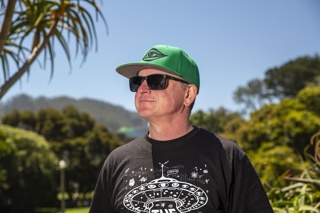
Todd Kurnat, aka Ink Letterman, aka DJ Circuit 73, Part 1 (S8E22)

Todd Kurnat, aka Ink Letterman, aka DJ Circuit 73, Part 1 (S8E22)

Todd Kurnat is everywhere. In this episode, meet and get to know Todd. These days, he's also known as Ink Letterman for his art and DJ Circuit 73 for his musical stylings. We begin in Michigan. Both...

14 Jul 26min
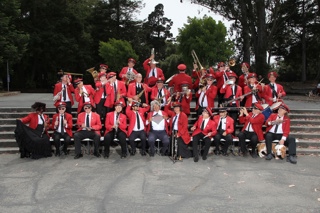
The Golden Gate Park Band (S8 Bonus)

The Golden Gate Park Band (S8 Bonus)

Listen in as I chat with German Gonzalez, musical conductor and principal director of the Golden Gate Park Band, now in its 144th year. We recorded this podcast in Golden Gate Park in June 2026.

7 Jul 23min
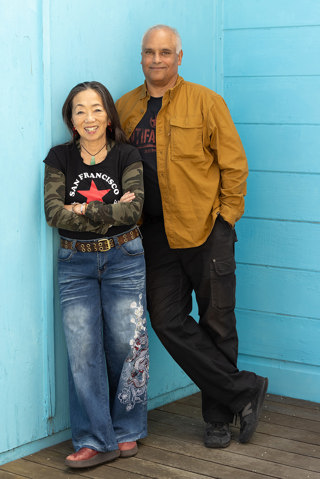
The San Francisco Mime Troupe, Part 3 (S8E21)

The San Francisco Mime Troupe, Part 3 (S8E21)

In Part 3, we hear from Keiko and Michael about the history of the San Francisco Mime Troupe. In the late-1950s, a San Franciscan named R.G. Davis taught a class in movement—mime, dance, physical inte...

2 Jul 35min
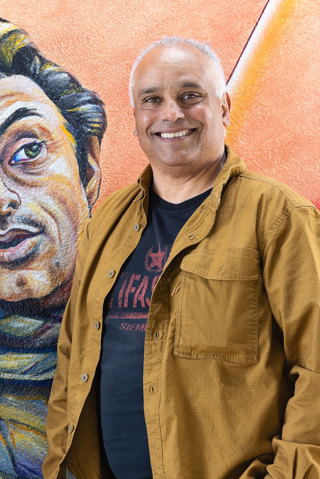
Michael Gene Sullivan of the San Francisco Mime Troupe (8E21)

Michael Gene Sullivan of the San Francisco Mime Troupe (8E21)

Both sides of Michael Gene Sullivan's family are from Detroit. In Part 2, we get to know Keiko's fellow SFMT collective member. Michael was born in Livonia, Michigan, a small town outside of Detroit. ...

1 Jul 35min
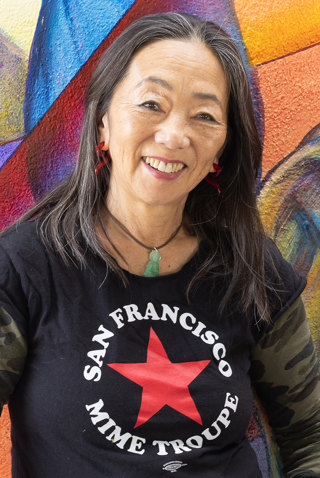
Keiko Shimosato Carreiro of the San Francisco Mime Troupe (S8E21)

Keiko Shimosato Carreiro of the San Francisco Mime Troupe (S8E21)

Keiko Shimosato Carreiro was born in the Bay Area … the Boston Bay Area. In Part 1 of this episode, meet Keiko. Today, she's a longtime member of the San Francisco Mime Troupe collective. But her stor...

30 Jun 30min

Populært innen Samfunn

rss-spartsklubben
giver-og-gjengen-vg
aftenpodden
konspirasjonspodden
aftenpodden-usa
popradet
rss-nesten-hele-uka-med-lepperod
rss-henlagt-andy-larsgaard
rss-espen-lee-usensurert
min-barneoppdragelse
grenselos
lydartikler-fra-aftenposten
wolfgang-wee-uncut
alt-fortalt
synnve-og-vanessa
rss-dette-ma-aldri-skje-igjen
frokostshowet-pa-p5
fladseth
relasjonspodden-med-dora-thorhallsdottir-kjersti-idem
rss-siktet