How Do We Really Know What Happened in the Past When Many Historians Were Propagandists and AI is Fabricating Everything Else?

How Do We Really Know What Happened in the Past When Many Historians Were Propagandists and AI is Fabricating Everything Else?

“History is written by the winners.” This aphorism is catchy and it makes an important point that a lot of what we know about history was written with an agenda, not for the purposes of informing us. Unfortunately, it isn’t true. There are many times that the so-called “losers” wrote the histories remembered today. After the American Civil War, Southern historians like Edward Pollard crafted "Lost Cause" narratives, romanticizing the Confederacy despite their defeat. Similarly, Chinese and Persian accounts of the Mongol invasions, such as those by Zhao Hong and Ata-Malik Juvayni, detailed Mongol brutality and cultural impacts from the perspective of the subjugated, challenging the victors' dominance.

But this statement still gets to a fundament question: What if the history you learned was deliberately shaped by people with their own agendas?

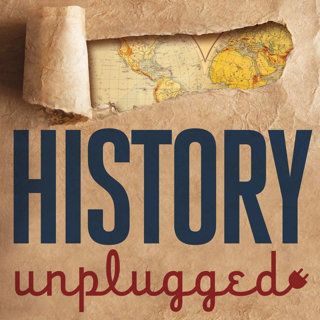
This question drives today’s guest, Richard Cohen, in his book “Making History: The Storytellers Who Shaped The Past.” We explore how historians and storytellers, from ancient Greece to the modern era, shape our understanding of history through their biases and agendas, featuring figures like Herodotus, who blended fact and fable, Edward Gibbon, whose Decline and Fall of the Roman Empire reflected his personal perspective, and William Randolph Hearst, whose yellow journalism distorted historical narratives.

No history is truly objective, as personal, cultural, and political influences inevitably color the accounts of chroniclers like Thucydides, Tacitus, Voltaire, but we can still construct an understanding of the past that brings us closer to the truth.

See omnystudio.com/listener for privacy information.

Episoder(1075)

Did Haiti’s First and Last King Squander the Revolution or Succeed in Underappreciated Ways?

Did Haiti’s First and Last King Squander the Revolution or Succeed in Underappreciated Ways?

Slave, revolutionary, king, Henry Christophe was, in his time, popular and famous the world over. Born to an enslaved mother on the Caribbean island of Grenada, Christophe first fought to overthrow th...

13 Mar 202551min

What Ancient Greeks and Victorian Explorers Thought Was at the North Pole

What Ancient Greeks and Victorian Explorers Thought Was at the North Pole

The North Pole looms large in our collective psyche—the ultimate Otherland in a world mapped and traversed. It is the center of our planet’s rotation, and its sub-zero temperatures and strange year of...

11 Mar 202541min

Nothing Healed America’s Wounds After the Civil War Like Baseball

Nothing Healed America’s Wounds After the Civil War Like Baseball

The nineteenth century was a time of rapid growth and development for the game of “base ball,” and players George Wright and Albert Spalding were right in the thick of it. These two young men, the fir...

6 Mar 202550min

How an 1870 Murder Created San Francisco

How an 1870 Murder Created San Francisco

Shortly before dusk on November 3, 1870, just as the ferryboat El Capitan was pulling away from its slip into San Francisco Bay, a woman clad in black emerged from the shadows and strode across the cr...

4 Mar 202537min

Failed Futures: If Alexander The Great Hadn’t Died, He Might Have Conquered Europe, Circumnavigated Africa, and Built His Own Silk Road

Failed Futures: If Alexander The Great Hadn’t Died, He Might Have Conquered Europe, Circumnavigated Africa, and Built His Own Silk Road

And Alexander wept, seeing as he had no more worlds to conquer. That’s a quote from Hans Gruber in Die Hard, which is a very convoluted paraphrase from Plutarch’s essay collection Moralia. There’s ple...

27 Feb 202534min

Why the Anabasis is the Second-Most Influential Greek Epic (After Homer’s Works)

Why the Anabasis is the Second-Most Influential Greek Epic (After Homer’s Works)

Imagine being stranded thousands of miles deep in enemy territory with 10,000 soldiers, no allies, no clear way home, and the only means of escape was by foot. This was the predicament faced by Xenoph...

25 Feb 202548min

The American Revolution Would Have Been Lost Without a Ragtag Fleet of Thousands of Privateers

The American Revolution Would Have Been Lost Without a Ragtag Fleet of Thousands of Privateers

Privateers were a cross between an enlisted sailor and an outright pirate. But they were crucial in winning the Revolutionary War. As John Lehman, former secretary of the navy under President Ronald R...

20 Feb 202559min

Did Lincoln Save Global Democracy or Undermine It Using Wartime Powers?

Did Lincoln Save Global Democracy or Undermine It Using Wartime Powers?

Did Abraham Lincoln preserve democracy during the Civil War, or did he endanger it in the process? To explore this paradox, we’re joined by renowned historian and Lincoln scholar Allen Guelzo, author ...

18 Feb 202557min

Populært innen Samfunn

rss-spartsklubben
giver-og-gjengen-vg
aftenpodden
aftenpodden-usa
konspirasjonspodden
popradet
rss-henlagt-andy-larsgaard
rss-nesten-hele-uka-med-lepperod
wolfgang-wee-uncut
grenselos
lydartikler-fra-aftenposten
min-barneoppdragelse
synnve-og-vanessa
rss-dette-ma-aldri-skje-igjen
rss-dannet-uten-piano
alt-fortalt
fladseth
198-land-med-einar-trnquist
opptur-med-annette-og-ingeborg
frokostshowet-pa-p5