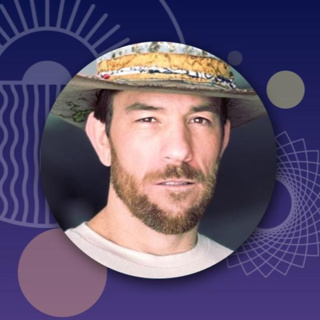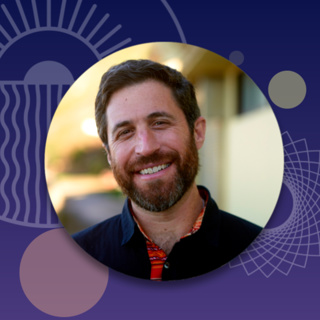

#50 - Zev Eisenberg: Siblings on the Ibogaine Path

#50 - Zev Eisenberg: Siblings on the Ibogaine Path

What happens when your sibling not only shares your past but also walks with you into the same medicine that changed your life?

In this deeply personal episode of Ibogaine Uncovered, host Talia Eisenberg sits down with her brother, psychedelic integration therapist Zev Eisenberg, to explore his first-hand experience with Ibogaine and the healing it brought to their family.

Zev reflects on their shared childhood in Omaha, his journey from the high-pressure art world to becoming a therapist, and the fears he carried about Ibogaine after witnessing Talia’s own intense experience years ago. He shares how the medicine helped him reprocess painful memories, regulate his emotions, reconnect with his inner child, and even take steps toward reconciliation with their father. Together, they discuss family dynamics, the evolution of psychedelic work from trauma healing to personal optimization, and the value of returning to Ibogaine for deeper layers of growth.

Zev Eisenberg is an NYU-trained psychologist and psychedelic integration therapist based in New York City. He now specializes in helping clients prepare for and integrate transformational psychedelic experiences through his practice, Heart Openers.

Timestamps

  • (01:32) – Gratitude for the experience and seeing Beyond’s care model firsthand
  • (03:02) – Growing up in Omaha, early drug use,
  • (07:28) – Why Zev avoided Ibogaine for years despite seeing its impact on Talia
  • (09:57) – Life challenges in early 2024 that led him to finally say yes
  • (14:55) – How previous personal work shaped a gentler Ibogaine experience
  • (16:28) – Detailed journey account: memory-based visions and emotional completions
  • (20:42) – Releasing fear of Ibogaine and the idea of returning for deeper work
  • (22:59) – Therapist’s perspective on Beyond’s facilitation and client empowerment
  • (25:54) – Family healing: reconciling with their father post-ceremony
  • (32:05) – Childhood memories reframed with purpose after Ibogaine
  • (36:54) – Career arc: from the New York art world to psychedelic integration therapy
  • (41:15) – Integration at six weeks: inner child work, physical energy, and mental clarity
  • (45:08) – The growth mindset and why healing is never “one and done”

Episoder(55)

#23 - Dr. Nolan Williams: Can Ibogaine Treat Traumatic Brain Injury?

#23 - Dr. Nolan Williams: Can Ibogaine Treat Traumatic Brain Injury?

Dr. Nolan Williams is an Associate Professor within the Department of Psychiatry and Behavioral Sciences and the Director of the Stanford Brain Stimulation Lab. He is triple board-certified in general neurology, general psychiatry, as well as behavioral neurology and neuropsychiatry. Dr. Williams joins Ibogaine Uncovered to discuss his recently published study, Magnesium–ibogaine therapy in veterans with traumatic brain injuries. Published in Nature Medicine, it evaluates 30 Special Ops veterans with predominantly mild TBI who each independently scheduled themselves for ibogaine treatment at a center in Mexico, where they also engaged in activities like breathwork and yoga, and spoke with therapists and coaches. Don’t read too much into the word “mild” here – as you’ll hear from Dr. Williams, people suffering from TBI are more often than not also dealing with other health conditions including PTSD, depression, anxiety, substance use, and suicidality. Participants in the study were referred by Veterans Exploring Treatment Solutions (VETS), a non-profit organization dedicated to ending veteran suicide.What we discuss: Dr. Williams’ first impression of ibogaine: how he went from being skeptical to calling it “the most sophisticated pharmacological agent in the world” Why it was important for Dr. Williams to study ibogaine treatment on Special Ops veterans The changes Dr. Williams and his team witnessed in participants after they underwent ibogaine treatment The role of magnesium in the protocol and what his team was able to show as it relates to heart health during treatment  What we know about the dreamlike state of consciousness facilitated by ibogaine Ibogaine as a “dirty drug” and the analogy of the modern key What Dr. Williams meant when he said ibogaine led to“a Benjamin-Buttoning of the brain,” and the implications of such a change for people with TBI and PTSD The study’s limitations Which other populations could potentially benefit from ibogaine treatment? The role of research in affecting drug policyWhy it’s important: The first-of-its-kind neuroimaging study found that ibogaine could effectively treat TBI and PTSD in Special Ops veterans while improving cognitive function. Ibogaine treatment also reduced the veterans’ average rating on a disability assessment scale. Before treatment, the average rating of participants in the study indicated mild to moderate disability. A month later, their ratings indicated no disability. Remarkably, 88% experienced a reduction in PTSD symptoms, 87% experienced a reduction in depression symptoms, and 81% experienced a reduction in anxiety, while suicidal ideation decreased from 47% to 7% one month following treatment. All this to say, this new study led by Dr. Williams and conducted by his team at Stanford is playing a role in  taking ibogaine out of the category of obscure psychedelic and placing it into the category of potential breakthrough therapy. The numbers speak for themselves, as does the mainstream media coverage of the publication. As Dr. Williams points out, research still has much to reveal about this powerful plant medicine, but for now,  this study indicates that ibogaine could be a treatment option for a condition from which many people fail to find relief.Relevant Links: Dr. Nolan Williams: Stanford Profile Stanford Brain Stimulation Lab Magnesium–ibogaine therapy in veterans with traumatic brain injuries (Nature Medicine) Pre-post Evaluation of the Safety and Efficacy of Ibogaine-Magnesium Therapy in Veterans With Repeated Blast Exposure (ClinicalTrials.gov) 0665 Ibogaine treatment in combat Veterans significantly improves sleep, beyond alleviating Posttraumatic Stress Disorder symptoms (Sleep Research Society) Psychedelic drug ibogaine shows preliminary promise for traumatic brain injury: Study (ABC News) How psychoactive drug ibogaine may help military veterans with traumatic brain injuries (Medical News Today)

24 Jan 202435min

#22 - Ben “Doc” Askins: From Straight-Edge to Psychedelic

#22 - Ben “Doc” Askins: From Straight-Edge to Psychedelic

Ben "Doc" Askins is a physician assistant, US army captain, author and podcast host. He has two decades of experience practicing and teaching wilderness, tactical, and expeditionary medicine in the military. As a civilian, he is certified with the Multidisciplinary Association on Psychedelic Studies in MDMA-assisted therapy, and is a Psychiatric Physician Assistant offering ketamine assisted therapy in Kentucky. Doc is a National Outdoor Leadership school alum, a veteran of the Global War on Terrorism, and has postgraduate training in Neuropsychiatry and Genomics with a Masters in Divinity. Doc’s book, The Anti-Hero’s Journey: The Zero with a Thousand Faces, is described as a “warped war memoir about the way to attain enlightenment” (think of it as an integration therapy guide in the form of his life story). You might remember Doc from episode 22 – he was featured in our recap of the Kentucky Summit on Breakthrough Therapies for Opioid Use Disorder. What we discuss: Doc’s presence at the Kentucky Summit Why Doc thinks the idea of investing $42 million in ibogaine research in KY is “a terrible idea” A clinician’s perspective on ibogaine How Doc went from a straight-edge kid and member of the DARE club to a proponent of psychedelic assisted therapy America’s shifting perception of psychedelics Psychedelic assisted therapy for veterans The challenges of treating people suffering from suicidality Doc’s recommendations for post-treatment integration Reflecting on Doc’s book, The Anti-Hero’s JourneyWhy it’s important: With his strict Christian upbringing and army background, Doc might not be the first person you’d expect to be an advocate of breakthrough psychedelic therapies – but it’s precisely that background that qualifies him to speak to the ongoing crisis. As a Kentuckian with close personal connections to both the opioid and suidide crises, an active duty member of the Army National Guard, and a physician assistant (among many other things – he’s the first to call his background ‘eclectic’), Doc’s perspective on the state’s interest in funding ibogaine research is both well-informed and unique. He’s the first person I’ve heard call the plan “a terrible idea,” but not for the reason you might think. Speaking to his experience working in ketamine-assisted therapy, Doc offers insight into the kind of support a person suffering from suicidality requires, and explains why the window after a psychedelic experience is a critical time for people who have been facing treatment-resistant depression. Doc’s story is a testament to how tragedy can change our life’s course in an instant, and proof that even with years of “just say no” indoctrination, there’s hope that even the staunchly opposed could change their minds about psychedelic medicines like ibogaine. Relevant Links: Anti-Hero’s Journey website  Listen to Anti-Hero’s Journey podcast Ben “Doc” Askins on Instagram The Kentucky Summit on Exploring Breakthrough Therapeutic Potential for Opioid Use Disorder The Real Reason KY’s Attorney General Doesn’t Want My Opinion On Psychedelics (Brainz Magazine) An Open Letter To KY Governor Andy Beshear (Brainz Magazine) U.S. Department of Veterans Affairs: Posttraumatic Stress Disorder American Foundation for Suicide Prevention: Statistics

14 Jan 20241h 2min

#21 - The Power of Story at the Kentucky Opioid Use Disorder Summit

#21 - The Power of Story at the Kentucky Opioid Use Disorder Summit

In this episode, host Amanda Siebert recaps the recent Kentucky Summit on Exploring Breakthrough Therapeutic Potential for Opioid Use Disorder, which was held in La Grange, Kentucky on November 30. The event brought together practitioners, researchers, policy makers, caregivers, and members of the community to discuss and learn about ibogaine, a psychedelic medicine that has been shown to interrupt opioid use disorder. Kentucky is considering allocating $42 million to study ibogaine after the state received nearly $900 million in settlements from opioid producers and distributors for their role in exacerbating the overdose crisis. In this episode, Amanda gets vulnerable, opening up for the first time publicly about her personal connection to the overdose crisis, and draws connections between the crisis in the Bluegrass state and the province of British Columbia, before highlighting some key discussion points brought up during the summit.What’s covered Amanda’s personal connection to the overdose crisis By the numbers: the impact of the overdose crisis in BC and beyond Kentucky: one of America’s hardest hit states Learning about psychedelics for substance use The power of story Recapping Kentucky’s interest in ibogaine Summit recap: Rick Doblin, Dr. Deborah Mash, Juliana Mulligan Stories from panelists Ciprianna Quann, Talia Eisenberg, Ben “Doc” Askins, and Karen Butcher Fear and frustration around access to psychedelic treatment, especially for BIPOC communitiesWhy it’s important: The overdose crisis is not limited to Kentucky – It exists in varying degrees in every American state and Canadian province, cutting across demographic lines and impacting urban and rural areas alike. Even as psychedelics become part of the mainstream, it’s jarring to see a place like Kentucky be the first to consider funding ibogaine research. What the summit illustrated is that with all of our differences, whether geographical, political, spiritual, or cultural in nature, the pain associated with substance use disorder and overdose is universal, and can unify us to seek out alternative solutions. By the end of the summit, it was clear everyone in the room agreed on one thing: when it comes to substance use disorder in the state of Kentucky and beyond, it’s time to do something different.Relevant Links: The Kentucky Summit on Exploring Breakthrough Therapeutic Potential for Opioid Use Disorder Overdoses the leading cause of death in B.C. for those aged for 10 to 59: coroner Drug Overdose Deaths Drug Overdose Mortality by State Beyond Drugs: The Universal Experience of Addiction (Dr. Gabor Mate)

20 Des 202338min

#20 - Amy Fillinger: Can Ibogaine Help Codependency?

#20 - Amy Fillinger: Can Ibogaine Help Codependency?

Amy Fillinger is a travel agent and mom of three living in Arkansas. When Amy discovered ibogaine through social media, she assumed she’d learned about it to help her ex-husband who was suffering from alcohol use disorder, until she realized it was a tool that could help her on her own healing journey. She underwent ibogaine treatment at Beond about six months prior to the recording of this episode to help her heal from codependency and post-traumatic stress. What we discuss: Codependency and the idea of “relationship addiction” Amy’s path to the medicine and her first impression of ibogaine How Amy was feeling mentally, emotionally and physically before her ibogaine treatment Amy’s understanding of her codependent behavior before treatment Her intentions for the ibogaine experience, including facilitating forgiveness and letting go of anger The insights Amy received in her journey about her life, and particularly about her future Amy’s use of social media to document her (continuing) journey Using movement as an integration tool The self-limiting beliefs Amy experienced as a result of being in a codependent relationship How Amy’s relationship with family and romantic partners have shifted since her treatment Amy’s advice for other people who may be struggling with codependent behaviorWhy it’s important: Codependency is a learned behavior that can be passed down from one generation to another. It is an emotional and behavioral condition that affects an individual’s ability to have a healthy, mutually satisfying relationship. Codependency is sometimes referred to as “relationship addiction” because people with codependency often form or maintain relationships that are one-sided, emotionally destructive or abusive. It often affects a spouse, parent, or sibling of a person suffering from substance use disorder. Some estimates suggest that over 90 percent of the American population demonstrates codependent behavior from time to time. Amy’s experience with ibogaine is another example of how this powerful psychedelic medicine can help us work through an incredible gamut of struggles, issues and maladaptive coping mechanisms, whether we’re dealing with an addiction to a substance, a behavior, or a way of thinking. Relevant Links: Codependency explainer on Mental Health America Prevalence of codependency in the United States Study: Living with Addicted Men and Codependency: The Moderating Effect of Personality Traits Amy’s Instagram

1 Des 202336min

#19 - Tricia Eastman: Are We Responsible Psychedelic Stewards?

#19 - Tricia Eastman: Are We Responsible Psychedelic Stewards?

Tricia Eastman is an author, speaker, medicine woman, facilitator, and the founder of Ancestral Heart, a non-profit organization dedicated to the preservation and deeper understanding of ancient ritual and Indigenous wisdom. Tricia is also the founder of Psychedelic Journeys, where she has curated transformative medicine experiences and retreats in different locations around the world and for which she is currently building a retreat center in the Azores Islands. Tricia has trained under two different Bwiti traditions and after nearly a decade of working with iboga, she has a deep understanding of its spiritual technology.What we discuss: Tricia’s introduction to the psychedelic realm and her experience working with different medicines, including iboga How ibogaine helped her overcome a lifelong struggle with eating disorders The different Bwiti traditions that she has been initiated into and trained under How stewardship informs Tricia’s work at Ancestral Heart and beyond The ritualistic use of iboga among the Bwiti for initiation The spiritual technology of iboga The difference between working with iboga in Gabon and receiving ibogaine in a clinic The cost of losing connection with ritual Are we being responsible stewards of this movement, and respectful of traditional practices and medicines that do not belong to us?  If not, what will it take?Why it’s important: Consider the definition of stewardship: the conducting, supervising, or managing of something, especially: the careful and responsible management of something entrusted to one's care. Now consider that word in the context of iboga and ibogaine. In a recent article for Psychedelic Alpha, author and medicine woman Tricia Eastman and co-author Dr. Joseph Barsuglia suggest that we ought to have a nuanced appreciation of stewardship in the context of iboga; considering it both an appreciation of the responsibility we owe to the cultures and ecosystems from which iboga is derived, and also the safety of those who ingest it. In this episode, Tricia, the founder of Ancestral Heart and Psychedelic Journeys, explains how connection to ritual helps build that appreciation, and how, without proper care, rushing to legalize or decriminalize iboga could have unintended consequences. The show ends with the question posed in the title: Are we being responsible stewards of this movement, and respectful of traditional practices and medicines that do not belong to us? Keep listening to find out. Relevant Links: Psychedelic Alpha article, “Ibogaine’s Surge in Popularity Could Be a Huge Loss for the Gabonese People Unless We Shift Course” Ancestral Heart website Psychedelic Journeys website Tricia Eastman on Instagram Stewardship definition, Merriam-Webster

10 Nov 20231h 10min

#18 - David Nassim: Keep Ibogaine Sustainable

#18 - David Nassim: Keep Ibogaine Sustainable

David Nassim is the co-director of Blessings of the Forest (BOTF), an organization that supports environmental and traditionalist associations, Indigenous communities and administrative authorities committed to the preservation and sustainable development of Gabon’s natural and cultural heritage – including the preservation of iboga, the West African plant from which ibogaine is derived. David is also the organization’s international relations and finance officer, and a practitioner and Chinese medicine consultant. You might remember David from our interview at Psychedelic Science 2023, featured in Episode 16.What we discuss: The work that BOTF does and its role in the iboga supply chain The Nagoya Protocol: What it is, and how it informs the protection of the iboga plant and the communities that use it  The unseen challenges of working closely with a large number of different organizations, associations, and communities The role of iboga in David’s life, and the different Bwiti traditions that he has worked with How iboga is viewed globally: the different interpretations and understandings in the United States and Gabon What is at the root of the reverence Gabonese people have for iboga? The implications of Western interest, namely the Kentucky Opioid Abatement Advisory Program and its interest in ibogaine What questions to ask when determining how a practitioner has obtained iboga/ibogaine Is there any overlap between what you’ve learned from Chinese Medicine, and from your work with iboga?Why it’s important: In North America, ibogaine is a compound that most people associate with opioid use disorder, but in West Africa, specifically in Gabon, ibogaine is just one part of a much greater whole. In this episode, David Nassim explains in great detail the implications of increased global interest in the iboga plant for the Bwiti communities that depend on it. By leaning on the Nagoya Protocol on Access and Benefit-sharing, Blessings of the Forest is working to protect and preserve iboga while building meaningful relationships directly with communities that require support. David’s insights and understanding bring the issue of reciprocity into sharp focus, and challenge us to consider the global implications of pursuing a treatment like ibogaine.Relevant Links: Blessings of the Forest website The Nagoya Protocol on Access and Benefit-sharing Blessings of the Forest on Instagram Lucid News story featuring David: Gabon Takes First Step Toward Legal Export of Sustainable Iboga Ibogaine Uncovered: Episode 16 - The State of Ibogaine: A Psychedelic Science Recap ICEERS Report - The Future of Iboga: Perspectives from Central Africa

23 Okt 20231h 2min

#17 - Dr. Gül Dölen: Can Ibogaine Open Critical Periods?

#17 - Dr. Gül Dölen: Can Ibogaine Open Critical Periods?

Dr. Gül Dölen, MD, PhD, is an associate professor of neuroscience at Johns Hopkins University. In her lab, her team focuses on how the brain enables social behaviors through basic neurobiological processes such as neuromodulation and synaptic plasticity. Dölen has led several headline-making studies in the psychedelic field, including one in 2018 that involved giving MDMA to octopuses, and a more recent study that revealed psychedelics can reopen the “critical period” in the brain.What we discuss: How Dr. Dölen became interested in studying psychedelics after focusing on learning and memory as well as the pathogenesis of autism The study that turned things around: why study the effects of psychedelics in an evolutionarily distant species like the octopus? What giving octopuses MDMA revealed about their normally solitary behavior The implications in the world of psychedelic science after studying their effects on this kind of animal Defining critical periods: What are they? What are the benefits of experiencing a critical period? Dr. Dölen’s hypothesis: Could psychedelics be the “master key” to reopening critical periods? Which drugs are best at reopening critical periods? Where does ibogaine stand? Are there any risks associated with experiencing an abundance of critical periods? The problem with the word ‘plasticity’Why it’s important: Dr. Dölen’s pioneering research–both the study of MDMA in octopuses and her more recent work on unlocking critical periods–allows us to look at psychedelic drugs in different ways: in evolutionarily distant species with entirely different brain structures, and as “master keys” that could potentially unlock those periods. While there aren’t many studies that put different psychedelic drugs on a spectrum of efficacy, her work shows that among MDMA, LSD, psilocybin, and ketamine, ibogaine leads the way when it comes to opening critical periods – a piece of information that (hopefully) encourages more scientists in the psychedelic space to study this powerful medicine. Relevant Links: Dr. Dölen’s faculty profile on Johns Hopkins Dr. Dölen, Center for Psychedelic & Consciousness Research, JHU Spectrum News: In Deep Water with Gül Dölen The Tim Ferriss Show: Dr. Gül Dölen  dölenLAB  Nature: Octopuses on ecstasy just want a cuddle Wired: The Psychedelic Scientist Who Sends Brains Back to Childhood The Microdose: 5 Questions for Gul Dolen

16 Sep 202353min

#16 - Talia Eisenberg & Vianey Perez: The Intake Process

#16 - Talia Eisenberg & Vianey Perez: The Intake Process

Curious about the process of applying for ibogaine treatment? Want to know more about how staff screen potential clients? In this episode, Amanda Siebert is joined by two previous guests, Beond co-founder Talia Eisenberg and VP of clinical operations, Vianey “Nurse V” Perez, for a deep dive on Beond’s intake process, including details on medical screening, personalized care, and potential challenges or red flags. What we discuss: Why a person might seek out ibogaine treatment The length of time the intake process takes: if I were to inquire tomorrow, what’s the earliest I could be in treatment? How involved the medical team is in the intake process What makes someone a good candidate for ibogaine treatment?  What if someone has failed at other types of treatment? Potential red-flags Challenges that clients might face while in treatment Do people ever have to leave treatment? What’s the protocol?Why it’s important: Deciding to pursue treatment with a psychedelic drug as powerful and potent as ibogaine can come with a hefty side of anxiety. The goal in creating this episode was to provide listeners with a resource that might help quell some of that stress.

3 Aug 20231h 6min

Populært innen Helse

hvordan-har-du-det-mann
fastlegen
rss-gukild-johaug
psykodrama
relasjonspodden-med-dora-thorhallsdottir-kjersti-idem
leger-om-livet
foreldreradet
bak-fasaden-en-reise-i-livet-med-sykepleier-ine
morten-ramm-lar-kakla-ga-til-du-sovner
klimaks
helsetipspodden
hjernesterk
g-punktet
rss-lopedrommen
sovnlos
hverdagspsyken
apent-forhold
treningsprat
fryktlos
sinnsyn