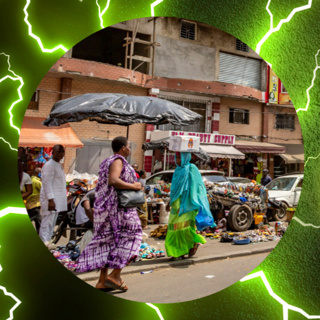
Cocoa, Conflict, and Capital—The Economic Story of Côte d'Ivoire W/ Yohann Coulibaly
Dollar Dialogue15 Aug 2025

Cocoa, Conflict, and Capital—The Economic Story of Côte d'Ivoire W/ Yohann Coulibaly

Today we have Supreeth Nagella, Arib Malik, and Yohaan Coulibaly discussing Cote d'Ivoire's economy and future. This is an absolute banger, so watch till the very end. 🔥 II. Civil War & The Economic CollapseNo discussion of Côte d'Ivoire’s economy is complete without addressing its two civil wars—in 2002 and again in 2010.The roots of conflict were ethnic and political—but they were also economic.During the boom years of cocoa, vast numbers of migrant workers from Burkina Faso, Mali, and other Sahelian states came to Côte d'Ivoire to farm. Over time, disputes over land ownership, citizenship, and access to economic opportunity boiled over. When the price of cocoa crashed in the late 1990s, and with growing dissatisfaction over corruption and inequality, the fragile peace unraveled. In 2002, civil war broke out, splitting the country in two. The economy shrank by over 15%, investor confidence evaporated, and cocoa production became both a target and a tool of warfare.Militias seized cocoa routes to fund their operations. Child labor and smuggling spiked. The Ivorian economy—once dubbed the “African miracle”—sputtered into chaos.But even during the darkest days, cocoa remained central. In fact, the fight to control the cocoa belt was often more economically motivated than ideologically driven.This segment explores:How natural resource wealth can fuel—not prevent—conflictWhy cocoa fields became strategic military targetsThe international community’s (and chocolate industry’s) mixed responseHow post-conflict reconstruction relied heavily on restoring cocoa exports📈 III. Capital Returns: Recovery, Reforms, and RisksAfter the second civil war ended in 2011 and President Alassane Ouattara took office, Côte d'Ivoire entered a period of relative stability and rapid economic growth.GDP growth averaged 7–8% annually in the 2010s, driven by:Public infrastructure projects (roads, ports, electricity)Investment in agribusiness and miningFinancial services and urbanization in AbidjanInternational support from the IMF and World BankBut beneath the headlines of “Africa Rising,” many old patterns remained.📉 Cocoa remained over 40% of exports📉 Poverty reduction was uneven📉 Youth unemployment remained high, especially in northern regions📉 Price volatility and climate threats loomed over farmersWe examine how:The government created a cocoa regulator, the Conseil du Café-Cacao, to stabilize pricesEfforts to encourage domestic chocolate manufacturing largely failed due to infrastructure gaps and trade barriersChinese and Gulf capital began entering the port and logistics sectorsAusterity measures and growing debt challenged long-term sustainabilityIs the growth real—or just another cycle?🧒🏾 IV. Child Labor, Exploitation, and Ethics in the Cocoa ChainOne of the most controversial aspects of Côte d'Ivoire’s cocoa economy is the use of child labor.Despite international outcry and initiatives like the Harkin–Engel Protocol, recent studies suggest over 1.5 million children still engage in hazardous work on cocoa farms in West Africa.We explore:The role of poverty and weak enforcement in perpetuating child laborHow multinational chocolate companies navigate (or exploit) weak regulationThe rise of “ethical chocolate” and whether certifications like Fair Trade and Rainforest Alliance actually workInterviews from field investigations and academic research on cocoa’s labor conditionsWhy corporate social responsibility often fails to move beyond PRAt the heart of this segment is a question: Can you love chocolate and care about justice?🌍 V. Cocoa and Climate: A Crisis BrewingClimate change is not an abstract threat for Côte d'Ivoire—it’s an existential one.🔺 Rising temperatures and erratic rainfall are shrinking the cocoa belt🔺 Soil degradation and pest outbreaks are increasing costs for farmers🔺 The expansion of cocoa has contributed to over 80% deforestation in just a few decadesWe explore how:Deforestation for cocoa is threatening biodiversity.

Denne episoden er hentet fra en åpen RSS-feed og er ikke publisert av Podme. Den kan derfor inneholde annonser.

Episoder(70)

The New Great Game: China's String of Pearls vs India's Necklace of Diamonds w/ Sambhav Maurya

The New Great Game: China's String of Pearls vs India's Necklace of Diamonds w/ Sambhav Maurya

The Indian Ocean is no longer just a trade route.It has become one of the world's most important geopolitical battlegrounds.From Gwadar in Pakistan to Djibouti in the Horn of Africa, from Chabahar in ...

25 Jul 57min

Singapore vs Hong Kong; The Battle for Asia's Financial Crown w/ Mohammed Zahraan Dada

Singapore vs Hong Kong; The Battle for Asia's Financial Crown w/ Mohammed Zahraan Dada

For decades, Hong Kong was widely regarded as the undisputed financial capital of Asia. It served as the gateway between China and global markets, attracting multinational corporations, investment ban...

11 Jul 58min

The Cost of Living Crisis: Why Britain Can’t Afford to Live Anymore w/ Joshua Hinton-Shereston

The Cost of Living Crisis: Why Britain Can’t Afford to Live Anymore w/ Joshua Hinton-Shereston

Britain is experiencing one of the most severe declines in living standards in modern history.Today we are led by hosts Supreeth Nagella Achuthakumar, Zumar Sheikh, Demir Hossain, and Mohammed Ariful ...

9 Jul 1h

Exploring Taxation: UAE, US, and Sweden | Revenue, Redistribution, and Power w/ Saabira Khan

Exploring Taxation: UAE, US, and Sweden | Revenue, Redistribution, and Power w/ Saabira Khan

In Episode 4 of Dollar Dialogue, we are joined by an amazing guest speaker Ms. Sabeera Khan, ameliorating our podcast today. And of course, as usual, we have hosts Supreeth Nagella, Zumar Sheikh, Demi...

30 Mai 55min

The Housing Crisis: New York, Toronto, and Mumbai | Scarcity, Cost & Control w/ Amelia Murad

The Housing Crisis: New York, Toronto, and Mumbai | Scarcity, Cost & Control w/ Amelia Murad

Housing was once considered a basic necessity. It was a foundation for stability, family, and long-term security. Today, in many of the world’s largest cities, it has become one of the most expensive ...

9 Mai 54min

EP 2: Leaders Who Bet on Oil: Chávez, MBS, and Norway’s Model w/ Ishraq Rayan

EP 2: Leaders Who Bet on Oil: Chávez, MBS, and Norway’s Model w/ Ishraq Rayan

Welcome to another episode of The Dollar Dialogue.This episode features guest speaker Ishraq Rayan, who brings a nuanced perspective on resource economics and development, alongside lead host Supreeth...

25 Apr 1h 7min

The Economics of Intelligence — AI, Firms, and the Future of Work

The Economics of Intelligence — AI, Firms, and the Future of Work

Welcome to the first episode of The Dollar Dialogue — a podcast dedicated to unpacking complex economic ideas and connecting them to the world we live in today.This episode features guest speaker Masr...

11 Apr 1h 7min

EP 64: Transition of Power and End of Chapter

EP 64: Transition of Power and End of Chapter

This isn’t just another episode...it’s the closing of a fantastic chapter.Episode 64 marks the official end of Season 1 of Dollar Dialogue, a journey built from the ground up by the original founders:...

31 Mar 10min

Populært innen Business og økonomi

stopp-verden
dine-penger-pengeradet
e24-podden
rss-penger-polser-og-politikk
rss-pa-konto
rss-borsmorgen-okonominyhetene
rss-skravla-gar
pengepodden-2
finansredaksjonen
lederpodden
utbytte
tid-er-penger-en-podcast-med-peter-warren
stormkast-med-valebrokk-stordalen
rss-orjasater
livet-pa-veien-med-jan-erik-larssen
morgenkaffen-med-finansavisen
liberal-halvtime
pengesnakk
rss-fa-makro
lydartikler-fra-aftenposten