
#229 From Platform To Proof – How To Tackle Your Scope 3 Emissions
The ISO Show10 Sep 2025

#229 From Platform To Proof – How To Tackle Your Scope 3 Emissions

One of the biggest challenges for those looking to achieve Net Zero is tackling scope 3 emissions, which are indirect emissions that typically reside in your supply chain.

These can account for up to 70% of your total emissions and can be quite the undertaking to gather the necessary data to be able to complete your calculations needed for carbon verification.

In the final episode of the Platform to Proof mini-series, we invite Jay Ruckelshaus, Co-Founder and Head of Policy and Partnerships at Gravity, back onto the podcast to explain how to tackle scope 3 emissions, how it works in practice and how carbon accounting software can streamline the process.

You'll learn

· What are scope 3 emissions?

· What are the drivers for those tackling scope 3 emissions?

· Where to start with scope 3 emissions

· How does supply chain engagement work in practice?

· What are the benefits for suppliers involved?

· How can carbon accounting software help with scope 3 emissions?

Resources

· Gravity

· Carbonology

In this episode, we talk about:

[02:05] Episode Summary – We introduce Jay Ruckelshaus, Co-Founder and Head of Policy and Partnerships at Gravity, who will accompany Mel on a 3-part mini-series diving into carbon accounting software and the value it can bring.

In this final part, Mel and Jay dive into scope 3 emissions, the challenges associated with gathering them and how carbon accounting software can help streamline this process.

[02:30] Catch-up on the first part – If you missed the first two parts of the series, catch-up with them here:

· Part 1: From Platform To Proof – What Is The Business Driver For Carbon Accounting And Reporting?

· Part 2: From Platform To Proof – How Carbon Accounting Software and Verification Combine for Carbon Compliance

[03:50] What are scope 3 emissions?: The term 'scope 3' comes from a document and initiative called the GHG Protocol, which sets out the core methodology by which companies should measure account for their greenhouse gas emissions. It details 3 different scopes, scope 1 is your direct emissions (i.e. fuel for vehicle use ect), Scope 2 is grid emissions associated with purchased electricity or other forms of energy (i.e. energy for offices).

Scope 3 is a very broad term and addresses the emissions created by your value / supply chain. This could include things like transportation of resources you require from a third-party.

These emissions can count to upwards of 70% of a companies total emissions, depending on the nature of the business that can even go as high as 90%!

[06:50] What are the drivers for those tackling scope 3 emissions? Jay summaries 3 of the main drivers:

Biggest emission source: For those looking to truly hit Net Zero, they can't simply ignore their largest emission source. It poses the biggest risk to the company, so it's in their best interest to reduce them where possible. Of course, this isn't easy as it may involve swapping suppliers or working with existing ones to make their practices more sustainable. It's not as straight forward as addressing your scope 1 and 2 emissions.

Regulation requirement: Scope 3 is increasingly being included within mandatory regulations, whereas in previous years, it may have been a voluntary part of those requirements. For example, the new regulations coming into effect for California in 2026 will see around 10,000 companies needing to report on their scope 3 emissions.

In the EU, regulations such as CSRD also require reporting on these emissions. Though these haven't been made mandatory as of yet, we can see that changing in future.

Stakeholder requirement changes: Customers and other stakeholders are asking for more evidence of meaningful sustainability action. Supply chain initiatives now are gearing more towards sustainable procurement, which coincides with the rise of CSR related activities. This drive to evaluate your supply chain is being pushed from all directions.

[09:55] Where to start with scope 3 emissions: Likely stating the obvious, but ensure you have addressed your scope 1 and 2 emissions first.

When looking to your scope 3 emissions, you'll first need to determine which of the 15 emission categories is going to be important for your business to get a handle on. The nature of your business will determine which of the categories are a priority, so if you're a digital service based business, then the raw materials category likely won't be very appliable to you so you'd only need to provide a very high-level summary of any related emissions.

For those categories that are a priority, you should identify how in-depth you would need to get with the data analytics, and create a strategy for each of those categories. If you're struggling to start, there are some industry average statistics out there to help you with those initial calculations.

It's key to set up a defined measurement cycle, that will need the ability to get more granular as you progress. This is so you can actively track your reduction efforts.

Of course, the level of this will be determined by the resource you and your suppliers have to help facilitate the process. It's definitely worth investing in your supplier relationships to make this process run smoothly year on year.

Some business that have say 100+ suppliers will often send out a survey to obtain this data, but the quality of the information returned (if any) can be lacking. So, a more direct approach will likely reap the results you're after.

Mel highlights an instance where an organisation had an engagement programme, where they selected 100 of their suppliers and provided training and guidance on understanding and reporting on their emissions. The suppliers could then see how beneficial the process was not just for that organisations, but for their own company as well. It's more than just gathering data, it's about effecting your sphere of influence for meaningful change.

[14:15] How does supply chain engagement work in practice? As mentioned, one of the ways many organisations have opted to gather data have been through supplier surveys, however, you need to supplement this with other supplier initiatives to get the best results.

Gravity took a more empathetic approach, by looking at this process from the suppliers perspective. They highlighted that this should just be an extractive exercise, the supplier should also be getting something out of this.

One such way to do so would be to give them training and / or tools in order to measure their emissions so they can give you the data you need, and also have that data to share with their other customers. You can work with them to identify potential emission reductions and energy saving schemes that could save them money down the line.

There are also a number of AI tools that can comb the web and look for any public carbon disclosures or ESG reports that suppliers may have already made. So this saves on the initial outreach and results in less burden for both parties.

[17:10] What are the benefits for suppliers involved? By adding further requirements to your supplier relationship, it offers the opportunity to evaluate and develop your supplier engagement strategy.

The suppliers can benefit both from your experience with carbon reporting, in addition to gaining access to the same tools you use to manage this.

By helping them get a jump start on their carbon disclosures, they can benefits from being ahead of the curve if certain regulations haven't effected them yet. We're seeing these sustainability regulations trickle down to new sectors and smaller companies, so them having the data ready puts them at a great advantage.

They can also potentially optimise their own processes and save money from the experience by using their data to identify where further reductions can be made. Those supplier reductions then benefit your organisation as your scope 3 emissions improve, it's a win win situation.

[20:35] How can carbon accounting software help with scope 3 emissions? Using Gravity as an example, they've built a lot of tools that can take raw inventory and gather a lot of data concerning purchasing, logistics ect. This is all collated into one area where it can be analysed and used for calculations.

They also have an AI agent that can comb the web for specific information that your suppliers may have publicly disclosed. An AI agent can also reach out directly to suppliers for further information which will be collated within your centralised system, checked for accuracy and put into a format that's ready for reporting.

This is all done with a full audit trail for transparency.

If you'd like to learn more about Gravity and how their energy and carbon accounting software can help you, check out their website. If you'd like to ask Jay any questions directly, feel free to send him an email.

If you'd like any assistance with Carbon Verification, get in touch with the Carbonology team, they'd be happy to help!

We'd love to hear your views and comments about the ISO Show, here's how:

Share the ISO Show on Twitter or Linkedin

Leave an honest review on iTunes or Soundcloud. Your ratings and reviews really help and we read each one.

Subscribe to keep up-to-date with our latest episodes:

Stitcher | Spotify | YouTube |iTunes | Soundcloud | Mailing List

Denne episoden er hentet fra en åpen RSS-feed og er ikke publisert av Podme. Den kan derfor inneholde annonser.

Episoder(200)

#258 What is BS 99001? Quality Management For The Built Environment

#258 What is BS 99001? Quality Management For The Built Environment

Many of you will be familiar with ISO 9001, the leading Quality Management Standard, which provides a solid foundation for managing any business. However, for certain industries, ISO 9001 alone is not...

16 Sep 44min
#257 How to meet legislative and ISO requirements in leasehold properties

#257 How to meet legislative and ISO requirements in leasehold properties

Many businesses do not own the property they operate in, this can lead to complex questions over who has ownership over certain property and facility related legal obligations. Managing areas such as...

19 Aug 33min

#256 BedX – Supporting Businesses Looking To Tender For Universal Bedfordshire and Beyond

#256 BedX – Supporting Businesses Looking To Tender For Universal Bedfordshire and Beyond

There has been a lot of buzz around the upcoming Universal Project currently in development in Bedfordshire. It's estimated to generate around £50 billion in economic benefit, along with the creation ...

5 Aug 45min

#255 AI Due Diligence - Information Security Checks Before You Integrate AI

#255 AI Due Diligence - Information Security Checks Before You Integrate AI

AI can be fantastic for relieving a lot of administrative burdens, allowing individuals to focus on more complex tasks that need a human touch. However, many are all too quick to install and integrate...

22 Jul 19min
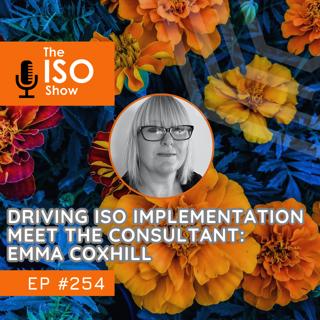
#254 Driving ISO Implementation – Meet the Consultant: Emma Coxhill

#254 Driving ISO Implementation – Meet the Consultant: Emma Coxhill

The path towards becoming an ISO consultant is often a meandering one. It's not often a career that many aspire to, yet despite that, there are still thousands of ISO professionals worldwide. We're c...

1 Jul 25min

#253 Building The Case For Health & Safety Regulations & Standards

#253 Building The Case For Health & Safety Regulations & Standards

Everyone who goes to work should have the right to go home after work. This is a sentiment that wasn't necessarily formally recognised until the 1970's here in the UK.   Health & Safety often gets mo...

24 Jun 27min
#252 Wavenet's On-going Commitment to Best Practice – Successfully Maintaining Seven ISO Standards

#252 Wavenet's On-going Commitment to Best Practice – Successfully Maintaining Seven ISO Standards

Anyone that has undergone the ambitious task of Implementing an ISO Standard will know how much work goes into creating and maintaining a single ISO certification. Now imagine juggling seven ISO certi...

17 Jun 33min
#251 Driving The Demand For GHG Emissions - How Davies Group Tackled Carbon Verification

#251 Driving The Demand For GHG Emissions - How Davies Group Tackled Carbon Verification

Watch the video interview here Carbon verification is quickly becoming a necessary step for many businesses, whether due to regulatory compliance, market demand or as part of a voluntary scheme. The...

10 Jun 34min

Populært innen Business og økonomi

stopp-verden
dine-penger-pengeradet
rss-penger-polser-og-politikk
e24-podden
rss-borsmorgen-okonominyhetene
rss-pa-konto
rss-skravla-gar
lydartikler-fra-aftenposten
finansredaksjonen
utbytte
pengepodden-2
livet-pa-veien-med-jan-erik-larssen
tid-er-penger-en-podcast-med-peter-warren
rss-orjasater
stormkast-med-valebrokk-stordalen
lederpodden
pengesnakk
morgenkaffen-med-finansavisen
liberal-halvtime
rss-markedspuls-2