The root-brain hypothesis
Many Minds14 Okt 2020

The root-brain hypothesis

Welcome back folks! Today is a return to one of our favorite formats: the audio essay. If you like your audio essays short, concise, and full of tidbits, then this mini will not disappoint.

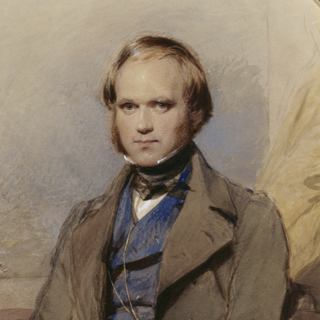
We take a look at a 140-year-old idea but very much a radical one—the root-brain hypothesis. It was proposed by Charles Darwin in a book published in the twilight of his career. The idea, in short, is that plants have a structure that is, in some ways, brain-like—and it is located underground, at their roots. We talk about how Darwin and his son Francis arrived at this idea, why it was ignored for so long, and how it's recently stirred to life.

Enjoy!

A text version of this "mini" is available here.

Notes and links

2:15 – The last page of Darwin's The Power of Movement in Plants (1880).

3:25 – The 2009 paper by Dr. Baluška and colleagues about the history and modern revival of the "root-brain hypothesis."

6:00 – The tinfoil hats experiment—and its influence—is discussed in this 2009 paper.

8:00 – The dust-up between Darwin and Sachs is described in this 1996 paper.

8:47 – The 2011 paper listing many of the environmental variables plants are now known to be sensitive to.

9:28 – Dr. Gagliano and colleagues' paper on associative learning in plant and on plants' use of sounds to find water. The possibility of echolocation is discussed here.

9:45 – For broader context surrounding the question of plants may have something like a brain, see Oné R. Pagán's essay titled 'The brain: A concept in flux.'

9:57 – The 2006 paper that inaugurated the field of "plant neurobiology."

10:34 – Discussions of the "transition zone" of the root can be found in the 2009 paper by Baluška and colleagues, as well as in this more technical paper from 2010.

11:00 – The response letter to the original "plant neurobiology" paper, signed by 36 plant biologists.

12:00 – Michael Pollan's 2013 article 'The Intelligent Plant' in The New Yorker.

12:05 – Anthony Trewavas's letter, highlighting the power of metaphors in science.

12:26 – The 2020 paper about pea tendrils in Psychonomic Bulletin & Review.

Correction: The audio version of this episode misstates the publication year of Darwin's final book, about worms. The correct year is 1881, not 1883.

Many Minds is a project of the Diverse Intelligences Summer Institute (DISI) (https://www.diverseintelligencessummer.com/), which is made possible by a generous grant from the Templeton World Charity Foundation to UCLA. It is hosted by Kensy Cooperrider, with creative support from DISI Directors Erica Cartmill and Jacob Foster, and Associate Director Hilda Loury. Our artwork is by Ben Oldroyd (https://www.mayhilldesigns.co.uk/).

You can subscribe to Many Minds on Apple, Stitcher, Spotify, Pocket Casts, Google Play—or wherever you like to listen to podcasts.

We welcome your comments, questions, and suggestions. Feel free to email us at: manymindspodcast@gmail.com.

For updates about the show, follow us on Twitter: @ManyMindsPod.

Denne episoden er hentet fra en åpen RSS-feed og er ikke publisert av Podme. Den kan derfor inneholde annonser.

Episoder(162)

Babies, dogs, and the riddles of word learning

Babies, dogs, and the riddles of word learning

It's kind of astonishing, really, that kids ever learn words. Each one poses a little riddle. Does this sound string refer to a person? A category of things? Or maybe some other feature of the bloomin...

22 Mai 1h 18min

The inner life of the hand

The inner life of the hand

Newton saw in the human hand proof of the divine; Darwin saw a key to our species' success. Many others, too, have described the hand in hyperbolic terms, as a paragon of design, a cornerstone of huma...

7 Mai 1h 10min

From the archive: The cuttlefish and its coat of many colors

From the archive: The cuttlefish and its coat of many colors

Hi friends! We're skipping a beat to take care of some spring housekeeping tasks. We will be back in May! In the meanwhile, enjoy this listener favorite from our archives! ----- [originally aired Apri...

22 Apr 1h 33min

Illuminating cave art

Illuminating cave art

Deep in our past, in the dark depths of caves, our ancestors did something strange and beautiful. Working by firelight, some doodled little designs. Others made hand stencils. Some saw a bulge of rock...

9 Apr 1h 25min

What can AI teach us about the mind?

What can AI teach us about the mind?

Everyone is talking about AI these days. Often these conversations are about how AI might upend education, or work, or social life, or maybe civilization itself. But among cognitive scientists and psy...

26 Mar 1h 21min

Mutualisms all the way down

Mutualisms all the way down

No one is an island. We all depend on each other in critical, often tangled ways. And when I say "we" and "each other" I don't just mean humans. Yes, we humans rely on other humans. But we also rely o...

11 Mar 1h 8min

Seven metaphors for AI

Seven metaphors for AI

If you wanted a petri dish for understanding metaphors—how they emerge and evolve and jostle with each other—it would be hard to do better than the world of AI. We talk about AI systems variously as c...

26 Feb 55min

Origins of the kiss

Origins of the kiss

Humans do some pretty weird things. Some of us will sit in searingly hot rooms or jump into icy ponds. Others risk their lives trying to climb to new heights or dive to new depths. And every once in a...

12 Feb 1h 1min

Populært innen Fakta

fastlegen
dine-penger-pengeradet
relasjonspodden-med-dora-thorhallsdottir-kjersti-idem
foreldreradet
rss-bisarr-historie
treningspodden
jakt-og-fiskepodden
rss-strid-de-norske-borgerkrigene
mikkels-paskenotter
sinnsyn
dopet
hverdagspsyken
rss-kunsten-a-leve
rss-sunn-okonomi
rss-kull
rss-sarbar-med-lotte-erik
gravid-uke-for-uke
sovnlos
rss-bak-luftfarten
tomprat-med-gunnar-tjomlid