Revising the Neanderthal story
Many Minds28 Okt 2020

Revising the Neanderthal story

You probably think you know the Neanderthals. We've all been hearing about them since we were kids, after all. They were all over the comics; they were in museum dioramas and on cartoons. They were always cast as mammoth-eating, cave-dwelling dimwits—nasty brutes, in other words. You probably also learned that they died off because they couldn't keep pace with us, Homo sapiens, their svelter, savvier superiors.

That's story we had long been told anyhow. But, over the past few decades, there's been a slow-moving sea change—a revolution in how archaeologists understand our closest cousins. For this episode I talked to Dr. Rebecca Wragg Sykes about this revolution. She is a Neanderthal specialist and the author of the new book Kindred: Neanderthal Life, Love, Death and Art.

Rebecca and I discuss the new picture of Neanderthals emerging from the latest archaeological research. We talk about where they lived, what they ate, the tools and clothing they made. We talk about the evidence that they had a considerable degree of cognitive sophistication and—very possibly—an aesthetic sense. Once we put all this together—and let the new picture come into focus—the gap long thought to separate them from us from them starts to close. And this makes the question of why they vanished about 40 thousand years ago all the more puzzling.

I really hope you enjoy this one—I certainly did. And if you do, I definitely encourage you to check out Kindred!

A transcript of this episode is available here.

Notes and links

Most of the topics we discuss are treated in detail in Rebecca Wragg Sykes's book, Kindred.

5:40 – Earlier book-length treatments of the Neanderthals include The Smart Neanderthal and Neanderthals Revisited.

9:15 – The archaeological site of Atapuerca in Spain, which includes the Sima de los Huesos (Pit of Bones).

11:20 – The Neander Valley in Germany was the site of the very first Neanderthal find in 1856.

11:50 – Another early site was Krapina, Croatia, which is now home to a Neanderthal museum.

24:30 – A recent academic article on the complexity of Neanderthal tool use.

28:27 – A French site—La Folie—gives a sense of what some Neanderthal dwellings were like.

41:05 – A popular article about the "wow site" at Bruniquel. The original academic article.

49:16 – An article on the evidence that Neanderthals were preparing and using birch tar.

56:45 – Some evidence suggests Neanderthals were interested in bird feathers and talons.

1:01:30 – There is now evidence for repeated phases of interbreeding between human and Neanderthals.

1:05:00 – Other ancient hominin species included the Denisovans.

1:07:00 – There are some reasons to believe that pathogens carried by humans may have played a role in the demise of the Neanderthals.

1:13:30 – Another richly imaginative treatment of ancient human life is Ancestral Geographies of the Neolithic, by Mark Edmonds.

To keep up with the latest Neanderthal research, Dr. Wragg Sykes recommends following archaeologists such as John Hawks (@johnhawks). She is also on Twitter (@LeMoustier) and her website is: https://www.rebeccawraggsykes.com/.

Many Minds is a project of the Diverse Intelligences Summer Institute (DISI) (https://www.diverseintelligencessummer.com/), which is made possible by a generous grant from the Templeton World Charity Foundation to UCLA. It is hosted by Kensy Cooperrider, with creative support from DISI Directors Erica Cartmill and Jacob Foster, and Associate Director Hilda Loury. Our artwork is by Ben Oldroyd (https://www.mayhilldesigns.co.uk/). Our transcripts are created by Sarah Dopierala (https://sarahdopierala.wordpress.com/).

You can subscribe to Many Minds on Apple, Stitcher, Spotify, Pocket Casts, Google Play, or wherever you like to listen to podcasts.

We welcome your comments, questions, and suggestions. Feel free to email us at: manymindspodcast@gmail.com.

For updates about the show, follow us on Twitter: @ManyMindsPod.

Denne episoden er hentet fra en åpen RSS-feed og er ikke publisert av Podme. Den kan derfor inneholde annonser.

Episoder(167)

From the archive: Varieties of childhood

From the archive: Varieties of childhood

Hi friends! We're taking a bit of a summer pause. We'll be back soon—in the meanwhile, enjoy this listener favorite from our archives! ----- [originally aired July 10, 2025] Childhood is a special tim...

31 Jul 1h 28min

From the archive: Philosophers on psychedelics

From the archive: Philosophers on psychedelics

Hi friends! We're taking a bit of a summer pause. We will be back soon—in the meanwhile, enjoy this listener favorite from our archives! ----- [originally aired May 14, 2025] Some call it the "psyched...

17 Jul 1h 40min
The origins of Darwin's ideas

The origins of Darwin's ideas

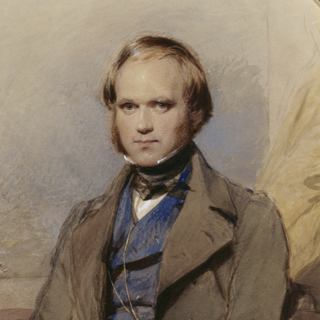
No discipline, no sphere of intellectual life, has been untouched by the work of Charles Darwin. He died in 1882 but his ideas are very much alive; they're now central to how we understand the natural...

3 Jul 1h 19min

The sparkling deep

The sparkling deep

It's tempting to see bioluminescence as an oddity, one of those rare eccentricities of life on earth. And, on land, maybe that's true. But our planet is mostly water, and out in the open ocean biolumi...

20 Jun 1h 20min

Is Man the Hunter just a myth?

Is Man the Hunter just a myth?

There's a story about of our past that you know well. It goes like this: At some point earlier in human evolution, we started to hunt. Men in particular—perhaps channeling some deep-seated aggressive ...

5 Jun 1h 32min

Babies, dogs, and the riddles of word learning

Babies, dogs, and the riddles of word learning

It's kind of astonishing, really, that kids ever learn words. Each one poses a little riddle. Does this sound string refer to a person? A category of things? Or maybe some other feature of the bloomin...

22 Mai 1h 18min

The inner life of the hand

The inner life of the hand

Newton saw in the human hand proof of the divine; Darwin saw a key to our species' success. Many others, too, have described the hand in hyperbolic terms, as a paragon of design, a cornerstone of huma...

7 Mai 1h 10min

From the archive: The cuttlefish and its coat of many colors

From the archive: The cuttlefish and its coat of many colors

Hi friends! We're skipping a beat to take care of some spring housekeeping tasks. We will be back in May! In the meanwhile, enjoy this listener favorite from our archives! ----- [originally aired Apri...

22 Apr 1h 33min

Populært innen Fakta

fastlegen
dine-penger-pengeradet
relasjonspodden-med-dora-thorhallsdottir-kjersti-idem
foreldreradet
treningspodden
jakt-og-fiskepodden
rss-kunsten-a-leve
rss-strid-de-norske-borgerkrigene
mikkels-paskenotter
hverdagspsyken
sinnsyn
fryktlos
gravid-uke-for-uke
rss-var-forste-kaffe
rss-sarbar-med-lotte-erik
laringsmiljo-i-skole-og-barnehage-uis-podkast
rss-orjasater
rss-impressions-2
kvallm
lrerrommet