Our pranking primate cousins
Many Minds3 Mar 2021

Our pranking primate cousins

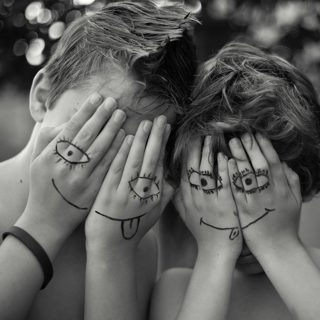
Do you remember the first time you made a good joke? Most likely not. Turns out the first forms of humor emerge super early in infancy, before the first birthday even. We're not talking about stand-up routines here. We're talking about a more basic but no less interesting behavior: teasing. In what's known as "playful teasing," one individual intentionally violates another's expectations for the sake of amusement.

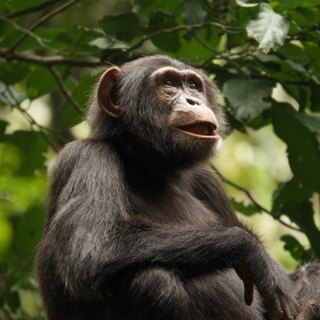
In this week's episode, we're going behind a recent paper that ask whether apes also tease each other playfully—whether they share our early-emerging impulse to prank and razz each other. My guests are Johanna Eckert, a Postdoctoral Researcher at the Max Planck Institute for Evolutionary Anthropology in Leipzig, Germany, and Erica Cartmill, Associate Professor of Anthropology at UCLA. (For those who may not know, Erica is one of the founders and directors of the Diverse Intelligences Summer Institute, the organization behind Many Minds.) In their paper, Johanna, Erica, and their co-author Sasha Winkler review a wealth of observations made over the years that together suggest that apes do indeed have the pranking impulse. They seem to tease each other in many of the ways infants do, in fact.

Here, we talk about some of these fascinating observations and why they deserve a fresh interpretation. We consider what makes teasing such a cognitively rich behavior. We discuss the different functions teasing may serve and talk about how research on primate teasing is part of a bigger zeitgeist of work on positive emotions in non-human animals.

I'm an inveterate teaser myself; I come from a family of teasers. And I'm someone who tends to show affection for people by teasing them. So I was super excited to dive into this topic. Teasing is fascinating on its own, no question. But it becomes that much more so when we realize that it may shed light on the evolutionarty roots of humor and joking. Understanding teasing can, in other words, help us understand the phylogeny of funniness.

But, before we get going, two bits of exciting news. The first is that we have a new website at disi.org. You'll find Many Minds there under the 'Podcast' tab. Check it out. The second bit is that applications for the 2021 Diverse Intelligences Summer Institute are now open! You'll find the link and bunch more info on the new website, under the 'Apply' tab. There are two application tracks, an academic track and a storytelling track. If you like this show—and the kinds of topics we cover—there's a pretty good chance you'd be interested in DISI. So definitely consider applying yourself and please do share with anyone who may be interested.

Alright, friends—now on to my conversation about playful teasing with Dr. Johanna Eckert and Dr. Erica Cartmill! Hope you enjoy this one!

The paper we discuss is here. A transcript of this show is available here.

Notes and links

5:20 – A paper stemming from Dr. Cartmill's dissertation work on gesture in orangutans.

9:45 – Learn more about the work of Professor Vasudevi Reddy here.

12:10 – For more about Koko the Gorilla, who died in 2018, see here and here.

14:15 – Meet the orangutans at the Leipzig Zoo, including Bimbo, here.

16:00 – A recent review article about "theory of mind" in non-human animals.

19:15 – A classic article on tactical deception in primates.

24:00 – Many animals seem to enjoy jumping on the backs of capybaras.

27:20 – A paper on play fighting and its possible functions.

30:00 – A recent review of gesture in non-human primates by Dr. Cartmill and another former guest, Dr. Cat Hobaiter.

41:00 – One example of a recent study using thermal imaging in chimpanzees.

46:45 – The Latke-Hamantash Debate is a (humorous) yearly ritual at the University of Chicago.

Dr. Eckert's end-of-show reading recommendations:

The Psychology of Humor, by Rod Martin and Thomas Ford

Important early work by Otto Adang on teasing in chimpanzees, including here and here

Dr. Cartmill's end-of-show reading recommendations:

Teasing and clowning in infancy, by Vasudevi Reddy and Gina Mireault

Jokes: Philosophical Thoughts on Joking Matters, by Ted Cohen

Many Minds is a project of the Diverse Intelligences Summer Institute (DISI) (https://disi.org), which is made possible by a generous grant from the Templeton World Charity Foundation to UCLA. It is hosted and produced by Kensy Cooperrider, with creative support from DISI Directors Erica Cartmill and Jacob Foster, and Associate Director Hilda Loury. Our artwork is by Ben Oldroyd (https://www.mayhilldesigns.co.uk/). Our transcripts are created by Sarah Dopierala (https://sarahdopierala.wordpress.com/).

You can subscribe to Many Minds on Apple, Stitcher, Spotify, Pocket Casts, Google Play, or wherever you like to listen to podcasts.

We welcome your comments, questions, and suggestions. Feel free to email us at: manymindspodcast@gmail.com.

For updates about the show, visit our NEW website (https://disi.org/manyminds/), or follow us on Twitter: @ManyMindsPod.

Denne episoden er hentet fra en åpen RSS-feed og er ikke publisert av Podme. Den kan derfor inneholde annonser.

Episoder(167)

From the archive: Varieties of childhood

From the archive: Varieties of childhood

Hi friends! We're taking a bit of a summer pause. We'll be back soon—in the meanwhile, enjoy this listener favorite from our archives! ----- [originally aired July 10, 2025] Childhood is a special tim...

31 Jul 1h 28min

From the archive: Philosophers on psychedelics

From the archive: Philosophers on psychedelics

Hi friends! We're taking a bit of a summer pause. We will be back soon—in the meanwhile, enjoy this listener favorite from our archives! ----- [originally aired May 14, 2025] Some call it the "psyched...

17 Jul 1h 40min
The origins of Darwin's ideas

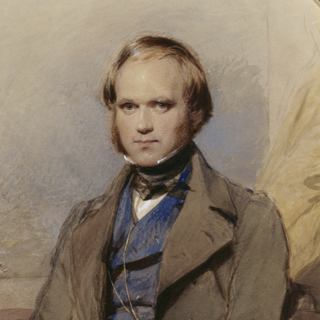
The origins of Darwin's ideas

No discipline, no sphere of intellectual life, has been untouched by the work of Charles Darwin. He died in 1882 but his ideas are very much alive; they're now central to how we understand the natural...

3 Jul 1h 19min

The sparkling deep

The sparkling deep

It's tempting to see bioluminescence as an oddity, one of those rare eccentricities of life on earth. And, on land, maybe that's true. But our planet is mostly water, and out in the open ocean biolumi...

20 Jun 1h 20min

Is Man the Hunter just a myth?

Is Man the Hunter just a myth?

There's a story about of our past that you know well. It goes like this: At some point earlier in human evolution, we started to hunt. Men in particular—perhaps channeling some deep-seated aggressive ...

5 Jun 1h 32min

Babies, dogs, and the riddles of word learning

Babies, dogs, and the riddles of word learning

It's kind of astonishing, really, that kids ever learn words. Each one poses a little riddle. Does this sound string refer to a person? A category of things? Or maybe some other feature of the bloomin...

22 Mai 1h 18min

The inner life of the hand

The inner life of the hand

Newton saw in the human hand proof of the divine; Darwin saw a key to our species' success. Many others, too, have described the hand in hyperbolic terms, as a paragon of design, a cornerstone of huma...

7 Mai 1h 10min

From the archive: The cuttlefish and its coat of many colors

From the archive: The cuttlefish and its coat of many colors

Hi friends! We're skipping a beat to take care of some spring housekeeping tasks. We will be back in May! In the meanwhile, enjoy this listener favorite from our archives! ----- [originally aired Apri...

22 Apr 1h 33min

Populært innen Fakta

fastlegen
dine-penger-pengeradet
relasjonspodden-med-dora-thorhallsdottir-kjersti-idem
foreldreradet
treningspodden
jakt-og-fiskepodden
rss-kunsten-a-leve
rss-strid-de-norske-borgerkrigene
mikkels-paskenotter
hverdagspsyken
sinnsyn
fryktlos
gravid-uke-for-uke
rss-var-forste-kaffe
rss-sarbar-med-lotte-erik
laringsmiljo-i-skole-og-barnehage-uis-podkast
rss-orjasater
rss-impressions-2
kvallm
lrerrommet