Plants, languages, and the loss of medicinal knowledge
Many Minds27 Okt 2021

Plants, languages, and the loss of medicinal knowledge

Our planet is home to an astonishing diversity of plants—close to 400,000 species. Over the millennia, indigenous communities around the world have been studying those plants, experimenting with them, using them as a sort of free-growing pharmacy. Certain species, prepared in certain ways, might be used for digestive ailments; others for the skin, teeth, or liver. But this vast trove of medicinal knowledge is now under threat. Under two threats, really—we're losing plant species and we're losing indigenous languages and cultures.

My guests this week are Dr. Rodrigo Camara-Leret and Dr. Jordi Bascompte, both of the University of Zurich's Department of Evolutionary Biology and Environmental Studies. Rodrigo is a Senior Researcher there, and Jordi is a Full Professor. We discuss their remarkable recent paper titled 'Language extinction triggers the loss of unique medicinal knowledge', published this past summer in the Proceedings of the National Academy of Sciences (PNAS). In the paper, Rodrigo and Jordi analyzed data from three hotspots of biocultural diversity—New Guinea, the Northwest Amazon, and North America. They were trying to better understand the nature of indigenous medicinal knowledge, the threats it is facing, and how we might best protect it.

This is one of those papers that immediately grabbed me. It's deeply, unclassifiably interdisciplinary; it takes on an urgent question with a clever approach; and it tells us something we genuinely didn't already know. As I already said, our global stores of ethnobotanical knowledge are under threat—and from different directions. What Jordi & Rodrigo's work shows is that, in order to protect that knowledge, we need to focus on protecting indigenous languages.

Before we get to it, just wanted to mention that, as it happens, Jordi was just very recently awarded the prestigious Ramon Margalef prize for his groundbreaking contributions to the field of ecology. So it was an extra special honor to have him on this episode.

Alright friends—on to my conversation with Dr. Rodrigo Cámara-Leret and Dr. Jordi Bascompte. Enjoy!

The paper we discuss is available here. A transcript of this episode is available here.

Notes and links

4:45 – The Bascompte lab focuses on the architecture of biodiversity.

9:30 – Dr. Cámara-Leret and Dr. Bascompte have previously worked together on indigenous knowledge networks.

12:00 – The concept of "ecosystem services" is central in ecology.

16:30 – Dr. Cámara-Leret has previously worked on plant biodiversity in New Guinea, as well as on ethnobotany in Northwestern South America.

25:30 – A 2000 paper estimated that only about 6% of the world's plant species have been screen for biological activity.

36:20 – Dr. Bascompte very recently won the 2021 Margalef Award for his contributions to ecology.

End-of-show recommendations:

Dr. Bascompte recommends Perspectives in Ecological Theory, by Ramon Margalef.

Dr. Cámara-Leret recommends Where the Gods Reign, by Richard Evans Schultes, and One River, by Wade Davis.

You can find Dr. Cámara-Leret on Twitter (@R_CamaraLeret) and follow his research at his website. You can follow Dr. Bascompte's work at his lab's website.

Many Minds is a project of the Diverse Intelligences Summer Institute (DISI) (https://disi.org), which is made possible by a generous grant from the Templeton World Charity Foundation to UCLA. It is hosted and produced by Kensy Cooperrider, with help from assistant producer Cecilia Padilla. Creative support is provided by DISI Directors Erica Cartmill and Jacob Foster. Our artwork is by Ben Oldroyd (https://www.mayhilldesigns.co.uk/). Our transcripts are created by Sarah Dopierala (https://sarahdopierala.wordpress.com/).

You can subscribe to Many Minds on Apple, Stitcher, Spotify, Pocket Casts, Google Play, or wherever you like to listen to podcasts.

We welcome your comments, questions, and suggestions. Feel free to email us at: manymindspodcast@gmail.com.

For updates about the show, visit our website (https://disi.org/manyminds/), or follow us on Twitter: @ManyMindsPod.

Denne episoden er hentet fra en åpen RSS-feed og er ikke publisert av Podme. Den kan derfor inneholde annonser.

Episoder(167)

From the archive: Varieties of childhood

From the archive: Varieties of childhood

Hi friends! We're taking a bit of a summer pause. We'll be back soon—in the meanwhile, enjoy this listener favorite from our archives! ----- [originally aired July 10, 2025] Childhood is a special tim...

31 Jul 1h 28min
From the archive: Philosophers on psychedelics

From the archive: Philosophers on psychedelics

Hi friends! We're taking a bit of a summer pause. We will be back soon—in the meanwhile, enjoy this listener favorite from our archives! ----- [originally aired May 14, 2025] Some call it the "psyched...

17 Jul 1h 40min
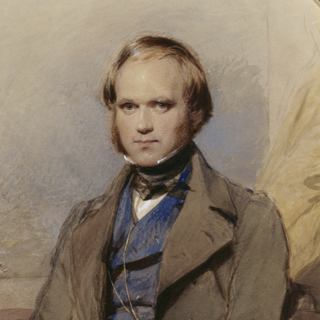
The origins of Darwin's ideas

The origins of Darwin's ideas

No discipline, no sphere of intellectual life, has been untouched by the work of Charles Darwin. He died in 1882 but his ideas are very much alive; they're now central to how we understand the natural...

3 Jul 1h 19min

The sparkling deep

The sparkling deep

It's tempting to see bioluminescence as an oddity, one of those rare eccentricities of life on earth. And, on land, maybe that's true. But our planet is mostly water, and out in the open ocean biolumi...

20 Jun 1h 20min

Is Man the Hunter just a myth?

Is Man the Hunter just a myth?

There's a story about of our past that you know well. It goes like this: At some point earlier in human evolution, we started to hunt. Men in particular—perhaps channeling some deep-seated aggressive ...

5 Jun 1h 32min

Babies, dogs, and the riddles of word learning

Babies, dogs, and the riddles of word learning

It's kind of astonishing, really, that kids ever learn words. Each one poses a little riddle. Does this sound string refer to a person? A category of things? Or maybe some other feature of the bloomin...

22 Mai 1h 18min

The inner life of the hand

The inner life of the hand

Newton saw in the human hand proof of the divine; Darwin saw a key to our species' success. Many others, too, have described the hand in hyperbolic terms, as a paragon of design, a cornerstone of huma...

7 Mai 1h 10min

From the archive: The cuttlefish and its coat of many colors

From the archive: The cuttlefish and its coat of many colors

Hi friends! We're skipping a beat to take care of some spring housekeeping tasks. We will be back in May! In the meanwhile, enjoy this listener favorite from our archives! ----- [originally aired Apri...

22 Apr 1h 33min

Populært innen Fakta

fastlegen
dine-penger-pengeradet
relasjonspodden-med-dora-thorhallsdottir-kjersti-idem
foreldreradet
treningspodden
jakt-og-fiskepodden
rss-kunsten-a-leve
rss-strid-de-norske-borgerkrigene
mikkels-paskenotter
hverdagspsyken
sinnsyn
fryktlos
gravid-uke-for-uke
rss-var-forste-kaffe
rss-sarbar-med-lotte-erik
laringsmiljo-i-skole-og-barnehage-uis-podkast
rss-orjasater
rss-impressions-2
kvallm
lrerrommet