
Universal emotions in fact and fiction
Many Minds2 Apr 2025

Universal emotions in fact and fiction

Are human emotions universal? Or do they vary from one place to the next and from one time period to the next? It's a big question, an old question. And every discipline that's grappled with it brings its own take, its own framings and forms of evidence. Some researchers appeal to cross-cultural experiments; others turn to neuroimaging studies or conceptual analysis. Some even look to fiction.

My guest today is Dr. Bradley Irish, an Associate Professor of English Literature at Arizona State University. Brad is the author of a new book, The Universality of Emotion: Perspectives from the Sciences and Humanities; in it he maps the landscape of debate around this long-contested topic. Brad is also the author of numerous articles and books on the emotions in Shakespeare's plays, as well as in the work of other early modern authors.

Here, Brad and I talk about both sides of his work—his writing as an observer of cross-disciplinary debates about the universality of emotion and his writing as a scholar of literature. We sketch four prominent theories of emotions—basic emotions theory, appraisal theories, psychological construction theories, and social construction theories. We weigh the idea that some emotions are more universal than others. We talk about the role that language might play in our emotional experience. And we consider why many literary scholars tend to be deeply suspicious of claims about human universality. Along the way, Brad and I also touch on: the theory of ur-emotions, the aims of literary analysis; disgust, anger, schadenfreude, anxiety; frogs and public dissections; Shakespeare as a supposedly universal poet; and Brad's latest project on neurodiversity in literature.

If you're enjoying the show, we would be most grateful if you could give us a rating or review, maybe even a shout-out on your social media platform of choice. For those who listen on Spotify, you can also now leave comments on individual episodes—which is a great way to let us know what you think.

Alright friends, on to my conversation with Brad Irish. Enjoy!

A transcript of this episode is available here.

Notes and links

7:00 – For an example of an anti-universalist treatment from a literary scholar, see here. See also Dr. Irish's brief essay on the idea of universality in literary studies.

12:00 – For Dr. Irish's first book—on emotions in the early modern period—see here.

15:00 – For a recent review/update of the "basic emotions theory" tradition, see here.

21:00 – An influential early paper on facial expressions of emotion across cultures. A more recent, critical perspective on the relationship between facial expressions and emotions.

23:00 – For a review of social constructionist approaches to emotion, see here.

24:00 – A recent review of the "appraisal theories" of emotion.

26:00 – Psychological constructionist theories of emotion are most strongly associated with the work of Dr. Lisa Feldman Barrett and colleagues. For an articulation of these views, see here.

33:00 – For more on the relationship between language and emotion, see influential recent studies here, here, and here.

39:00 – The paper introducing the concept of "ur-emotions."

44:00 – Dr. Patrick Colm Hogan's book, What Literature Teaches Us about Emotion.

49:00 – Dr. Irish's book, Shakespeare & Disgust: The History and Science of Early Modern Revulsion.

58:00 – For an influential paper on disgust in general, see here. For more on moral disgust in particular, see here.

1:07:00 – For the idea that disgust evolved to help us avoid disease, see here.

1:15:00 – For more on the idea that fictions can be thought of as simulations of psychology and the social world, see our earlier episode on stories.

1:16:00 – For more about Dr. Irish's latest research project, see his new book, Literary Neurodiversity Studies.

Recommendations

Emotion Theory: The Routledge Comprehensive Guide, edited by Andrea Scarantino

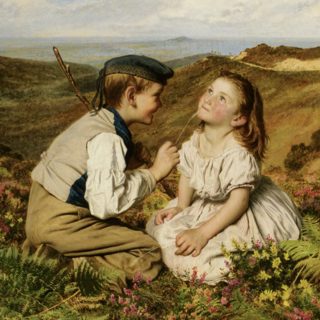
Tile image credit: 'It's Touch and Go to Laugh or No' (1857) by Sophie Gengembre Anderson via Wikipedia

Many Minds is a project of the Diverse Intelligences Summer Institute, which is made possible by a generous grant from the John Templeton Foundation to Indiana University. The show is hosted and produced by Kensy Cooperrider, with help from Assistant Producer Urte Laukaityte and with creative support from DISI Directors Erica Cartmill and Jacob Foster. Our artwork is by Ben Oldroyd. Our transcripts are created by Sarah Dopierala.

Subscribe to Many Minds on Apple, Stitcher, Spotify, Pocket Casts, Google Play, or wherever you listen to podcasts. You can also now subscribe to the Many Minds newsletter here!

We welcome your comments, questions, and suggestions. Feel free to email us at: manymindspodcast@gmail.com.

For updates about the show, visit our website or follow us on Twitter (@ManyMindsPod) or Bluesky (@manymindspod.bsky.social).

Denne episoden er hentet fra en åpen RSS-feed og er ikke publisert av Podme. Den kan derfor inneholde annonser.

Episoder(172)

Island of the tool users

Island of the tool users

Tool use is rare in the animal kingdom—but maybe not as rare as we once thought. Since Jane Goodall famously observed a chimpanzee fishing for termites, many new examples of animals using tools have c...

9 Okt 1h 26min

Cognitive offloading and its consequences

Cognitive offloading and its consequences

For thousands of years—maybe for as long as we've been human—we've offloaded our thinking. We've counted on our fingers. We've carved tallies into bone. We've invented a long series of tools to help u...

25 Sep 1h 15min

Coming of age in Ngogo

Coming of age in Ngogo

It's a familiar story in many ways. A child is born, and for years afterward is adored and indulged and anchored to home and family. But then the child grows up and starts crossing that long threshold...

11 Sep 1h 34min

The natural history of linguistic diversity

The natural history of linguistic diversity

Thousands of languages are used around the world today, and this linguistic diversity is a precious part of our human heritage. But it's also more than that. Linguistic diversity provides clues—a vast...

28 Aug 1h 32min

From the archive: Electric ecology

From the archive: Electric ecology

Hi friends! We're still taking a bit of a summer pause. We'll be back at the end of August—in the meanwhile, enjoy this listener favorite from our archives! ----- [originally aired September 19, 2024]...

17 Aug 1h 33min

From the archive: Varieties of childhood

From the archive: Varieties of childhood

Hi friends! We're taking a bit of a summer pause. We'll be back soon—in the meanwhile, enjoy this listener favorite from our archives! ----- [originally aired July 10, 2025] Childhood is a special tim...

31 Jul 1h 28min

From the archive: Philosophers on psychedelics

From the archive: Philosophers on psychedelics

Hi friends! We're taking a bit of a summer pause. We will be back soon—in the meanwhile, enjoy this listener favorite from our archives! ----- [originally aired May 14, 2025] Some call it the "psyched...

17 Jul 1h 40min

The origins of Darwin's ideas

The origins of Darwin's ideas

No discipline, no sphere of intellectual life, has been untouched by the work of Charles Darwin. He died in 1882 but his ideas are very much alive; they're now central to how we understand the natural...

3 Jul 1h 19min

Populært innen Fakta

fastlegen
dine-penger-pengeradet
fryktlos
rss-kunsten-a-leve
relasjonspodden-med-dora-thorhallsdottir-kjersti-idem
rss-strid
rss-bisarr-historie
treningspodden
foreldreradet
jakt-og-fiskepodden
rss-orjasater
sinnsyn
hverdagspsyken
mikkels-paskenotter
takk-og-lov-med-anine-kierulf
dopet
gravid-uke-for-uke
rss-mind-body-podden
hr-podden-2
rss-var-forste-kaffe

















