
India’s cryptocurrency dilemma

India’s cryptocurrency dilemma

15 million Indians have invested $2 billion in cryptocurrency. Is it a bubble? Or an opportunity? A lot depends on how the regulatory framework takes shape. Please listen to the latest episode of All Indians Matter. An estimated 15 million Indians have invested over $2 billion in cryptocurrency. Depending on who you choose to believe, cryptocurrency is a wealth creation opportunity like no other or a bubble that will put the dotcom meltdown to shame. Regulators, naturally, are faced with a tough ask – how do you allow the frothy, exciting fintech sector to flourish while ensuring investor security and checks against misuse? Cryptocurrency is a digital asset, a form of payment that can be exchanged online for goods and services. Many companies have issued their own currencies, often called tokens, which can be traded for the company’s offerings. Think of them as casino chips – you need to exchange real currency for the cryptocurrency. Cryptocurrencies are based on Blockchain, a decentralized technology spread across many computers that manages and records transactions and is said to be extremely secure. It is what is known as distributed-ledger technology. At this time, more than 6,700 different cryptocurrencies are traded publicly. Bitcoin, perhaps the best-known, is considered a hot investment, rallying 400% over the past year. And it’s not just millennials who’re buying it in India – industry estimates say that since January 2021 people above 45 years of age have been showing a keen interest in it. The crypto universe has been in the news for other reasons recently – Bitcoin went into freefall from $65,000 in April to below the $40,000 mark. And the volatility continues. That puts the focus firmly on regulation of cryptocurrencies. So, are cryptocurrencies legal in India? And what is the government’s stand on them? After vacillating for a long time, the government took the first step towards regulation. The Ministry of Corporate Affairs made it mandatory for companies to disclose crypto trading and investments, which experts see as a positive step. It is aimed at curbing illegal trading and the use of cryptos to conceal black money. Such disclosures will also mean better, more transparent corporate governance. So, while you can trade in cryptocurrencies, India is a long way from having a robust regulatory framework. The government had formed an inter-ministerial committee on November 2, 2017, to study virtual currencies. Its report highlighted the positive aspect of distributed-ledger technology and suggested applications for it in financial services. However, the government wasn’t convinced about cryptocurrencies and proposed a blanket ban on them. Accordingly, in April 2018, the Reserve Bank advised all entities under its jurisdiction to not deal in virtual currencies or provide services to anyone dealing with them. The Finance Ministry too issued a statement saying: “The government does not consider cryptocurrencies as legal tender or coin and will take all measures to eliminate the use of these crypto assets in financing illegitimate activities or as part of the payment system.” In mid-2019, a government committee suggested banning all private cryptocurrencies with a jail term of up to 10 years as well as heavy penalties for those dealing in them. However, the Supreme Court in March 2020 overturned the ban and so cryptos are legal. The current thinking within the industry is that a strict set of regulations will be put into place sometime this year. These currencies are already taxable and the regulations are expected to detail a tax regime specifically applicable to them. All of this comes on the back of the rising popularity of Blockchain in areas such as identity management, smart contracts and supply chain. Cryptocurrency is perhaps the best known use case for Blockchain. The global user base increased by 190% between 2018 and 2020 to 200 million, driving the market capital of cryptocurrency to $2 trillion in April 2021. India has been a global driver of the technology ecosystem, so it should be well placed to seize this opportunity. There is no definitive count of how many Indians deal in cryptocurrencies but, judging from the trading levels, industry estimates peg the number at 15 million. Their holdings are estimated at Rs 15,000 crore and monthly trading volumes at Rs 60,000 crore. What worries the government and observers is the volatility and decentralised nature of cryptocurrency. After all, cryptocurrencies are not issued by a government-controlled centralised authority the way, say, the rupee is minted by the Reserve Bank of India. The industry can help by offering solutions to the concerns. A whitepaper with detailed recommendations was submitted to the government by IndiaTech.org, an internet start-up association. First of all, it recommended, stop treating cryptos as currencies and look upon them as digital assets. By doing this, you take away the uncertainty around it being a currency competing with the rupee. Register Indian crypto exchanges and have foreign direct investment limits – just like we do with banks – and establish checks and balances, the report added. Among these are mandatory KYC of all cryptocurrency holders, notified accounting standards and disclosures through entities like chartered accountants. There are also recommendations on anti-money laundering checks, taxation, traceability, disclosure, trading limits and source disclosure. With the correct regulation, combined with the fast-growing digital economy, India can be home to a Blockchain boom – just as we did with information technology and information technology enabled services. Learn more about your ad choices. Visit megaphone.fm/adchoices

Denne episoden er hentet fra en åpen RSS-feed og er ikke publisert av Podme. Den kan derfor inneholde annonser.

Episoder(441)

Beneath The Silence: Gandhi's Shadow over Today's Storm

Beneath The Silence: Gandhi's Shadow over Today's Storm

This episode dives into Mahatma Gandhi’s powerful legacy, his vision of self-reliant villages, dignity of labour, and harmony through non-violence. As India evolves, his timeless ideals offer a compel...

1 Okt 20251h 56min
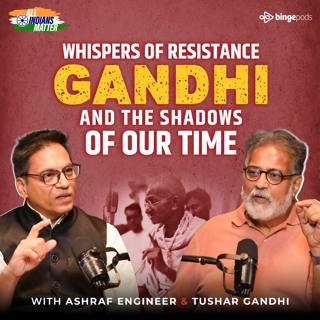
Gandhi: The Question That Remains | Teaser

Gandhi: The Question That Remains | Teaser

This series on the Mahatma delves into the relevance of Gandhi’s ideals in a divided and unequal India. Tushar explores rising religious tensions, caste pride, media trials, and economic disparity ref...

29 Sep 20252min

Why the uptick in CEO exits should concern you

Why the uptick in CEO exits should concern you

There’s a strong uptick in the number of CEO departures in recent times – both in India and abroad. Blame it on geopolitical turbulence, market volatility, massive technological and regulatory changes...

26 Sep 20257min

The government is at war with the Mughals

The government is at war with the Mughals

The revision of school textbooks to erase Mughal influence on Indian history and culture is in keeping with the BJP-RSS effort to rewrite the past to justify its present and the future it wants to cre...

19 Sep 20258min

Gender credit gap holding India, societal evolution back

Gender credit gap holding India, societal evolution back

Study after study shows that women face serious challenges in accessing credit. The wide gender credit gap is holding back our progress — even though women are increasingly taking up entrepreneurship....

12 Sep 20257min

‘Formal schooling structure often fails the underprivileged’

‘Formal schooling structure often fails the underprivileged’

While the Right to Education Act is in place, millions of underprivileged children remain out of school. For those in school, often quality  education is out of reach. Poverty, it is clear, is keeping...

9 Sep 202538min

How Trump’s tariffs are wrecking the US’ economy

How Trump’s tariffs are wrecking the US’ economy

Donald Trump’s unshakeable commitment to tariffs means that it no longer matters how much evidence there is against their effectiveness. He will use them because he believes in them. Never mind that t...

5 Sep 20257min

What are FTAs and how do they help developing countries?

What are FTAs and how do they help developing countries?

The recent India-UK free trade agreement (FTA) put in the spotlight how many countries are using such deals to accelerate growth, access new markets, create jobs and lift people out of poverty. Fewer ...

29 Aug 20259min

Populært innen Politikk og nyheter

giver-og-gjengen-vg
aftenpodden
aftenpodden-usa
fotballpodden-2
forklart
stopp-verden
popradet
lydartikler-fra-aftenposten
det-store-bildet
rss-gukild-johaug
hanna-de-heldige
dine-penger-pengeradet
rss-ness
nokon-ma-ga
aftenbla-bla
rss-espen-lee-usensurert
rss-penger-polser-og-politikk
e24-podden
grasoner-den-nye-kalde-krigen
ukrainapodden