

20VC: Hubspot Co-Founder Brian Halligan on Leadership Lessons Scaling Hubspot to a $28BN Market Cap | The Best Series A Investment in Venture History & What Makes Sequoia so Successful?
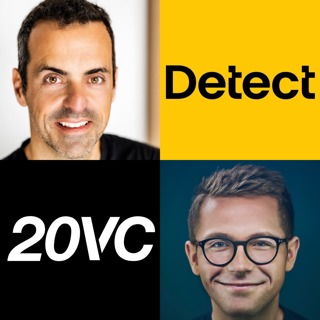
Brian Halligan is the Co-Founder and Executive Chairperson of HubSpot. Brian led the business as CEO for 15 years from Day 1 to a $30BN public company with 7,000 employees. Among Brian numerous achievements, Brian is famed for coining the term "inbound marketing", he is a globally recognised author, he is also an incredible teacher having developed MIT's popular Scaling Entrepreneurial Ventures class. In addition to all of this, he is also the Co-Founder of Propeller Ventures, a $100 million climate tech venture fund, specializing in ocean innovation investments. In Today's Episode with Brian Halligan We Discuss: 1. The Makings of a Generational Defining Entrepreneur: How did the first job as a paperboy lead to the founding of a $30BN company? How does Brian analyse the importance of luck vs skill in success? What is Brian running from? What is he running towards? 2. How to Be the Best Leader from 15 Years as CEO: What are Brian's biggest lessons in leadership from Elon Musk and Jensen Huang? How has Brian's leadership style changed over time? Why is the way leaders prioritise what they do today completely broken? How can leaders use quarterly goals to prioritise most effectively? Does Brian believe people are born CEOs? Are MBAs worth it for CEOs? 3. How to Build the Best Team: What is the #1 failure condition of teams today? Why does Brian believe most of your employees are mercenaries and not missionaries? Is that ok? Why do recovery plans never work? Once lost, can trust in teams be regained? Are people destined for certain stages of company growth? Why does culture always break when teams hit 100 people? 4. The Best Deal in VC History: Why did Hubspot sell 47% of the company to General Catalyst in their Series A? How did Sequoia come to lead their Series D? How much of a needle mover is it for companies and founders to have Sequoia invest? Why did Brian sell secondary to Sequoia in the Series D? Is it the most costly mistake he has made?
15 Jan 20241h 16min

20VC Exclusive: Keith Rabois on Rejoining Khosla Ventures
Keith Rabois is a Managing Director @ Khosla Ventures and one of the most respected venture investors of the last decade. Keith has led investments in Stripe, Faire, Ramp, Affirm and many more. Just last week, Keith announced he would be rejoining Khosla from Founders Fund, where he spent an immensely successful 5 years as a General Partner. Prior to Founders Fund, Keith started his career at Khosla where he spent 6 years and led investments in DoorDash, Opendoor, Webflow and more. In Today's Episode with Keith Rabois We Discuss: 1. The Decision to Rejoin Khosla Ventures: Why did Keith decide to rejoin Khosla Ventures from Founders Fund? What did Keith miss most that Khosla did, that Founders Fund did not? How did Delian take the news? 2. Comparing Two Great Firms: Founders Fund vs Khosla Ventures: Investing Style: How does Keith compare the investing styles when analyzing FF and KV? Price Discipline: Which firm is more price-disciplined? Does price discipline even matter? What are the single biggest mistakes Keith has made on price? How did it change how he invests? Founder Type: What sort of founder would choose KV? What founder would choose FF? How did the depth & quality of investment decision-making compare between KV and FF? 3. What It Takes To Win in Venture in 2024: Liquidity: What have been Keith's biggest lessons on when is the right time to sell positions? Capital Planning: What have been Keith's biggest lessons on the most effective use of reserves? Why does Keith believe if you do not lose some deals as an investor, you are not competing for the right companies? Khosla Ventures recently raised $3BN. How important is the ability to support companies across their lifetime in 2024 vs stage specific? 4. Where is The Best Place to Invest: Why does Keith think seed is the best place to be investing today? Why despite the better risk/reward profile, does Keith think Series A is not the best place to invest? Does Keith believe we will see the return of growth investing in 2024? What does Keith predict for the M&A market in 2024? Did Figma kill all activity? When will the IPO windows open again? Why would Stripe go out this year? 5. Keith Rabois: AMA: Why did Keith not want to start his own fund? Will he ever? What have been Keith's biggest lessons from working with Vinod Khosla and Peter Thiel? What were Keith's biggest lessons from Roelof Botha on what it takes to be an effective board member? How does Keith think about bitcoin in 2024?
12 Jan 20241h 6min

20VC: Did Figma Kill M&A Markets in 2024, The Three Biggest Mistakes Made in Growth Investing, The Three Requirements Companies Need to Go Public in 2024 with Ed Sim and Jamin Ball
Jamin Ball is a Partner @ Altimeter Capital where he sits on the board of Airbyte, Clickhouse, dbt Labs, Prisma, Tabular. Jamin has also led investments in Deel, MotherDuck, Personio and Starburst. Prior to Altimeter, Jamin spent 5 years at Redpoint where he led investments in Workato, Monte Carlo, Cityblock Health, Root Insurance. Ed Sim is one of the best seed round investors in venture as the Founder and Managing Partner @ Boldstart, Ed focuses specifically on developer, infra and SaaS at pre-seed and seed round. Over the last decade, Ed has backed some of the best including Snyk, BigID, Kustomer, Front and Superhuman. In Today's Episode We Discuss: 1. How to Invest Successfully in 2024: What are the three biggest mistakes growth investors can make in 2024? Why should founders not start a platform company? What were Jamin and Ed's biggest mistakes from the ZIRP era? How does Jamin justify paying an $8BN price for Hopin? What were his lessons? 2. The M&A Markets in 2024: Did Figma kill the M&A markets for 2024? What should we expect in M&A? Why will private companies buying private companies be a massive segment in 2024? What are Ed and Jamin's biggest tips to founders considering selling their company in 2024? 3. When Will IPOs Come Back: What will be the catalyst to the opening of the IPO markets? Will Stripe and Databricks go public in 2024? What others should we expect? What are the three requirements for a company to go public in 2024? 4. Firesales: Investors Need Cashback: Why does Ed believe now is the time in the cycle where late-stage investors want cash back to distribute back to their LPs or to recycle? What should we expect to see in terms of acqui-hires and firesales? What are the different incentives when comparing founders vs early stage VCs vs late stage VCs when it comes to acquisitions?
10 Jan 20241h 6min

20VC Crypto Roundtable: How Will US Elections Impact Crypto? Why Will Trump Lean Into Crypto in 2024? Should FTX Investors Have Known About SBF? Will Opensea Ever Be Worth $13BN Again? Will NFTs Come Back with Kyle Samani and Nick Tomaino
Nick Tomaino is the Founder and General Partner @ 1confirmation, one of the leading seed firms fueling the decentralization of the web and society. The fund started with $26M and the firm now has over $1B in assets under management. Nick is famed for being one of the first investors in OpenSea. Kyle Samani is the Co-Founder and Managing Partner @ Multicoin Capital, one of the leading crypto native funds of the last decade with positions in Solana, FTX, Fractal, and Helium to name a few. In Today's Episode We Discuss: 1. Moving Away from a Shitcoin Casino: What will it take for crypto to move away from being shitcoin casino? Why does Nick believe that "crypto has been a free for all and greed got the better of people"? Why does Nick believe that crypto shilling will reduce the amount of violence in the world? 2. FTX: The Biggest Ponzi Scheme in Plain sight: How does Kyle reflect on SBF and FTX today? Should he have known it was a fraud? How did Nick see so far ahead of time that SBF was not genuine? What are the most striking lessons when comparing Coinbase's Superbowl advert to FTX's? 3. Where Politics and Crypto Collide: SBF was one of the largest donors to Biden, what does this say about the rise of "crony capitalism"? What candidates running in the election will be best for crypto? Why will Trump win the election and be the first President to rule from a prison cell? Why is the strategy pursued by Gensler and the SEC so flawed? 4. The Great NFT Comeback, The Crypto IPO Season: What will be the next crypto company to IPO? When? When will NFTs come back? What will cause this? Will Opensea ever be worth $13BN again? What is their future?
8 Jan 202451min

20VC: Predictions for 2024: What Happens to Early Stage VC Funding, Do a Load of Venture Funds Die, What do LPs Do in 2024, Does Figma Kill the M&A Market, Will IPOs Comeback & What Does a Trump Administration do for Startups with Jason Lemkin @ SaaStr
Joining Harry in the hot seat today is Jason Lemkin, Founder @ SaaStr and one of the OG SaaS investors of the last decade. The discussion today is broken into two segments: 2023: A Year in Review: Breakout company Best early-stage fund Best late-stage fund Most surprising event Founder of the Year 2024: Predictions: What is to Come: Does the IPO window open? Do Stripe, Databricks, and more go public? What happens to early-stage venture markets? Does the growth stage come roaring back? What happens to the M&A market? How does Trump change the startup ecosystem? Will a generation of young VCs be washed out the system? Will a ton of venture firms shut down?
4 Jan 20241h 11min

20VC: From a $1.1M Acquisition to $1.4BN in Revenues; The Meteoric Rise of Hoka Running with Deckers CEO, Dave Powers
Dave Powers serves as President and CEO of Deckers Brands, a global footwear and apparel company where he focuses on the company's five high-performing brands: UGG®, Teva®, Sanuk®, HOKA One One® and Koolaburra®. Prior to Deckers, he held executive leadership roles at Converse and Timberland, where he led worldwide retail merchandising, marketing, visual and store design as well as the creation of a sustainable line of footwear and apparel. In Today's Episode with Dave Powers: 1. The Unlikely CEO of a Global Footwear Company: How did Dave make his way into the world of consumer and fashion from the ground up? Why did Dave never think he was the type of person to be a CEO? What does Dave know now that he wishes he had known when he started his career? 2. From $1.1M Acquisition to $1.4BN Revenues: The Hoka Story: Why did Deckers acquire Hoka for $1.1M? What did they see in this, at the time, futuristic running shoe that no one else saw? Was the growth of Hoka linear or were there needle-moving moments that propelled the brand? What did they do so right that led to their success? What would Dave have done differently in the Hoka journey if he had his time again? 3. From $14.7BN Acquisition to Oprah's Favourite: The UGG Journey: How much of a needle mover was it for UGG when Oprah added it to her list of favourite items? Why did UGG go through a tough period? What did they do wrong? What does it take to resurrect a brand? How can they bring UGG back to life and make it cool? 4. From Abercrombie to LVMH: An Analysis of the Industry: How does Dave analyse the rise and fall of Abercrombie and Hollister? Where did it go wrong? What does Dave believe LVMH are the best in the world at? What does he learn from them? How important is it for consumer companies to have a hero product? How can consumer companies scale to mass markets without losing their core audience?
22 Des 202353min

20VC Roundtable: Spotify, Adobe & Linkedin CPOs on How AI Changes The Future of Product, Why AI is Now the Product, How TikTok Changed Product, Why Cost is the Biggest Barrier to LLM Usage & Why Incumbents Can Adopt AI Faster Than Any Prior Innovation Cyc
Gustav Söderström is the Co-President, CPO & CTO at Spotify. Gustav has been instrumental in taking Spotify from a 30-person operation in Sweden when he joined to being the global leader of the space. Scott Belsky is Adobe's Chief Product Officer and Executive Vice President, Creative Cloud. Scott oversees all of product and engineering for Creative Cloud, as well as design for Adobe. Tomer Cohen is the Chief Product Officer @ Linkedin where he is responsible for setting and executing the global product strategy at LinkedIn. In Today's Episode on How AI Changes The Future of Product and Design We Discuss: 1. Why AI Is Now the Product that UI Serves: Why does Gustav believe that AI is now the product? How has the importance of UI changed with the rise of AI? How did TikTok change the product paradigm over the last few years? 2. What Matters More Models or Data: What is more important the size of the model or the amount of data a company has? Will companies use many models at the same time? Why will companies using many models at once create a huge opportunity for startups? Will every company have their own model? What will be the decision-making framework of whether to have your own model or leverage another? How does the rise of AI change how companies approach data acquisition, collection and cleaning? 3. The Workforce Needs to Change with AI: How do product leaders and teams need to change in an AI-first world? What do designers need to do to stay up to date in an AI-first world? What does it mean to be good at prompting? How can people get good at prompting? Why will AI kill companies that charge by the hour? Why will seat pricing die in a world of AI? What will be the business model for AI? 4. Incumbents vs Startups: Who Wins: Do incumbents win in a world of AI or do startups? Why is AI primed for incumbents to win and move fast in a way they could not in prior technology cycles? What are the biggest hurdles and challenges incumbents have to face that startups do not? What are the biggest barriers that startups have to win in a world of AI that incumbents do not have?
20 Des 202350min

20VC: Why Now is the Best Time to Invest in Emerging Managers, Biggest Mistake Emerging Managers Make When Fundraising & Investing Lessons from Investing $1.5BN Per Year and Being Early Investors in Thrive, a16z and Founders Fund with Peter Lacaillade
Peter Lacaillade is a Managing Director @ SCS Financial Services where he leads its private investment program where he oversees the firm's activities in private equity, opportunistic credit and private real assets. Peter has been an early backer of Thrive, Founders Fund, a16z, Greenoaks and 20VC. Before SCS, Peter was an Associate at HarbourVest Partners in its Secondary Group where he analyzed venture capital, growth equity and buyout investments. In Today's Episode with Peter Lacaillade We Discuss: 1. Becoming One of the Great LPs in Venture: How did Peter make his way into the world of fund investing as an LP? What does Peter know now that he wishes he had known when he started as an LP? Why does Peter believe now is the best time to be investing in newer, emerging managers? 2. How to Pick the Best Venture Managers: What are the commonalities in the best VCs Peter has invested in? How important is track record for Peter when evaluating managers? What mistakes has Peter made when it comes to manager selection? What did he learn? How do the best managers build relationships with their LPs? 3. Building a Portfolio That Can 5x: In a venture fund portfolio, what is the distribution between those that outperform, perform as planned and then underperform? How does Peter invest in both large franchises and emerging managers with a barbell approach? How much in established franchises and how much in emerging managers? Are managers actively marking down their portfolios in the last 18 months? Who has been the best at this and who has been the worst? How much should portfolios be marked down? How does Peter evaluate the compression of deployment timelines we saw in the last 18 months? 4. A Breakdown of the LP Landscape: Family Offices: What are the biggest dangers of having family offices as LPs? Why do multi-family offices tend to be better? Endowments: Are they really as stable as people think they are? What separates a good vs great endowment? Who stands out? Fund of Funds: Why does Peter think fund of funds deserve more credit? How should managers think about working with FoFs most effectively? What is the right level of concentration managers should have between these different LP profiles? What are the biggest mistakes emerging managers make when approaching LPs?
18 Des 20231h 2min