Chuck Klosterman on Writing the Past and Relishing the Present

Chuck Klosterman on Writing the Past and Relishing the Present

How do you go about writing a book on an era that is, for many, recent history? When Chuck Klosterman set out to write his new book, The Nineties, he wasn't interested in representing it as a misremembered era or forcing a retrospective view into modern ideology. Rather than finding overlooked signposts that signaled events to come, he says, he wanted to capture what it actually felt like to experience that time – the anxiety and excitement around scientific and technological progress, what it was like to be limited to a few cassette tapes or CDs at a time, the physical media and musical subcultures that would later evaporate with the advent of the internet. Though easier to research than more ancient history, complications arose when he pondered the bifurcation of his audience between those for whom the release of Nevermind is a personal memory and those for whom it's as distant as the moon landing. Would he have to explain to readers what a compact disc is?

Chuck joined Tyler to discuss the challenges of writing about recent history, the "slow cancellation of the future" that began in the aughts, how the internet widened cultural knowledge but removed its depth, why the context of Seinfeld was in some ways more important than its content, what Jurassic Park illustrates about public feelings around scientific progress in the '90s, why the '90s was the last era of physical mass subcultures, why it's uncommon to be shocked by modern music, how his limited access to art when growing up made him a better critic, why Spin Magazine became irrelevant with the advent of online streaming, what made Grantland so special, what he learned from teaching in East Germany, the impact of politics on the legacies of Eric Clapton and Van Morrison, how sports often rewards obnoxious personalities, why Wilt Chamberlain is still underrated, how the self-awareness of the Portland Trail Blazers undermined them, how the design of the NFL makes sports rivalries nearly impossible, how pro-level compensation prevents sports gambling from corrupting players, why so many people are interested in e-sports, the unteachable element of writing, why he didn't make a great editor on his school paper, what he'd say to a room filled with ex-lovers, the question he'd most like to ask his parents, his impressions of cryptocurrency, why he's trying to focus on what he has in the current moment rather than think too much about future plans, the power of charisma, and more.

Check out Ideas of India. Subscribe to Ideas of India on your favorite podcast app.

Read a full transcript enhanced with helpful links.

Recorded January 18th, 2022

Other ways to connect

Denne episoden er hentet fra en åpen RSS-feed og er ikke publisert av Podme. Den kan derfor inneholde annonser.

Episoder(288)

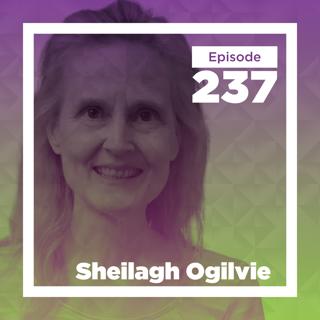
Sheilagh Ogilvie on Epidemics, Guilds, and the Persistence of Bad Institutions

Sheilagh Ogilvie on Epidemics, Guilds, and the Persistence of Bad Institutions

Sheilagh Ogilvie has spent decades examining the institutional structures that shaped European economic history, challenging conventional wisdom about everything from guilds to marriage patterns. In h...

2 Apr 202559min

Ezra Klein on the Abundance Agenda

Ezra Klein on the Abundance Agenda

What happens when a liberal thinker shifts his attention from polarization to economic abundance? Ezra Klein's new book with Derek Thompson, Abundance, argues for an agenda of increased housing, infr...

19 Mar 20251h 8min
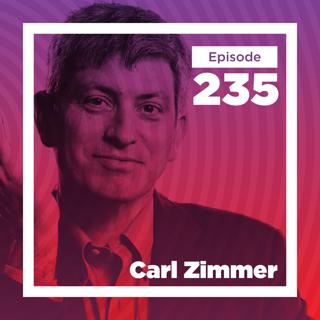
Carl Zimmer on the Hidden Life in the Air We Breathe

Carl Zimmer on the Hidden Life in the Air We Breathe

Carl Zimmer is one of the finest science communicators of our time, having spent decades writing about biology, evolution, and heredity. His latest (and 16th) book, Air-Borne: The Hidden History of t...

5 Mar 202551min

Gregory Clark on Social Mobility, Migration, and Assortative Mating (Live at Mercatus)

Gregory Clark on Social Mobility, Migration, and Assortative Mating (Live at Mercatus)

How much of your life's trajectory was set in motion centuries ago? Gregory Clark has spent decades studying social mobility, and his findings suggest that where you land in society is far more predic...

19 Feb 20251h 23min
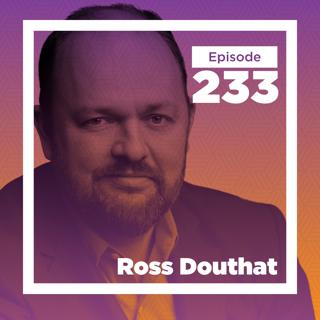
Ross Douthat on Why Religion Makes More Sense Than You Think

Ross Douthat on Why Religion Makes More Sense Than You Think

Sign Up for the Boston Listener Meet Up For Ross Douthat, phenomena like UFO sightings and the simulation hypothesis don't challenge religious belief—they demonstrate how difficult it is to escape rel...

5 Feb 20251h 13min
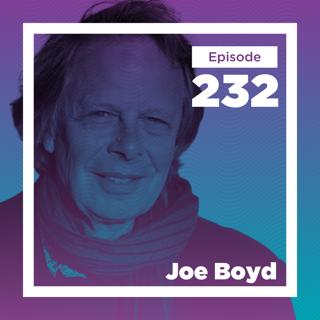
Joe Boyd on the Birth of Rock, World Music, and Being There for Everything

Joe Boyd on the Birth of Rock, World Music, and Being There for Everything

Sign Up for the Boston Listener Meet Up Joe Boyd was there when Dylan went electric, when Pink Floyd was born, and when Paul Simon brought Graceland to the world. But far from being just another music...

22 Jan 20251h
Scott Sumner on Monetary Rules, Blooming Late, and the Death of Cinema

Scott Sumner on Monetary Rules, Blooming Late, and the Death of Cinema

Scott Sumner didn't follow the typical path to economic influence. He nearly lost his teaching job before tenure, did his best research after most academics slow down, and found his largest audience t...

8 Jan 20251h 8min
Conversations with Tyler 2024 Retrospective

Conversations with Tyler 2024 Retrospective

Donate to Conversations with Tyler Give Crypto Other Ways to Give On this special year-in-review episode, Tyler and producer Jeff Holmes look back on the past year in the show and more, including ...

25 Des 202458min

Populært innen Fakta

fastlegen
dine-penger-pengeradet
rss-bisarr-historie
relasjonspodden-med-dora-thorhallsdottir-kjersti-idem
foreldreradet
treningspodden
rss-strid-de-norske-borgerkrigene
rss-kunsten-a-leve
jakt-og-fiskepodden
rss-sunn-okonomi
mikkels-paskenotter
sinnsyn
hverdagspsyken
gravid-uke-for-uke
rss-bak-luftfarten
rss-sarbar-med-lotte-erik
hagespiren-podcast
rss-kull
fryktlos
rss-mind-body-podden