Rachel Anderson and James Franzo - Creating Practice using Kratom and other Botanicals

Rachel Anderson and James Franzo - Creating Practice using Kratom and other Botanicals

In this episode, Joe and Kyle interview Rachel Anderson and James Franzo, founders of the EDELIC Center for Ethnobotanicals. In the show, they talk about the benefits of creating a healing practice using botanicals such as Kratom and the need to decriminalize all plants.

3 Key Points:
  1. EDELIC is a non-profit in Eugene, Oregon that began as a public lending library that has grown to a community of information, events, and conservatory of psychoactive botanicals.
  2. Kratom can sometimes get a bad rep, commonly thought of as an opioid. But Kratom is not an opioid, it just affects the opioid receptors in the brain, respiration never changes, and it's actually in the same category as the coffee family, so it gives a boost of energy.
  3. There is not an economic incentive that puts the botanical research on the same level as synthetic research. At EDELIC, the goal is to create scientific evidence that validates citizen-led research, authentic scientific information, and create a scientifically valid, open science and praxis oriented, non-commodified access pathway, to and from the direct human & botanicals/fungi relationship while protecting the bounty emerging from therein.

Support the show Navigating Psychedelics

Show Notes EDELIC
  • EDELIC is a non-profit in Eugene Oregon that has been operating for 4 years
    • They started as a public lending library
    • They put on a weekly discussion group and host events
    • What started as a library, grew to a conservatory to protect plants, and now includes research
Conservatory
  • They have 15-16 psychoactive species, such as Salvia, Kratom, San-Pedro, etc.
    • Volunteers are able to help out in the garden
  • They are interested in growing the conservatory to have different climates that cater to each individual plant
Events
  • They have done both a CBD event and Kratom event, and have brought the plants from the conservatory
  • The events that they have been holding are based on community desire for more information on those plants
Kratom
  • Kratom has the potential to prevent deaths in the opioid crisis with less initial stigma than ibogaine, psilocybin, etc
  • The symptoms of withdrawal from Kratom are similar to withdrawal from coffee
  • Kratom is a plant and the benefits can be harnessed along with a practice
    • when habits are formed, a person doesn't need to have a dependency on the Kratom
    • Kyle mentions that creating a practice is a foreign concept to some people, they think their healing comes solely from the substance and not the practice
  • The best way to take it is in tea form, and let all the intelligence centers of the body take the medicine in
    • James says he hears news and TED Talks on Kratom tinctures and extracts, and he thinks that leans Kratom toward that abusive behavior again
    • Using it continuously and re-upping on the go makes it less of a practice
    • "In all cases, were encouraging folks to focus on the whole botanical, letting the intelligence of the body to form the relationship with the plant will keep you safer than going in the other direction" - James
  • The goal is to use the Kratom to take away the pain to a point where the individual has more energy and to say, "what can I do to improve my health in this moment?"
    • That may look less like taking 100% of the pain away and taking it away just enough to have the energy to create a practice of healing without the reliance on another substance
  • Its generally safe, it has a predictable response in individuals, and it is legal
  • Kratom is not an opioid, it just effects the opioid receptors in the brain, respiration never changes, and its in the same category as the coffee family, so it gives a boost of energy
  • "Botanicals, integration practice, and realizing our internal intelligence centers can really influence and inform our decision making process" - James
  • Kratom can be tested, and there are industry standards similar to how cannabis is tested
    • Kratom is highly unregulated and you are taking a risk when not testing it for quality
Decriminalize Nature
  • In 1994, the World Trade Organization introduced this piece of legislation that says in US Patent Law, minor scientific alterations to natural botanical plants can be patented
  • Patent law protects scientific adaptations to botanicals, and therefore, the US claimed that third world countries owe us royalties for agricultural products
    • In Canada, they said to patent an indigenous plant is to steal from the third world country, and i n that case, the US owes other countries over 300 million and in pharmaceuticals, billions
    • That is why in the US, there is an urge to make money on synthetic versions of these plants
    • There is not an economic incentive that puts the botanical research on the same level as the synthetic research
  • The WTO does not recognize technology or innovations by farmers, artisans or grassroots innovators that happen in a grassroots setup
  • There are churches that are recognized at the federal level, they cant conduct research, but they have access to provide these plants
  • "We are hoping to create scientific evidence that validates citizen-led research, authentic scientific information, and create a scientifically valid, open science and praxis oriented, non-commodified access pathway, to and from the direct human & botanicals/fungi relationship while protecting the bounty emerging from therein. – James
  • Rachel notes that all funding so far has been from volunteers and donors
  • "I am strongly for decriminalizing nature, it protects the indigenous, it protects nature, there is no reason someone should be criminalized for using plants" - Rachel
  • There is a unique interplay between the laws at the local, state and federal level
Final Thoughts
  • There is a need for people to come together, a need to not feel alone, a need to share
  • If anyone is interested in starting a non-profit, Rachel and James are willing to help
Links

Website

Email: team@ecfes.org

About Rachel Anderson

Rachel's focus is on somatic therapies and the healthy integration of plant practices. She has successfully fund-raised, planned and organized public events, hosted intentional integration practices with ethnobotanicals, created artwork, designed integration journals, met with the 4J school board to discuss drug awareness education in classrooms. Rachel brings power, stability, and genuine strength and determination to ECfES and acts as an original steward for the original ECfES vision.

About James Franzo

A 20-year journey of self-education (using what has now become a large part of the lending library we operate) inspired James to launch ECFES. Additionally, gaining experience working in the field of chemical dependency treatment and social services contributed further to his disenfranchisement with current policy and treatment modalities, and attracted him further to evidence-based approaches to drug policy reform and the mental health field in general. Specifically, potent ethnobotanical plants and mind/body methodologies for integrating them. James is also an honorably discharged military veteran, who served for six years. James has been the website content developer @ ECFES, library archivist, team builder, and steward of the original vision for ECFES, an ethnobotanical/psychedelic/entheogenic healing center under one roof.

Denne episoden er hentet fra en åpen RSS-feed og er ikke publisert av Podme. Den kan derfor inneholde annonser.

Episoder(774)

PT 656 - Travis Tyler Fluck: Denver Mushroom Decriminalization, Mutual Aid, and the Future of Psychedelic Culture

PT 656 - Travis Tyler Fluck: Denver Mushroom Decriminalization, Mutual Aid, and the Future of Psychedelic Culture

Denver mushroom decriminalization changed the national conversation around psilocybin access, personal use, and grassroots psychedelic reform. In this episode of Psychedelics Today, Joe Moore speaks w...

11 Mai 1h 43min
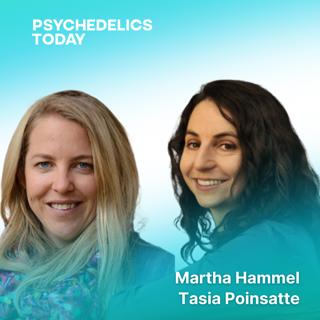
PT 655 - Martha Hammel and Tasia Poinsatte - Aspen Psychedelic Symposium

PT 655 - Martha Hammel and Tasia Poinsatte - Aspen Psychedelic Symposium

Aspen Psychedelic Symposium is the focus of this conversation with Martha Hammel of the Aspen Psychedelic Resource Center and Tasia Poinsatte of Healing Advocacy Fund. They join Joe Moore to discuss t...

8 Mai 54min
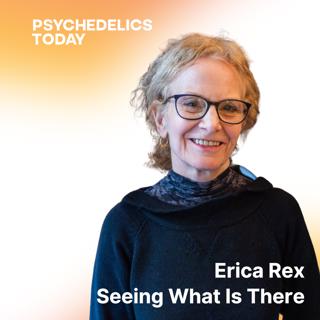
PT 654 - Erica Rex - Seeing What Is There

PT 654 - Erica Rex - Seeing What Is There

Seeing What Is There is at the center of this conversation with journalist and author Erica Rex, who joins Joe Moore to discuss her book Seeing What Is There: My Search for Sanity in the Psychedelic E...

23 Apr 1h 20min

PT 653 - Dr. Michael Alpert and Peter Alberding - ALS, Existential Distress, and Ketamine Therapy

PT 653 - Dr. Michael Alpert and Peter Alberding - ALS, Existential Distress, and Ketamine Therapy

ALS and ketamine therapy are at the center of this conversation with psychiatrist Dr. Michael Alpert and Peter Alberding, who was diagnosed with ALS in late 2023. Alpert is a Boston-area psychiatrist ...

16 Apr 1h 19min

PT 652 - Esme Dark - Psychedelics, Somatics and the Shadow

PT 652 - Esme Dark - Psychedelics, Somatics and the Shadow

Dr. Esme Dark joins Kyle Buller for a conversation on psychedelic therapy, somatic psychotherapy, and shadow work. Based in Australia, Dark is a clinical psychologist, somatic psychotherapist, and psy...

25 Mar 1h 14min

PT 651 - Betty Aldworth & Ismail Ali: MAPS Co-Executive Directors on Leadership, Research, and the Future of Psychedelics

PT 651 - Betty Aldworth & Ismail Ali: MAPS Co-Executive Directors on Leadership, Research, and the Future of Psychedelics

MAPS co-executive directors Betty Aldworth and Ismail Ali join Psychedelics Today to talk about leading one of the most visible organizations in the psychedelic field during a period of transition. Th...

19 Mar 1h 22min

PT 650 - Joe Moore Psychedelics Today on Leadership, Integration, and the Psychedelic Landscape

PT 650 - Joe Moore Psychedelics Today on Leadership, Integration, and the Psychedelic Landscape

Jen Davenport joins Psychedelics Today to interview co-founder Joe Moore about the growth of Psychedelics Today, the broader psychedelic ecosystem, and how professionals are beginning to engage with p...

9 Mar 1h 6min

PT 649 - Melissa Lavasani and Jay Kopelman

PT 649 - Melissa Lavasani and Jay Kopelman

Melissa Lavasani & Jay Kopelman join our podcast to discuss how psychedelic policy is actually moving in Washington, DC. Lavasani leads Psychedelic Medicine Coalition, a DC-based advocacy organization...

19 Feb 1h 10min

Populært innen Vitenskap

fastlegen
tingenes-tilstand
rss-nysgjerrige-norge
forskningno
sinnsyn
rekommandert
liberal-halvtime
villmarksliv
rss-zahid-ali-hjelper-deg
rss-paradigmepodden
jss
tomprat-med-gunnar-tjomlid
fjellsportpodden
kvinnehelsepodden
nordnorsk-historie
tidlose-historier
rss-inn-til-kjernen-med-sunniva-rose
rss-overskuddsliv
nevropodden
rss-rekommandert