Moths in the Winter with Shelby Fulton

Moths in the Winter with Shelby Fulton

Hi, Everyone! In today's episode of the Backyard Ecology podcast we are talking with Shelby Fulton who is a terrestrial biologist with the Kentucky Nature Preserves. Our conversation focuses on moths and how they survive the winter. We also talk about how diverse moths are and ways to observe them during the winter.

The number of different moth species is astonishing. For example, there are over 2,500 different species in Kentucky alone. Many species of moths are extremely small – almost too small to see. Others are much larger and easily identified. How a moth spends the winter is determined by its species. Some species overwinter as eggs, some as caterpillars, some as cocoons, and some as adults.

The most common overwintering strategy is as a cocoon (pupae). There are also quite a few moths that overwinter as adults. Moths that overwinter as adults tend to have fluffy, "furry" abdomens. Some of these species are dormant all winter – basically going into the moth equivalent of hibernation. While others may be active and fly around on warmer winter nights.

In addition to the fluffy, "furry" abdomens, moths that are active on warmer winter nights also tend to have other physiological adaptations to help them stay warm. These adaptations usually include the ability to shiver and warm themselves up enough so they can fly. Some species have internal adaptations that allow the moth's hemolymph (insect blood) to help keep itself warm. Those internal adaptations prevent the heat generated from the moth's shivering behavior from being lost to the outside environment as quickly as it would be lost without those internal adaptations.

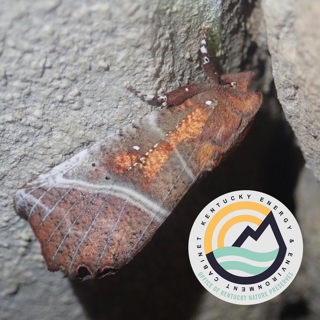
Many of the moths that overwinter as adults are relatively small (dime to nickel sized) and tend to be narrowly triangular and kind of drab colored. But some of them, like the herald (Scoliopteryx libatrix), which is featured in the photograph associated with this episode, are beautiful shades of brown or have intricate dashed patterns.

One of the primary places that moths overwinter, whether as adults, caterpillars, or cocoons, is in the leaf litter. That is one of the reasons why leaving your leaves on the ground and not throwing them away, burning them, or mulching them is so important if you want to provide habitat for moths, or even butterflies.

If you want to try and see some of the species of moths that overwinter as adults in your area, then you can try a sugar bait. There are many different sugar bait recipes, but they all include some form of alcohol, sugar, and fermented fruit. Mix everything up and spread it on a tree on a warm winter night, then check it periodically to see if anyone shows up. Taking pictures of any winter moths that show up and posting them to iNaturalist is a great way to get help identifying the moths. It will also help researchers learn more about what species of moths are active in your area during the winter, because this is yet another relatively understudied area of backyard ecology.

Links:

Photo credit: Shelby Fulton, Office of Kentucky Nature Preserves

Episoder(115)

More than just a forest: Our surprisingly diverse eastern ecosystems

More than just a forest: Our surprisingly diverse eastern ecosystems

Summary The general impression that many people have is that prior to European settlement the whole eastern U.S. was one giant old growth forest. But that wasn't the case. Using an interdisciplinary a...

18 Feb 21min
How to Be Successful with Your Habitat Goals

How to Be Successful with Your Habitat Goals

Summary When it comes to creating habitat, having a written set of goals can be extremely helpful in moving a task from the "I'll get to it someday" category to the "I'm actually going to get this don...

8 Jan 10min
Short's aster: A beautiful late season extravaganza for pollinators

Short's aster: A beautiful late season extravaganza for pollinators

Summary Late blooming native plants are crucial sources of pollen and nectar for pollinators. One of my favorite species that blooms in October, and often into early November, is Short's aster (Symphy...

23 Okt 20257min
The Science Behind "Leave the Leaves"

The Science Behind "Leave the Leaves"

Summary "Leave the leaves" has become an increasingly common mantra each fall. However, until recently little to no scientific research had been done to quantify impacts of leaving your leaves in a ty...

9 Okt 202547min
Black-eyed Susan: A must-have for the pollinator garden

Black-eyed Susan: A must-have for the pollinator garden

Summary Black-eyed Susan (Rudbeckia hirta) is a beautiful native plant that can be found throughout most of the eastern U.S. and makes a great addition to pollinator and native plant gardens. It can g...

25 Sep 20259min
A Bad Naturalist's Journey to Restore a Mountaintop Meadow

A Bad Naturalist's Journey to Restore a Mountaintop Meadow

Summary Paula Whyman shares her journey of trying to restore and manage a remnant prairie located on a Virginia mountaintop. Our conversation touches upon some of the challenges she faced, lessons she...

11 Sep 20251h 22min
Native Plants That Attract Hummingbirds to Eastern U.S. Gardens

Native Plants That Attract Hummingbirds to Eastern U.S. Gardens

Summary Hummingbirds are probably one of the most beloved groups of birds that people want to attract to their yards. In this episode, I share 10 of my favorite native plants for attracting hummingbir...

28 Aug 202513min
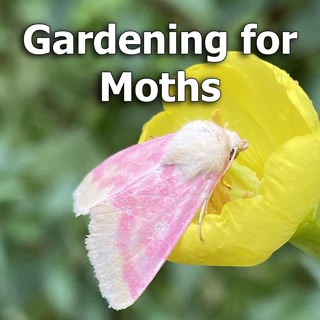
Gardening for Moths: Why It's Important for Backyard Conservation

Gardening for Moths: Why It's Important for Backyard Conservation

Summary In this episode, we focus on the fascinating world of moths and why gardening for moths is so im-portant for any backyard ecologist. We also talk about specific native plants grow to attract m...

7 Aug 20251h 11min

Populært innen Vitenskap

fastlegen
rekommandert
jss
tingenes-tilstand
rss-rekommandert
liberal-halvtime
sinnsyn
forskningno
tomprat-med-gunnar-tjomlid
villmarksliv
rss-nysgjerrige-norge
fjellsportpodden
dekodet-2
kvinnehelsepodden
smart-forklart
rss-paradigmepodden
vett-og-vitenskap-med-gaute-einevoll
nevropodden
tidlose-historier
utenrikshospitalet