Follow-up on the Kerry Patterson interview

Follow-up on the Kerry Patterson interview

Thank you for joining us for this special premium edition of The People and Projects Podcast.

Whether we're trying to change ourselves, our teams, or others around us, there's nothing particularly easy about it. Oh, there are models that are helpful and then there's basic common sense, but when all of this flies into the face of reality, making lasting change is truly challenging.

I don't know if it was obvious or not from my interview with Kerry Patterson but I am very excited about their new book Change Anything. I really like that they have proven through research that willpower isn't the answer. In fact, it's a trap. Instead, there are proven strategies that each of us can customize to help us making changes that last.

In this premium episode, I want to highlight a few of the points from Change Anything that I particularly resonated with and that could help you make lasting change.

First, there's great wisdom in their advice about being both the scientist and the subject. The scientific method is an interestingly relevant approach for us to make change. We have a hypothesis about factors that influence our ability to change or not and we design an approach to test that out. Yet scientists do this fully expecting that the experiments won't work every time. Through experimentation, the approach gets tweaked until the results prove (or disprove) the hypothesis. In our project management classes I share a quote from one of my favorite employees over the years. His line was "The project schedule is the schedule for exactly how the project will not occur!" I love that. It's not an excuse to avoid creating a schedule. It's just an acknowledgement that the schedule won't work exactly as is. That quote is applicable to whatever you want to change. We have a strong default bias—an enormously strong tendency to snap back into what we've always done--the default. Treating our change initiative as a scientist, learning from results and tweaking our approach helps us deal with those days when we're overcome by the default bias. We're the scientist and the subject, and by doing so, we can turn a bad day into good data.

Second, I greatly appreciate their advice to identify our crucial moments. Whether we're trying to stop smoking, start exercising, improve a relationship, or any other habit or situation, we don't have to white knuckle it, so to speak, 24 hours a day. In Change Anything, the authors challenge us to identify our crucial moments--those times when it is most difficult to stay on plan. For me when it comes to eating, it's when there's a bowl full of salty snacks around. I'm doomed if willpower is my only strategy. For some people in the workplace and they tend to procrastinate, their crucial moment can be when they're tempted to check e-mail instead of getting started on an important task. What are your crucial moments? Identify those and you can come up with strategies to be stronger.

Third, I found great value out of their six sources of influence. Get the book to understand them all, but in this premium cast I'm going to highlight a point from their first source: Love What You Hate. Is it possible to love what you hate? If I hate dieting, it is possible to turn that into love? If somebody literally hates their spouse or someone they work with, is it possible to turn that around into a relationship of love or at least admiration? Hmmm.... Well, the authors offer a number of tactics including "Visit your default future." I love this one. We are so short-term minded. We think about now, not 20 years from now. We don't connect the dots that this behavior now, though seemingly inconsequential, could have enormous repercussions down the road. I used to work with a guy who, to be honest, was just a pain to work with. He just wasn't pleasant to work with. He got away with it most of the time because he tended to deliver results but over time he alienated many people and became less effective. Worse yet, when he was finally let go from his company, that very same attitude has made it difficult to get or keep subsequent jobs. In the last 10 years, he's been unemployed as much as he's been employed. He's living the default future of being difficult to work with. Let's say I wanted to start eating better. How bad is it to eat this luscious piece of cake in front of me? In light of today or this week or this year, it's probably no big deal. But if I've been gaining, say, 3 pounds a year, what does my default future look like? Heavy, and that can certainly lead to plenty of other problems. What does your marriage look like or your relationship with your kids look like 10 years from now if you don't change some habits? How about 20 years from now? Visiting our default future in vivid detail can help provide some motivation to change what that destination looks like.

Finally, it's worth being reminded that we are significantly influenced by the people around us. That can be for the good or for the bad. In Change Anything the authors challenge us to consider if people are friends or accomplices. These can be obvious or subtle but the results can be staggering. Let me move this cast toward the recap by challenging to consider who you need to be surrounding yourself with. Who are those people who inspire you, challenge you to be better, build you up in a substantive way as opposed to just flatter you. Who can you learn from as well as pour into? Who makes it more difficult for you to achieve your goals? Find new friends to add and try to turn accomplices into friends. And realize that there may be some accomplices that you'll need to spend less time with.

I strongly recommend you get a copy of Change Anything and take advantage of the insights to make changes this year. I'm publishing this cast halfway through the year and it can be easy for us to allow our default bias to rationalize that we'll work on changes later this year or perhaps next year. Get started now, and please let me know if there's anything I can do to help you.

Thank you for being a premium subscriber to The People and Projects Podcast. Please let me know what questions you have and if there's anything I can do to help you lead and deliver. Thank you for joining me for this premium episode of The People and Projects Podcast! Have a great week!

Total Duration 7:21

Download the premium episode

Denne episoden er hentet fra en åpen RSS-feed og er ikke publisert av Podme. Den kan derfor inneholde annonser.

Episoder(533)

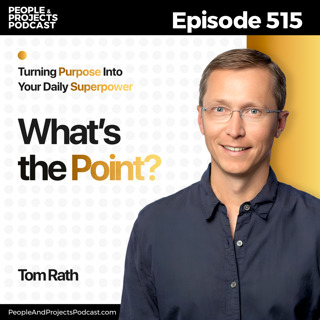
PPP 515 | The Dangerous Drift Away from What Matters Most, with author Tom Rath

PPP 515 | The Dangerous Drift Away from What Matters Most, with author Tom Rath

Summary In this episode, Andy sits down with Tom Rath, one of the most respected researchers on wellbeing and human potential, author of What's the Point? Turning Your Purpose Into a Superpower. Tom a...

14 Jul 48min
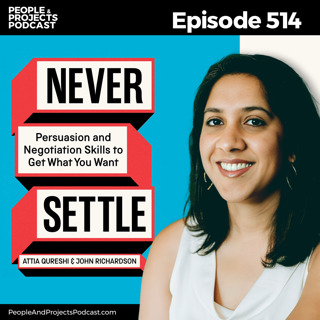
PPP 514 | Never Settling for Less: Why You're Leaving Value on the Table, with Attia Qureshi

PPP 514 | Never Settling for Less: Why You're Leaving Value on the Table, with Attia Qureshi

Summary In this episode, Andy sits down with Attia Qureshi, a coach and negotiation expert who is co-author, with John Richardson, of Never Settle. There's no shortage of great negotiation advice out ...

10 Jul 1h 1min
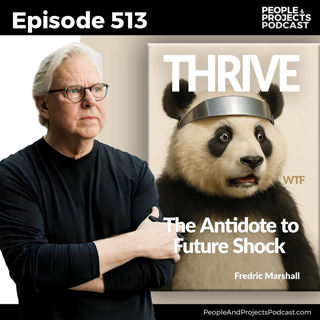
PPP 513 | Thriving in an Age of AI: What Most Leaders Are Getting Wrong About the Future, with Fred Marshall

PPP 513 | Thriving in an Age of AI: What Most Leaders Are Getting Wrong About the Future, with Fred Marshall

Summary In this episode, Andy sits down with Fred Marshall, entrepreneur, founder of Quantum Learning, and author of Thrive: The Antidote to Future Shock. Fred introduces his Super Eight, eight interc...

8 Jul 48min
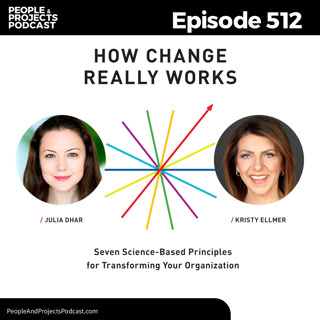
PPP 512 | Science-Based Principles to Lead Change That Sticks, with Julia Dhar and Kristy Ellmer

PPP 512 | Science-Based Principles to Lead Change That Sticks, with Julia Dhar and Kristy Ellmer

29 Jun 1h 3min
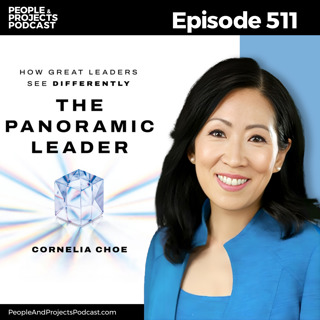
PPP 511 | How Great Leaders See Differently, with Cornelia Choe

PPP 511 | How Great Leaders See Differently, with Cornelia Choe

Summary In this episode, Andy sits down with Cornelia Choe, leadership advisor and founder of global CEO peer groups, author of The Panoramic Leader: How Great Leaders See Differently, co-authored wit...

20 Jun 46min
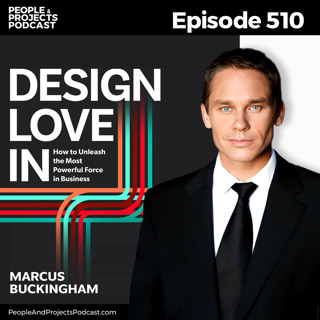
PPP 510 | The Word Great Leaders Keep Using (And Most Leaders Avoid), with Marcus Buckingham

PPP 510 | The Word Great Leaders Keep Using (And Most Leaders Avoid), with Marcus Buckingham

Summary In this episode, Andy welcomes back Marcus Buckingham, bestselling author and researcher, to discuss his new book, Design Love In: How to Unleash the Most Powerful Force in Business. For 25 ye...

19 Mai 1h 8min
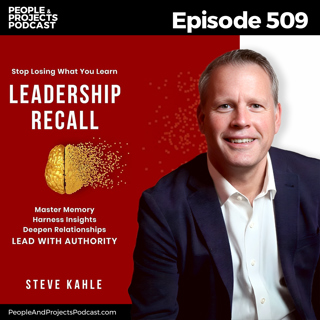
PPP 509 | Stop Letting Great Ideas Slip Away: A System for Leadership Recall, with author Steve Kahle

PPP 509 | Stop Letting Great Ideas Slip Away: A System for Leadership Recall, with author Steve Kahle

Summary In this episode, Andy welcomes back Steve Kahle, entrepreneur, executive, and fractional CIO, author of Leadership Recall: Harness Insights. Accelerate Innovation. LEAD WITH AUTHORITY. Steve f...

13 Mai 39min

PPP 508 | Why Where You Work May Matter More Than How You Work. The Indoor Epidemic, with Dr. John La Puma

PPP 508 | Why Where You Work May Matter More Than How You Work. The Indoor Epidemic, with Dr. John La Puma

Summary In this episode, Andy welcomes Dr. John La Puma, a board-certified internal medicine physician, professionally trained chef, regenerative organic farmer, and two-time New York Times bestsellin...

9 Mai 37min

Populært innen Business og økonomi

stopp-verden
dine-penger-pengeradet
rss-penger-polser-og-politikk
lydartikler-fra-aftenposten
e24-podden
rss-borsmorgen-okonominyhetene
rss-pa-konto
pengepodden-2
tid-er-penger-en-podcast-med-peter-warren
utbytte
morgenkaffen-med-finansavisen
rss-skravla-gar
finansredaksjonen
livet-pa-veien-med-jan-erik-larssen
okonomiamatorene
pengesnakk
lederpodden
liberal-halvtime
rss-impressions-2
rss-kron-podden