Follow-up on the John Baldoni Interview on Leading Up

Follow-up on the John Baldoni Interview on Leading Up

Dee Hock is one of my management heroes. Dee founded VISA years ago and had many insights on how to be an effective leader. If you've sat through one of our leadership workshops, you might be familiar with one of my favorite Dee Hock quotes. Dee says:

"If you look to lead, invest at least 40% of your time managing yourself -- your ethics, character, principles, purpose, motivation, and conduct. Invest at least 30% managing those with authority over you, and 15% managing your peers. Use the remainder to induce those you 'work for' to understand and practice the theory. I use the terms 'work for' advisedly, for if you don't understand that you should be working for your mislabeled 'subordinates,' you haven't understood anything. Lead yourself, lead your superiors, lead your peers, and free your people to do the same. All else is trivia."

There's a lot to chew on in that quote, isn't there? Too often we think managing is about managing down--our so-called subordinates. Dee puts much more focus on managing ourselves and those with authority over us. You and I could argue about whether his percentages are precise, but that's not the point. I take the point as managing ourselves and those in authority over us is a big deal. We need to be intentional about it, and that's why I spent time talking with John Baldoni about the subject.

In this premium episode I want to take time to stress points from the interview with John to help you put the learning into action.

First, do you recall John's distinction between managing up and leading up? To me, it's mostly semantics and I'm going to use the terms synonymously. That said, there's a good point to be made here. Some people interpret managing up as sucking up. It's as if we're kissing butt to just look good to the boss, often in a deceptive or at least selfish way--perhaps at the cost of others not looking as good. We don't manage or lead up just to look good. In fact, sometimes when I do this, I'm managing up precisely because I don't want us all to look bad! I'm concerned that the decision-making process needs additional perspectives or that it would be to our mutual benefit if the boss was influenced a certain way. Where it gets sleazy is when it's about me. Isn't that a good marker, in general? Whether it's regarding conflict or negotiation or influence or giving and receiving constructive feedback or goal setting or just about any area of life: when it becomes all about me, it's a problem. So, as John mentioned, leading up is ultimately about being committed to helping the organization grow and achieve.

Second, a primary skill to develop is learning to read your boss. This is so critical. Some time back I interviewed Dave Po-Chedley about his book on stakeholder relationships. Dave said we need to learn the "buying habits" of our boss. I like that term. How does he or she make decisions? Do they like a lot of detail or not? Do they want a PowerPoint deck or does that make them suspicious--they just want it drawn up on the fly on a whiteboard. Are they an outgoing, gregarious person or more quiet and analytical? Pictures or numbers? Face-to-face or via e-mail. All of these and many more are considerations to take to heart when we're trying to influence up. Becoming a student of your boss is part of Dee Hock's 30% of your time. Pay attention and learn to adjust your style accordingly. Anticipate what they want to see and how they'll likely push back. Learn their buying habits. It will make your job of selling ideas much easier.

Third, I want to remind you about John's three main requirements for you to be successful: competence, credibility, and confidence. Though I'm always surprised when someone occasionally wants to argue this point, competence is not fixed. It can be developed. A hunger to learn is one of the top traits I look for in aspiring leaders. Education and experience combined with a teachable spirit can significantly develop our competence--even helping us become a true expert given enough time. Applying that competence over time can increase our credibility. As I mentioned in the interview, credibility is currency. We have to execute--we can't just talk a good game. Consistently delivering with--as John said it--"shining colors" help us develop credibility that can be banked on. And then there's confidence. Nearly every year I spend time with one or more coaching clients whose issue isn't competence or credibility. Rather, they have a confidence problem. They sell themselves too short. Competence, Credibility, and Confidence are three C's that are worth writing down and being intentional about developing.

Finally, I want to recall your attention to John's leadership advice to Be Seen, Be Heard, and Be There. How visible are you to your boss? I was with a leader last week who was challenged because her boss was in a different state. It's difficult for her to build credibility in his eyes because of the distance. And yet it's important for leaders to be seen, to be visible not only to our boss but to our team and others that we serve. Don't be chained to your desk. Find ways to get face time with your stakeholders. If your boss, team, or key stakeholders are in a different location than you, make sure you are seen. Be intentional about getting time with them. It's critical, as is being heard. Leaders don't necessarily have to be heard in the same way that a drill sergeant communicates. And yet we have to be vocal. Through a variety of communication channels and mediums, we need to take the initiative to have a voice. If speaking up is more difficult for you, remember that this doesn't mean it's only for extroverts. Yet you nonetheless need to have your voice heard--even if it's through e-mail at times. Finally, John says we need to Be There. He mentioned it's a metaphor for taking initiative, for doing everything we can to get things done. Leading by example is not just the name of one of John's book--it's a key part of Being There.

In many ways, the lessons about leading up have applicability for leading out and down. It's not about me--it's about us. It's not about sitting back and waiting--it's about taking the initiative. It's not about having others adjust to me--it's about me adjusting to others.

What's a challenge you're having in managing or leading up? Send me an e-mail at andy@i-leadonline.com. I love hearing from Premium Subscribers.

Hey, the People and Projects Podcast is now on Facebook! I invite you to Like us at http://www.facebook.com/pages/People-and-Projects-Podcast/224005747630357 and join the discussion.

Thank you for being a premium subscriber to The People and Projects Podcast! Please let me know what questions you have and if there's anything I can do to help you lead and deliver. Thank you for joining me for this premium episode of The People and Projects Podcast! Have a great week!

Total Duration 7:27

Download the premium episode

Denne episoden er hentet fra en åpen RSS-feed og er ikke publisert av Podme. Den kan derfor inneholde annonser.

Episoder(533)

PPP 515 | The Dangerous Drift Away from What Matters Most, with author Tom Rath

PPP 515 | The Dangerous Drift Away from What Matters Most, with author Tom Rath

Summary In this episode, Andy sits down with Tom Rath, one of the most respected researchers on wellbeing and human potential, author of What's the Point? Turning Your Purpose Into a Superpower. Tom a...

14 Jul 48min

PPP 514 | Never Settling for Less: Why You're Leaving Value on the Table, with Attia Qureshi

PPP 514 | Never Settling for Less: Why You're Leaving Value on the Table, with Attia Qureshi

Summary In this episode, Andy sits down with Attia Qureshi, a coach and negotiation expert who is co-author, with John Richardson, of Never Settle. There's no shortage of great negotiation advice out ...

10 Jul 1h 1min
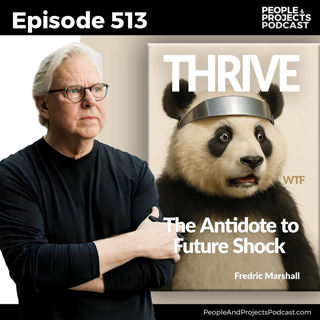
PPP 513 | Thriving in an Age of AI: What Most Leaders Are Getting Wrong About the Future, with Fred Marshall

PPP 513 | Thriving in an Age of AI: What Most Leaders Are Getting Wrong About the Future, with Fred Marshall

Summary In this episode, Andy sits down with Fred Marshall, entrepreneur, founder of Quantum Learning, and author of Thrive: The Antidote to Future Shock. Fred introduces his Super Eight, eight interc...

8 Jul 48min
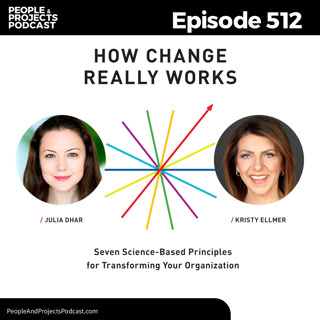
PPP 512 | Science-Based Principles to Lead Change That Sticks, with Julia Dhar and Kristy Ellmer

PPP 512 | Science-Based Principles to Lead Change That Sticks, with Julia Dhar and Kristy Ellmer

29 Jun 1h 3min
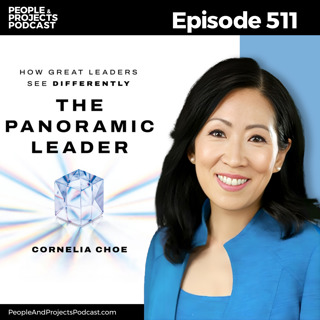
PPP 511 | How Great Leaders See Differently, with Cornelia Choe

PPP 511 | How Great Leaders See Differently, with Cornelia Choe

Summary In this episode, Andy sits down with Cornelia Choe, leadership advisor and founder of global CEO peer groups, author of The Panoramic Leader: How Great Leaders See Differently, co-authored wit...

20 Jun 46min

PPP 510 | The Word Great Leaders Keep Using (And Most Leaders Avoid), with Marcus Buckingham

PPP 510 | The Word Great Leaders Keep Using (And Most Leaders Avoid), with Marcus Buckingham

Summary In this episode, Andy welcomes back Marcus Buckingham, bestselling author and researcher, to discuss his new book, Design Love In: How to Unleash the Most Powerful Force in Business. For 25 ye...

19 Mai 1h 8min
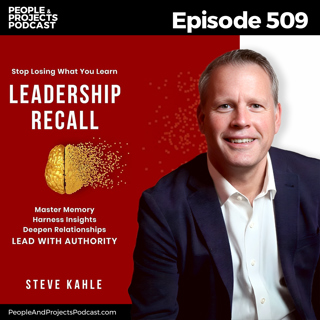
PPP 509 | Stop Letting Great Ideas Slip Away: A System for Leadership Recall, with author Steve Kahle

PPP 509 | Stop Letting Great Ideas Slip Away: A System for Leadership Recall, with author Steve Kahle

Summary In this episode, Andy welcomes back Steve Kahle, entrepreneur, executive, and fractional CIO, author of Leadership Recall: Harness Insights. Accelerate Innovation. LEAD WITH AUTHORITY. Steve f...

13 Mai 39min

PPP 508 | Why Where You Work May Matter More Than How You Work. The Indoor Epidemic, with Dr. John La Puma

PPP 508 | Why Where You Work May Matter More Than How You Work. The Indoor Epidemic, with Dr. John La Puma

Summary In this episode, Andy welcomes Dr. John La Puma, a board-certified internal medicine physician, professionally trained chef, regenerative organic farmer, and two-time New York Times bestsellin...

9 Mai 37min

Populært innen Business og økonomi

stopp-verden
dine-penger-pengeradet
rss-penger-polser-og-politikk
lydartikler-fra-aftenposten
e24-podden
rss-borsmorgen-okonominyhetene
rss-pa-konto
pengepodden-2
tid-er-penger-en-podcast-med-peter-warren
utbytte
morgenkaffen-med-finansavisen
rss-skravla-gar
finansredaksjonen
livet-pa-veien-med-jan-erik-larssen
okonomiamatorene
pengesnakk
lederpodden
liberal-halvtime
rss-impressions-2
rss-kron-podden