PPP 061.1 | Premium: Follow-up on the Michael Roberto interview on Filters

PPP 061.1 | Premium: Follow-up on the Michael Roberto interview on Filters

Total Duration 7:11

Download the premium episode

(NOTE: This Premium Episode is being included in our free podcast stream this week. It gives you a sense of the extra coaching that is available each episode for our premium subscribers. Learn more about becoming a Premium Subscriber at http://bit.ly/PremiumSubscribe).

There are many things I love about hosting this podcast. One of them is the opportunity to interact with the experts we interview. You probably notice that I normally include some behind the scenes cuts at the end of interviews to try and give a sense of who these people are. Most are very gracious. There's something about Michael Roberto that truly stands out though. He has great energy, a quick wit, and is everything I would have wanted in a college business professor.

In this premium episode I want to highlight some points from the interview with Michael to help you put the learning into action.

First, filtering isn't bad, right? We need it for efficiency. People say we need to over-communicate but, to an extreme, that can be a bad idea! If you listened to my interview with Cathy Davidson or read her book Now You See It, it's clear that we are wired up to put our attention on that which requires it. We would literally go nuts if we tried to take it all in. So filtering of information can be the equivalent of a corporate attention window: what is it that is most important. Let's focus on that.

So let me ask you: how do you filter for efficiency? What do you do to make sure the most important information gets to you? From a learning perspective, I focus on a relatively small number of blogs and podcasts. I find those give me regular doses of learning without trying to read everything or attend every learning opportunity. For example, I get great value out of HBR's blog. I use CIO Magazine's "What Are You Reading" section as a starting place for new and interesting books and authors to consider as guests. I use a number of Google's filtering capabilities to give me just the news I'm most interested in. I try to surround myself with diversely interesting people who help keep me informed of their viewpoint. If you are feeling overwhelmed, you might want to think about your filtering systems today.

But secondly, of course, filtering isn't always done for efficiency. And it isn't always done intentionally or for our good. As Michael says, we might by our actions and words unwittingly put pressure on those on our teams to conform to our way of thinking. We have to be careful for how we advocate for certain decisions or positions because our advocacy could cause some who know better to keep their mouths shut--to not speak up because they'll think you are not open to a contrary point of view. A key characteristic of your team must be that every member knows that if they have information or insights that can help you, they can bring it to you without fear of rejection or judgment. That doesn't mean that you will always agree with them or follow their advice. I read a case study from Michael years ago that, in effect, said that people can usually put up with decisions that you make as long as they had a fair say in the process. As long as they're heard, they can better accept what you decide. But if you explicitly or subtly make it clear that you're not open to their point of view, not to mention even giving them the opportunity, you risk making a poorly informed decision that can often surface compliance at best instead of commitment from your teams. Be careful how you may be pressuring people to conform.

Third, make sure you're aware of the power and dangers of advocacy. This filter says that the information is presented in such a way as to advocate for a certain position. Information that might not reinforce the position is held back. Whether from politicians, your senior management, advertisers, a supplier, or someone on your team, keep your eyes wide open for not just what is presented but also for what is not being presented. I've learned to deal with this by asking questions, digging into the data that is presented, and watching for influence techniques such social proof. It's not that I don't trust people when they're making a pitch. But whether it's a resume, a request for something to buy, or an argument for why we should take action, there's almost always some advocacy going on. Make sure you look for dissenting or alternative points of view.

Fourth, remember that sometimes it's the other person advocating. Other times it's you and me only taking in the data we want. Confirmation bias is an easy trap to fall into. Make sure to not fall in love with an approach or decision because it is ours. Cathy Davidson's collaboration by difference is her solution to this, which basically recommends we surround ourselves with diverse points of view that are intentionally looking at different aspects of what's going on. Confirmation bias can be deadly to decision-making. Beware.

Fifth, and to many of the previous points, remember Michael's suggestion about getting out to the periphery. One way to help know what's important is to get out of your office and spend time with customers, or people in remote offices, or with stakeholders. I interviewed Todd Williams earlier this summer about rescuing problem projects. You may recall his advice that, with troubled projects, your team knows the answers. They know how to help you but you need to spend time with them. Extended time. Michael Roberto is obviously a big Churchill fan and his story about Churchill going out and spending time with the frontlines provided helpful insight that had less filtering through the ranks. Of course you have to be careful to not undermine your direct reports or senior management, but getting to the edges or periphery, spending time with those who don't normally have a voice, such as the younger people as Michael talked about. In my interview with Dev Patniak regarding his book Wired to Care, he basically said we don't have to be innovative if we have an intense understanding of our customers--what he refers to as empathy. Stop trying to live off your own wisdom and insights. Get to the edges and you'll get fresh insights.

Finally, remember Michael's suggestion about talking to the Non's. That means spending some time with people who aren't currently using the services or your team or company but potentially could. Or maybe they're not fans of you or your team or your project. Why is that? Don't write them off. Insights from the Non's could just help you turn them.

I trust it's obvious that I really like Michael's book Know What You Don't Know: How Great Leaders Prevent Problems Before They Happen. Get a copy and enjoy it--it's a great read.

You can learn more about Michael and read his blog by visiting http://michael-roberto.blogspot.com/.

Hey, take a minute to stop by our podcast Facebook page! I invite you to Like it and the join the discussion.

Thank you for being a premium subscriber to The People and Projects Podcast. Please let me know what questions you have and if there's anything I can do to help you lead and deliver. Thank you for joining me for this premium episode of The People and Projects Podcast! Have a great week!

Denne episoden er hentet fra en åpen RSS-feed og er ikke publisert av Podme. Den kan derfor inneholde annonser.

Episoder(533)

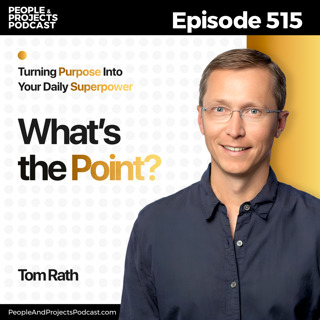
PPP 515 | The Dangerous Drift Away from What Matters Most, with author Tom Rath

PPP 515 | The Dangerous Drift Away from What Matters Most, with author Tom Rath

Summary In this episode, Andy sits down with Tom Rath, one of the most respected researchers on wellbeing and human potential, author of What's the Point? Turning Your Purpose Into a Superpower. Tom a...

14 Jul 48min
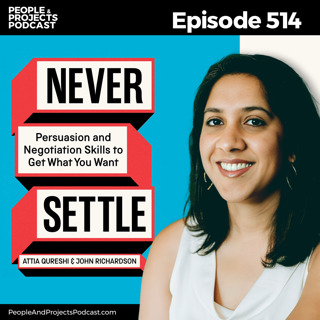
PPP 514 | Never Settling for Less: Why You're Leaving Value on the Table, with Attia Qureshi

PPP 514 | Never Settling for Less: Why You're Leaving Value on the Table, with Attia Qureshi

Summary In this episode, Andy sits down with Attia Qureshi, a coach and negotiation expert who is co-author, with John Richardson, of Never Settle. There's no shortage of great negotiation advice out ...

10 Jul 1h 1min
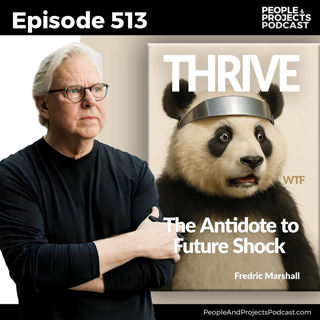
PPP 513 | Thriving in an Age of AI: What Most Leaders Are Getting Wrong About the Future, with Fred Marshall

PPP 513 | Thriving in an Age of AI: What Most Leaders Are Getting Wrong About the Future, with Fred Marshall

Summary In this episode, Andy sits down with Fred Marshall, entrepreneur, founder of Quantum Learning, and author of Thrive: The Antidote to Future Shock. Fred introduces his Super Eight, eight interc...

8 Jul 48min
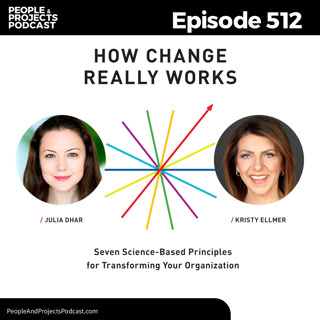
PPP 512 | Science-Based Principles to Lead Change That Sticks, with Julia Dhar and Kristy Ellmer

PPP 512 | Science-Based Principles to Lead Change That Sticks, with Julia Dhar and Kristy Ellmer

29 Jun 1h 3min
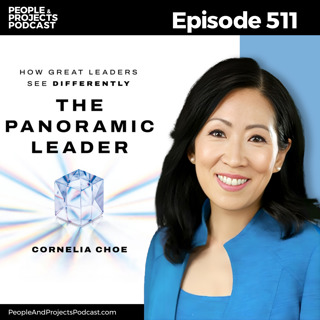
PPP 511 | How Great Leaders See Differently, with Cornelia Choe

PPP 511 | How Great Leaders See Differently, with Cornelia Choe

Summary In this episode, Andy sits down with Cornelia Choe, leadership advisor and founder of global CEO peer groups, author of The Panoramic Leader: How Great Leaders See Differently, co-authored wit...

20 Jun 46min
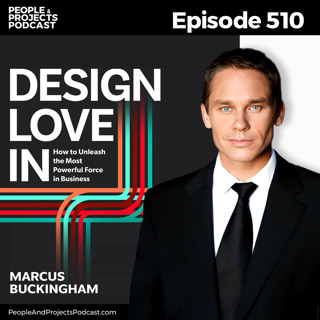
PPP 510 | The Word Great Leaders Keep Using (And Most Leaders Avoid), with Marcus Buckingham

PPP 510 | The Word Great Leaders Keep Using (And Most Leaders Avoid), with Marcus Buckingham

Summary In this episode, Andy welcomes back Marcus Buckingham, bestselling author and researcher, to discuss his new book, Design Love In: How to Unleash the Most Powerful Force in Business. For 25 ye...

19 Mai 1h 8min
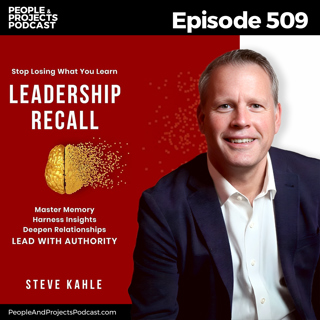
PPP 509 | Stop Letting Great Ideas Slip Away: A System for Leadership Recall, with author Steve Kahle

PPP 509 | Stop Letting Great Ideas Slip Away: A System for Leadership Recall, with author Steve Kahle

Summary In this episode, Andy welcomes back Steve Kahle, entrepreneur, executive, and fractional CIO, author of Leadership Recall: Harness Insights. Accelerate Innovation. LEAD WITH AUTHORITY. Steve f...

13 Mai 39min

PPP 508 | Why Where You Work May Matter More Than How You Work. The Indoor Epidemic, with Dr. John La Puma

PPP 508 | Why Where You Work May Matter More Than How You Work. The Indoor Epidemic, with Dr. John La Puma

Summary In this episode, Andy welcomes Dr. John La Puma, a board-certified internal medicine physician, professionally trained chef, regenerative organic farmer, and two-time New York Times bestsellin...

9 Mai 37min

Populært innen Business og økonomi

stopp-verden
dine-penger-pengeradet
rss-penger-polser-og-politikk
lydartikler-fra-aftenposten
e24-podden
rss-borsmorgen-okonominyhetene
rss-pa-konto
pengepodden-2
tid-er-penger-en-podcast-med-peter-warren
utbytte
morgenkaffen-med-finansavisen
rss-skravla-gar
finansredaksjonen
livet-pa-veien-med-jan-erik-larssen
okonomiamatorene
pengesnakk
lederpodden
liberal-halvtime
rss-impressions-2
rss-kron-podden