
The age of social AI
Many Minds8 Okt 2025

The age of social AI

AI therapists and caregivers. Digital tutors and advisors and friends. Artificial lovers. Griefbots trained to imitate dead loved ones. Welcome, to the bustling world of AI-powered chatbots. This was once the stuff of science fiction, but it's becoming just the stuff of everyday life. What will these systems do to our society, to our relationships, to our social skills and motivations? Are these bots destined to leave us hollowed out, socially stunted, screen-addicted, and wary of good-old-fashioned, in-the-flesh human interaction? Or could they actually be harnessed for good?

My guest today is Dr. Henry Shevlin. Henry is a philosopher and AI ethicist at the Leverhulme Centre for the Future of Intelligence (CFI) at Cambridge University. In a series of recent papers, Henry has been exploring this brave new world of "social AI" and its philosophical, ethical, and psychological dimensions.

Here, Henry and I sketch the current landscape of social AI—from dedicated platforms like Replika and CharacterAI to the more subtly social uses of ChatGPT and Claude. We consider several tragic cases that have recently rocketed these kinds of services into public awareness. We talk about what's changed about AI systems—quite recently—that's now made them capable of sustained relationships. We linger on the possible risks of social AI and, perhaps less obviously, on the possible benefits. And we consider the prospects for regulation. Along the way, Henry and I also talk about his 81-year-old father, his teenage self, and, of course, the kids these days; we consider whether social AI, in its potential harms, is more like social media or more like violent video games; we talk about "deskilling" and it's opposite "upskilling"; and we of course take stock of a certain elephant in the room.

Alright friends, this is a fun one. We've been wanting to explore this dawning age of social AI for some time. And we finally found, in Henry, the right person to do it with. Enjoy!

Notes

3:00 – The piece in The Guardian—'It's time to prepare for AI personhood'—by Jacy Reece Anthis.

5:00 – The Replika subreddit.

9:30 – News coverage of recent research on the bedside manner of AI systems.

10:30 – For a recent paper on AI by the philosopher Ophelia Deroy, see here.

11:30 – For some of Dr. Shevlin's recent writing about "social AI", see here and here.

13:30 – OpenAI's recent report, 'How People Use ChatGPT'.

16:30 – For examples of popular media coverage of recent (tragic) cases involving chatbots, see here, here, here, and here.

21:00 – The paper by Rose Guingrich and Michael Graziano on how users describe their relationships with chatbots.

24:00 – The precise quote by Mark Twain is: "Nothing so needs reforming as other people's habits."

25:30 – The classic paper on Mary's room by Frank Jackson.

27:00 – Dr. Shevlin has also worked on questions about animal minds (e.g., here), as well as a number of issues in AI beyond "social AI" (e.g., here, here).

30:00 – The classic essay by Isaiah Berlin on hedgehogs and foxes.

32:00 – The classic paper on ELIZA, introduced by Joseph Weizenbaum in 1966. A version of ELIZA that you can interact with. For work by Sherry Turkle, see here.

34:00 – Dr. Shevlin's recent paper about the "anthropomimetic turn" in contemporary AI.

41:00 – For recent work on whether current chatbots pass a version of the Turing test, see here.

45:00 – Ted Chiang's story, 'The Lifecycle of Software Objects,' was re-published as part his collection of short fiction, Exhalation.

46:00 – For Dr. Shevlin's recent writing on machine consciousness, see here.

48:00 – For more on the possibility of consciousness in borderline cases (like AI systems), see our past episodes here and here.

52:00 – The study on whether people attribute consciousness to LLMs.

54:30 – A recent paper on griefbots by scholars at the University of Cambridge. A popular article about the phenomenon.

55:30 – A blogpost describing the so-called DigiDan experiment.

1:00:00 – Some of the potentially positive social qualities of AIs are discussed in this essay by Paul Bloom.

1:19:30 – For more on Iain Banks' culture series, see here.

1:20:30 – A popular article on the phenomenon of hikikomori.

Recommendations

The Oxford Intersections: AI in Society collection

The new podcast, Our Lives with Bots

Tile image credit: Image by Nick Fancher via Unsplash

Many Minds is a project of the Diverse Intelligences Summer Institute, which is made possible by a generous grant from the John Templeton Foundation to Indiana University. The show is hosted and produced by Kensy Cooperrider, with help from Assistant Producer Urte Laukaityte and with creative support from DISI Directors Erica Cartmill and Jacob Foster. Our artwork is by Ben Oldroyd.

Subscribe to Many Minds on Apple, Stitcher, Spotify, Pocket Casts, Google Play, or wherever you listen to podcasts. You can also now subscribe to the Many Minds newsletter here!

We welcome your comments, questions, and suggestions. Feel free to email us at: manymindspodcast@gmail.com.

For updates about the show, visit our website or follow us on Bluesky (@manymindspod.bsky.social).

Denne episoden er hentet fra en åpen RSS-feed og er ikke publisert av Podme. Den kan derfor inneholde annonser.

Episoder(167)

From the archive: Varieties of childhood

From the archive: Varieties of childhood

Hi friends! We're taking a bit of a summer pause. We'll be back soon—in the meanwhile, enjoy this listener favorite from our archives! ----- [originally aired July 10, 2025] Childhood is a special tim...

31 Jul 1h 28min

From the archive: Philosophers on psychedelics

From the archive: Philosophers on psychedelics

Hi friends! We're taking a bit of a summer pause. We will be back soon—in the meanwhile, enjoy this listener favorite from our archives! ----- [originally aired May 14, 2025] Some call it the "psyched...

17 Jul 1h 40min
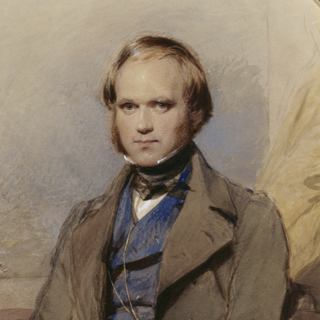
The origins of Darwin's ideas

The origins of Darwin's ideas

No discipline, no sphere of intellectual life, has been untouched by the work of Charles Darwin. He died in 1882 but his ideas are very much alive; they're now central to how we understand the natural...

3 Jul 1h 19min

The sparkling deep

The sparkling deep

It's tempting to see bioluminescence as an oddity, one of those rare eccentricities of life on earth. And, on land, maybe that's true. But our planet is mostly water, and out in the open ocean biolumi...

20 Jun 1h 20min

Is Man the Hunter just a myth?

Is Man the Hunter just a myth?

There's a story about of our past that you know well. It goes like this: At some point earlier in human evolution, we started to hunt. Men in particular—perhaps channeling some deep-seated aggressive ...

5 Jun 1h 32min

Babies, dogs, and the riddles of word learning

Babies, dogs, and the riddles of word learning

It's kind of astonishing, really, that kids ever learn words. Each one poses a little riddle. Does this sound string refer to a person? A category of things? Or maybe some other feature of the bloomin...

22 Mai 1h 18min

The inner life of the hand

The inner life of the hand

Newton saw in the human hand proof of the divine; Darwin saw a key to our species' success. Many others, too, have described the hand in hyperbolic terms, as a paragon of design, a cornerstone of huma...

7 Mai 1h 10min

From the archive: The cuttlefish and its coat of many colors

From the archive: The cuttlefish and its coat of many colors

Hi friends! We're skipping a beat to take care of some spring housekeeping tasks. We will be back in May! In the meanwhile, enjoy this listener favorite from our archives! ----- [originally aired Apri...

22 Apr 1h 33min

Populært innen Fakta

fastlegen
dine-penger-pengeradet
relasjonspodden-med-dora-thorhallsdottir-kjersti-idem
foreldreradet
treningspodden
jakt-og-fiskepodden
rss-kunsten-a-leve
rss-strid-de-norske-borgerkrigene
mikkels-paskenotter
hverdagspsyken
sinnsyn
fryktlos
gravid-uke-for-uke
rss-var-forste-kaffe
rss-sarbar-med-lotte-erik
laringsmiljo-i-skole-og-barnehage-uis-podkast
rss-orjasater
rss-impressions-2
kvallm
lrerrommet