Australia's inspiring 'humpback comeback' and why krill need protection

Australia's inspiring 'humpback comeback' and why krill need protection

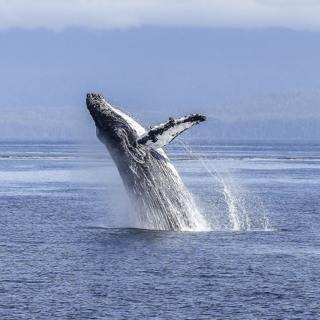
News of Australia's "humpback comeback" is making waves globally. Numbers of humpback whales (Megaptera novaeangliae) on the nation's east coast have rebounded to an estimated 50,000 from a historic low of just a few hundred before commercial whaling was outlawed in the 1970s. And wildlife scientist and whale expert Vanessa Pirotta joins the podcast to discuss this inspiring conservation achievement.

Pirotta emphasizes this is a good news story that deserves to be celebrated, and that it could also bolster action for other whale species that are struggling, including the southern right whale (Eubalaena australis) and blue whale (Balaenoptera musculus). However, she stresses that vigilant protection for all whale species remains necessary.

This good news is tempered by the fact that the key food source for humpbacks in this part of the world is Antarctic krill (Euphausia superba), which is now being heavily harvested by industrial fishing fleets after protections for the species recently lapsed. Pirotta notes that krill are a keystone species for both humpbacks and a much broader array of marine life, including penguins and seals.

Pirotta also discusses her cetacean health research based on the collection of "whale snot" (see Mongabay's explainer video about this method, which involves the use of drones, here) and whale monitoring work conducted with Indigenous conservation group Gamay Bay Rangers. Listeners can learn more about her work at vanessapirotta.com and find her book, Humpback Highway, here.

Find the Mongabay Newscast wherever you listen to podcasts, from Apple to Spotify. All past episodes are also listed here at the Mongabay website.

Image credit: A humpback whale. Image by ArtTower via Pixabay (Public domain).

-----
Timecodes

(00:00) The 'humpback comeback'

(14:50) Why krill need protection

(19:29) The Gamay Rangers sharing Indigenous knowledge

(28:05) Antarctica and whale snot

(32:12) Migaloo the white whale

(36:16) How whale populations impact all of us

Denne episoden er hentet fra en åpen RSS-feed og er ikke publisert av Podme. Den kan derfor inneholde annonser.

Episoder(360)

A 'coalition of the willing' to urge the world to drop fossil fuels

A 'coalition of the willing' to urge the world to drop fossil fuels

A group of 57 nations mostly from the Global South, describing themselves as "coalition of the willing" intent on making the Transition Away From Fossil Fuels, or TAFF, convened in the Colombian city ...

2 Jun 33min

Australia claims it's 'on track' to meet its environment targets. Scientists disagree

Australia claims it's 'on track' to meet its environment targets. Scientists disagree

Australia is one of 17 "megadiverse" countries that account for 70% of Earth's biodiversity. However, Australia is unique in having the highest mammalian extinction rate in the world. That makes cons...

26 Mai 42min

The world must address pandemic threats urgently, says former CDC officer

The world must address pandemic threats urgently, says former CDC officer

"[The]cruel irony here [is] that the world cannot get its act together to address these threats … people are dying, animals are suffering, we're losing rainforest … these are all interconnected threat...

19 Mai 35min

Protest works, but it needs your help now more than ever, veteran activists say

Protest works, but it needs your help now more than ever, veteran activists say

"We are experiencing what some people call sort of a shutdown of the public square in the United States and around the world," says veteran environmental activist André Carothers. Along with the forme...

12 Mai 51min

A new Netflix documentary captures rare mountain gorilla behavior

A new Netflix documentary captures rare mountain gorilla behavior

"That might be something that you see in a decade, not in two years of filming," Tara Stoinksi, CEO of the Dian Fossey Gorilla Fund, tells me. The behavior she's referring to occurs in mountain gorill...

5 Mai 38min

Centering an Indigenous approach to forestry through reciprocity, not extraction

Centering an Indigenous approach to forestry through reciprocity, not extraction

Forester and scientist Suzanne Simard is well known for her landmark 1997 paper, which demonstrated that two distinct species of trees could share resources. At the time, it turned traditional Western...

28 Apr 41min

Across oceans, seabird flyways gain recognition — and a chance at protection

Across oceans, seabird flyways gain recognition — and a chance at protection

The routes taken by migratory birds, known as flyways, often cross vast expanses of ocean. Six of these marine flyways have now been formally recognized by the U.N.'s Convention on Migratory Species,...

21 Apr 28min

The coyotes next door: What we get wrong about America's 'song dog'

The coyotes next door: What we get wrong about America's 'song dog'

Coyotes are now present in almost every major urban-metropolitan area in the United States, yet conflicts between the canines and humans are exceptionally low. Between 1960 and 2006, only 146 docume...

14 Apr 44min

Populært innen Vitenskap

fastlegen
tingenes-tilstand
jss
rekommandert
liberal-halvtime
sinnsyn
forskningno
tomprat-med-gunnar-tjomlid
villmarksliv
kvinnehelsepodden
tidlose-historier
rss-paradigmepodden
rss-zahid-ali-hjelper-deg
rss-overskuddsliv
dekodet-2
rss-rekommandert
hva-er-greia-med
rss-inn-til-kjernen-med-sunniva-rose
abels-tarn
nevropodden