
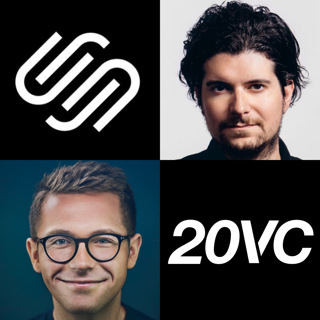
20VC: Squarespace Founder, Anthony Casalena on Scaling Squarespace from Dorm Room To Public Company with over $700M in ARR, The Decision to Direct List over Traditional IPO or SPAC & What Changes When You Go Public?
Anthony Casalena is the Founder & CEO @ Squarespace, the company that allows you to create a website, sell anything and market your business. To date, Anthony has raised over $948M for the company from the likes of General Atlantic, Index Ventures, Tiger Global; culminating in their IPO in May 2021. Despite the incredible size and scale of Squarespace today, Anthony started the company from his dorm room in 2003 and bootstrapped the business for many years to today with over 1,100 employees around the world. In Today's Episode with Anthony Casalena You Will Learn: 1.) How Anthony came to start Squarespace from a dorm room and turn it into a public company with over 1,200 employees globally? 2.) Why did Anthony decide to bootstrap with Squarespace for over 6 years when the company was scaling fast and profitable? How was Anthony's mindset impacted by the efficiency of bootstrap scaling? How did Anthony's mindset change when Squarespace raised their first large round? How does Anthony advise founders today on raising venture vs bootstrapping? 3.) Why did Anthony decide to do the direct listing over the more traditional IPO or a SPAC? How does Anthony advise other founders contemplating the same exit choices? How does Anthony personally describe this chapter of the company? Does he enjoy being a public company CEO? What are the best elements? What are the worst? 4.) E-Commerce has been a massive driver for growth for Squarespace, how does Anthony feel about the future of e-commerce on Squarespace? Only 1% of Squarespace's $700M ARR comes from enterprise, does enterprise hold a meaningful position in the future of the company? What are the core challenges of moving into enterprise? How does the company need to change? 5.) With the growth of the company, how has Anthony changed his style of leadership? What are his biggest strengths? What are his biggest weaknesses? What are the most obvious breakpoints in the scaling of companies? Item's Mentioned In Today's Episode with Anthony Casalena Anthony's Favourite Book: Thinking Fast and Slow
8 Okt 202133min

20VC: The Two Largest Changes in the Investing Market Today, Why The Scarce Resource in Venture is Access & Why Investors Are Acting Mostly Rational and Upside Scenario Planning Needs To Change with Anton Levy, Co-President @ General Atlantic
Anton Levy is Co-President, Managing Director and Global Head of General Atlantic's Technology sector. Anton has led General Atlantic's investments in the likes of Alibaba, CrowdStrike, Facebook, Slack and Snapchat and co-led investments in Adyen and Bytedance. As a result, Anton has been named to the Forbes Midas List of top investors each year from 2014 to 2021. Anton has also enjoyed board positions either as a member or observer in companies such as Uber, MercadoLibre, Klarna and Meituan to name a few. In Today's Episode with Anton Levy You Will Learn: 1.) How Anton made his way into the world of growth investing? What have been some of Anton's biggest lessons from seeing the booms and busts of the macro-environment? 2.) The Landscape: What does Anton believe are the two largest changes/trends in the venture landscape today? What does Anton think is the right way to respond to the threat of Tiger Global? How should founders think about active vs passive cash? How does Anton reflect on his own price sensitivity? What have been some of his biggest lessons on pricing? 3.) Portfolio Construction: How have GA had to change their approach to investing over the last few years? Why have they decided actively to move earlier and write smaller checks? How does a $50M investment from an $8BN impact portfolio construction thinking? How does GA determine which of their winners to size up into and write a $500M check? What is the process for that? 4.) Deployment Cycles: How does Anton think about the compression of deployment cycles in venture? Are people acting rationally? When will the bubble burst? How do interest rates impact capital inflows into venture? Why does Anton believe we are entering a golden age of innovation? What elements concern him? 5.) Culture- Building: What have been Anton's biggest lessons when it comes to culture building internally? Where do many make mistakes here? What have been the most surprising elements of scaling GA to Anton? What mistakes did they make? How did they move to correct them? Item's Mentioned In Today's Episode with Anton Levy Anton's Favourite Book: Bridge to Terabithia Anton's Most Recent Investment: Articulate
5 Okt 202145min
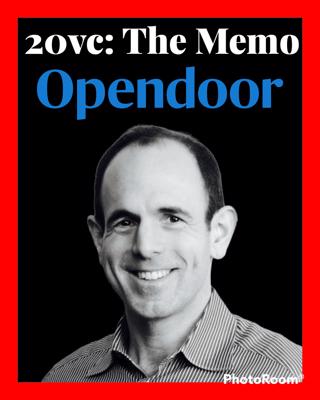
20VC: The Opendoor Memo: Keith Rabois on The Origins of Opendoor from a Conversation with Peter Thiel, Why Cash is Not a Competitive Moat for Startups Today and What People Misunderstand About Black Swan Events in Real Estate and How it Impacts Opendoor
Keith Rabois is a General Partner @ Founders Fund, one of the most successful venture firms of the last decade with home runs in the likes of SpaceX, Palantir, Stripe, Anduril, Facebook, Airbnb, Nubank and many more. As for Keith, he led the first institutional investments in DoorDash, Affirm and has also led investments in Ramp, Trade Republic, Faire and Stripe. Prior to venture, Keith had the most stellar operating career, joining PayPal when their monthly burn-rate was $6 million; Keith joined LinkedIn, Slide and Square when they had no revenue. Fun fact, five companies Keith helped build are now publicly traded with market caps >$1 Billion. Three others have been acquired for greater than $1 Billion or are publicly traded IPOs. If that was not enough, Keith is also the Co-Founder and CEO @ OpenStore, acquiring small DTC businesses. In Today's Episode with Keith Rabois You Will Learn: 1.) How Keith first came up with the idea for Opendoor? How a conversation with Peter Thiel led to the founding of the first iteration of the company? Why did it take Keith close to a decade to pursue the idea fully, post having the idea in 2003? 2.) The Market: What made Keith so excited to pursue Opendoor from a top-down market analysis perspective? What does Keith look for in markets he likes to invest in? How did Keith expect the market to change and evolve? What did the market do differently to how Keith thought it would behave? 3.) The Business Model: With debt being the oxygen for Opendoor, how many homes did they need to acquire before they could prove they could price homes accurately? What were Keith's lessons from the first homes they bought? What did not go to plan? Why does Keith disagree, if macro hits real estate, Opendoor's model is challenged? Why does Keith believe it is stronger then? 4.) The Team: What does Keith look for in the founding teams he backs? How does Keith detect diamonds in the rough? How can teams systematically de-risk an opportunity with their experience? With the benefit of hindsight, what would Keith have done differently with the team? 5.) The Funding: Was fundraising for Opendoor always easy? How did the seed round go down? How does Keith feel today about pre-emptive rounds where little company development has taken place? Why did Opendoor decide to SPAC? Why not a direct list? Was this the right choice? What makes for the best SPAC partner?
30 Sep 202136min

20VC: The Rise of Quick Commerce and Why CPGs ARe Misaligned Being Powered By Ad Spend, The 5 Core Components Consumers Care About When Ordering Today & Why Amazon and Alibaba Will Not Be The Big Players in 10 Years with Ralf Wenzel, Founder & CEO @ JOKR
Ralf Wenzel is the Founder & CEO @ JOKR, a global platform for instant retail delivery at a hyper-local scale. To date, Ralf has raised over $170M for the company from the likes of GGV Capital, Balderton, Softbank and Kaszek, just to name a few. Prior to JOKR, Ralf spent close to 7 years as the Founder & CEO @ foodpanda as well as enjoying roles as Chief Strategy Officer @ Delivery Hero, Interim Chief Product and Experience Officer @ WeWork and even moving to the other side of the table as a Managing Partner with Softbank. In Today's Episode with Ralf Wenzel You Will Learn: 1.) How Ralf made his way into the world of startups and came to found foodpanda? What were his biggest takeaways from foodpanda that have impacted how he thinks about scaling JOKR today? 2.) Fulfillment Centres: What are the selection criteria when deciding what is the right location for a fulfillment center? How does real estate cost differ when comparing LATAM to the US? How does Ralf think about the balance between consumer choice and SKU minimization? In what way does Ralf believe they have a moat due to their catalog management system? 3.) The Driver: Why is JOKR different to every other provider in the way they employ their riders? Does it not severely impact their margins by providing equal benefits across their entire rider workforce? How many drops per hour is a good level of driver efficiency? What have been Ralf's biggest lessons when it comes to driver retention? 4.) The Consumer: How did JOKR acquire their first consumers on the demand side? What marketing strategies worked? What did not work? Is Ralf concerned by the immense amount of money invested in the space driving customer acquisition prices way higher? How has Ralf seen CACs change over time in mature markets? 5.) Expansion Opportunities: How does Ralf feel about incorporating own brand products, produced by JOKR over time? How does this change the margin profile of the business? How does Ralf feel about paid search as a core part of their business? Will CPGs be able to pay to be ranked higher in JOKR?
27 Sep 202137min
Welcome 20Growth: How To Hire a Head of Growth? What are Signs of World-Class Talent? How To Structure the Process? How To Onboard Growth Teams? The Relationship Between Head of Growth and CEO and more with Casey Winters, Chief Product Officer @ Eventbrit
Casey Winters is the Chief Product Officer at Eventbrite where he leads the PM, product design, research, and growth marketing teams. Prior to Eventbrite, Casey spent close to 3 years at Pinterest where he led the growth product team. At Pinterest, Casey turned SEO into a scalable acquisition strategy, increasing conversion to signups 5x. Before Pinterest, Casey started the marketing team at Grubhub and scaled Grubhub's demand-side acquisition and retention strategies. Casey played an instrumental role in scaling Grubhub from 3 cities to 1,000+ and from a $1 million series A to an IPO and $7.3 billion exit. If that was not enough, Casey has also advised the likes of Canva, Hipcamp, Reddit, Faire and Career Karma to name a few. In Today's Episode with Casey Winters You Will Learn: 1.) How Casey made his way into the world of startups and came to lead some of the most powerful growth orgs in the world from Pinterest to Grubhub to Eventbrite? 2.) How does Casey define "growth" and "Head of Growth"? When is the right time to start thinking about implementing a growth team? When should one hire a growth leader? How should founders structure the process of hiring a Head of Growth? What do the stages look like? What signals suggest A* talent? What questions does Casey always ask? What tests does Casey do? 3.) What does the optimal onboarding process look like for growth teams? What tasks should a growth team perform in their first few months? What are clear signs you have an amazing candidate in place? What are some obvious red flags? How do the best growth teams approach post-mortems? How are they structured? Who attends them? How often? 4.) What is the ideal relationship between the Head of Growth and the CEO? How often do they meet? What do the best CEOs expect from their growth teams? How does Casey approach the relationship between growth teams and product teams? How does one know when to have an independent growth team vs within the product or marketing team? 5.) Casey AMA: What has been a decision that Casey made without data to back it up? How did it go? What were Casey's lessons? How does Casey prevent past experiments from impacting his future tactics? How does Casey's management style differ when managing larger vs smaller growth teams? How has angel investing impacted his approach to scaling growth teams?
22 Sep 202143min

20VC: Investing Lessons From Rounds In Peloton and Square, Why Great Investing is Stock-Picking and Sector Penetration & The Next Decade in Venture, Is Tiger's The Right Model with Hans Tung, Managing Partner @ GGV Capital
Hans Tung is a Managing Partner at GGV Capital, one of the leading venture firms of the last 2 decades with a portfolio including Alibaba, Xiaomi, Peloton, Airbnb, Slack, and many more. As for Hans, he has been named to the Forbes Midas list nine consecutive years from 2013-2021, most recently ranking #3. His portfolio includes 18 unicorns including Affirm, Airbnb, Coinbase, Divvy Homes, Peloton, Poshmark, Slack, Wish and Xiaomi. In 2005, he was among the first Silicon Valley VCs to move to China full time, spending eight years investing in the fastest-changing tech landscape in the world before returning to Silicon Valley in 2013 to join GGV Capital. In Today's Episode with Hans Tung You Will Learn: 1.) How Hans made his way into the world of venture from founding his first two companies? How did seeing the booms and busts of the macro-financial markets impact both his investing mindset and the companies he likes to back? 2.) The Landscape: How does Hans analyze the current venture landscape today? How does one compete in a world of Tiger and crossover funds writing term sheets post first meeting? How does Hans think about his own price sensitivity today? How does he determine when to pay up vs when to say no? What have been some of his biggest lessons on price? 3.) Working with the likes of Peloton, Square, Alibaba, what have been some of Hans biggest lessons on market size? What do most investors get wrong when it comes to market sizing? How does Hans think about an attractive enough exit multiple for a growth stage check? What did Peloton teach Hans about insertion points when investing? 4.) How does Hans think about when is the right time to sell? What have been some of his biggest lessons on taking cash off the table? Despite the success, how does Hans ensure he has the mental plasticity to approach every new deal with a fresh perspective? What does he do to ensure he does not have an unconscious bias from his past successes? Item's Mentioned In Today's Episode with Hans Tung Hans' Favourite Book: Outliers: The Story of Success Hans' Most Recent Investment: JOKR
20 Sep 202138min
20VC: Getir Founder, Nazim Salur on The Future of Last Mile Convenience, Who Will Win? Lessons on Driver Acquisition and Efficiency, Zone Maturity and Time To Profitability and Scaling to 300 Cities in the US in 2022
Nazim Salur is the Founder & CEO of Getir, one of the leading rapid delivery service providers that distribute over 1,500 everyday items within minutes. With an established status in Turkey, where the company trends towards a super-app, and a London launch behind it, Getir has further European and US expansion plans on the horizon. To fuel this expansion, Getir has raised over $1BN from Sequoia and Mike Moritz, Silver Lake, Mubadala, and Tiger Global to name a few. Prior to founding Getir, Nazim launched his first tech startup in 2012, BiTaksi, which brought people taxis in three minutes. In Today's Episode with Nazim Salur You Will Learn: 1.) How Nazim made his way into the world of startups with his founding of BiTaksi and how that led to his realization of the need for Getir? 2.) Why does Nazim believe that owning the entire vertical stack is a superior model? What are the selection criteria for the micro-fulfillment sites? What makes one more attractive than another? How does Getir think about the balance between SKU minimization and consumer demand? How does Getir think about building defensibility through their warehouse management system? 3.) How did Getir acquire their first drivers? What worked? What did not work? How does their driver acquisition strategy change depending on location? What is the core measurement that Getir uses to measure driver efficiency? What is the secret to driver retention? How has Nazim seen driver acquisition costs change over time in mature markets? 4.) How did Getir acquire their first customers? What is the most important element for consumers; speed or choice? How does Getir think about allocating marketing spend efficiently today? How has Nazim seen CACs change over time with the maturation of markets? With the immense funding for the space, is Nazim concerned about this? 5.) What are the decision-making criteria for what makes an attractive region to expand into? How much capital does it take to launch a new region? What is the time to profitability on each zone? How has this changed over time? How does Nazim think about expansion into the US? What excites him most about the expansion? What elements will be most challenging?
16 Sep 202142min
20VC: Sequoia's Doug Leone on What Has Been Instrumental To Scaling Sequoia Over Generations, How Sequoia Think About International Expansion and What They Learned From China and India & Why When You Lose Pre-Seed You Become Private Equity
Doug Leone is the Global Managing Partner @ Sequoia Capital, one of the world's most renowned and successful venture firms with a portfolio including the likes of Google, Airbnb, Whatsapp, Stripe, Zoom and many more. As for Doug, he joined Sequoia over 33 years ago and has led investments in Nubank, Meraki, ServiceNow and TradeRepublic to name a few. In Today's Episode with Doug Leone You Will Learn: 1.) How a 5PM Monday meeting with Don Valentine led to Doug joining Sequoia over 33 years ago? What did Don ask Doug in the meeting? What does Doug believe led Don to offer him his first role at Sequoia? 2.) The Leader: How did Doug change when he made the transition from a "COO" role to more of a "CEO" role with Sequoia? Doug has previously said, "Sequoia is a team, not a family". What does he mean by this? How do Doug and Sequoia do to give the team an unwavering sense of duty to the Sequoia brand? What does Doug believe Sequoia have done so well to allow them to move seamlessly from generation to generation? 3.) The Investor: Doug's first 3 investments all went on to successful IPOs, how did this impact his mindset at the time? What does Doug mean when he discusses "the abyss" he went through post this time? How does Doug advise others going through the abyss? What are the signs certain people will make it through vs not? 4.) The Landscape Today: How does Doug think about and react to newer entrants like Tiger and Softbank? How does Doug think about and assess his own price sensitivity today? How does Doug determine when to be disciplined vs when to pay up? Through what lens does Doug assess the compression of deployment cycles in venture today? Should we "play the game on the field"? 5.) The Expansion: In 2005, Sequoia expanded to China. Why was this the right time? What was the decision-making process for the Sequoia China team? Why does Doug believe, "when you lose pre-seed, you become private equity"? How does Doug react to the notion that success in venture is cyclical and compounds? Item's Mentioned In Today's Episode with Doug Leone Doug's Favourite Book: The Fountainhead: Ayn Rand, Antifragile: Things that Gain from Disorder
14 Sep 202149min