

20VC: Qualtrics Founder, Ryan Smith on The 2 Hour Decision Whether To Sell Qualtrics for $8Bn in Cash, Why Tying Your Identity To Your Company Will Never Make You Happy and His Relationship To Risk, Wealth and Responsibility as a Result
Ryan Smith is the Founder and Executive Chairman @ Qualtrics, the leader in customer experience and creator of the experience management (XM) category. Ryan has grown the company from a basement startup to one of the fastest-growing technology companies in the world, with 25 offices globally and more than 13,000 customers. Qualtrics raised $400M in funding from Accel, Sequoia, and Insight Venture Partners. Three days before the company was initially scheduled to go public, SAP announced its intent to acquire Qualtrics for $8B, which was the largest private enterprise software acquisition ever. In 2020, Qualtrics and SAP announced plans to take Qualtrics public as an independently operated company. In Today's Episode with Ryan Smith You Will Learn: 1.) How Ryan made his way into the world of startups having travelled the world and came to found Qualtrics in his basement over 21 years ago? 2.) How does Ryan think about his relationship to happiness and what it means to "be happy"? How does Ryan think about identity and founders aligning their identities to their company? How does Ryan think, if not careful, tech can eat you up? What does Ryan mean when he says he would rather be "opportunistic than an entrepreneur"? 3.) How does Ryan approach decision-making today? In what situations does Ryan think with his head vs his heart? How does Ryan approach risk today? How has his relationship to risk changed over time? What did the sale process to SAP look like? What was that decision-making process to sell to SAP for $8BN in cash vs IPO? What advice did his wife give him? 4.) How does Ryan evaluate his relationship to money today? How did it feel when Ryan sold Qualtrics to SAP for $8BN in cash? How does Ryan think about giving his children the right mentality and upbringing while being brought up in extreme wealth? What are the challenges of doing so? 5.) How does Ryan think about the weight of responsibility? Ryan and his brother Jared, did a lot very young, did Ryan feel the pressure of having to grow up faster than one usually would? How did that impact his mentality? How did Ryan's travels to Mexico and Japan change the person he is today? Item's Mentioned In Today's Episode with Ryan Smith Ryan's Favourite Book: Alchemist: A Fable about Following Your Dream As always you can follow Harry and The Twenty Minute VC on Twitter here!
11 Mai 202140min
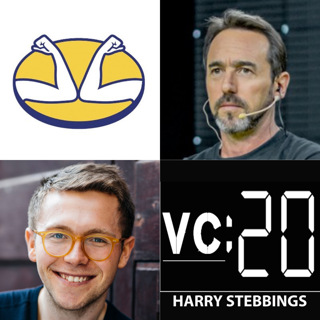
20VC: MercadoLibre Founder Marcos Galperin on Optimising Decision-Making, Effective Resource Allocation, Growth vs Profitability, Fundraising Strategies and more on the Journey To Build a $72Bn Market Cap Company
Marcos Galperin is the Founder and CEO @ MercadoLibre, one of LATAM's most successful companies of the last 2 decades. Today MercadoLibre's market cap exceeds $78Bn and the business includes everything from commerce to payments to logistics. Marcos is widely considered one of the great entrepreneurs of the last 2 decades scaling the business from its founding in 1999 while in business school at Stanford to today, a leader in LATAM operating across 18 countries and plans to end 2021 with over 32,000 employees. In Today's Episode with Marcos Galperin You Will Learn: 1.) How Marcos made his way into the world of startups and came up with the idea for MercadoLibre while at Stanford Business School? 2.) Talent Acquisition and Retention: What have been some of Marcos' biggest lessons on what it takes to acquire A* talent? Does Marcos believe individuals can scale across company stages? When is a stretch hire a stretch too far? What has been the secret to Marcos having such a retained leadership team? What works? What does not? 3.) Risk and Decision-Making: How does Marcos evaluate his relationship to risk today? What frameworks does Marcos use to make effective decisions today? How does Marcos think about short term vs long term when it comes to resource allocation? How does Marcos prioritise where he makes decisions vs where he is willing to delegate? 4.) Funding and The Crash: How does Marcos reflect on his biggest lessons from going through 2 crashes with MercadoLibre? How did he change the way he ran the business post crash? How does Marcos advise founders today when big rounds are on offer, take the money or wait? What other components are important to consider in this decision? Item's Mentioned In Today's Episode with Marcos Galperin Parker's Favourite Book: Built To Last: Successful Habits of Visionary Companies As always you can follow Harry and The Twenty Minute VC on Twitter here!
7 Mai 202133min
20VC: David Tisch on Why Ownership in Venture Does Not Matter, His Biggest Investing Misses and Hits and How His Investing Style Changed as a Result & 3 Core Reasons VCs Pass That Do Not Make Sense
David Tisch is the Founder and Managing Partner @ Box Group, one of the leading seed focused firms of the last decade with a portfolio including Airtable, Glossier, PillPack, Plaid and many more. Prior to founding Box, David was Managing Director of Techstars New York and was a prolific angel investor making early angel investments in the likes of Vine and Warby Parker to name a few. In Today's Episode with David Tisch You Will Learn: 1.) How David made his way into the world of tech and startups and came to change the state of seed funding in NYC with the founding of Box Group? 2.) Why does David believe that ownership requirements are "VCs projecting their problems on founders"? Why does David believe that ownership today fundamentally does not matter? How does David feel about his own relationship to price? Why is it important to be price aware across the portfolio, not on a per deal basis? 3.) What does David make of the rise of pre-emptive rounds? How does David advise portfolio founders who have them on the table? What other arguments does David use to founders contemplating taking seed rounds from multi-stage funds? How does David believe founders should assess their importance to the fund investing in them? 4.) How does David feel about his relationship to FOMO today? What have been some of his biggest misses in recent years? How have some of his biggest misses changed how he acts as an investor today? How have some of his biggest successes changed his investing lens? What changes did David and Box make to their decision-making process as a result? 5.) What does David believe are the biggest mistakes to turn down a company? Why is "too early" never a reason to turn down a company? How does David assess and think about market size today? Through what framework does David evaluate and assess competition today? What does David believe are some core concerns that are reasonable to turn down an opportunity? Item's Mentioned In Today's Episode with David Tisch David's Most Recent Investment: Ramp As always you can follow Harry and The Twenty Minute VC on Twitter here!
4 Mai 202137min
20VC: The Roblox Memo: First Round's Chris Fralic on The 17 Year Journey to Build a $41BN Market Cap Company, Why It Is Way Harder To Increase Ownership Across Rounds Today & What Happens Post SPACMania
Chris Fralic is a Board Partner @ First Round Capital, one of the leading seed-stage venture firms of the last decade with investments in the likes of Uber, Square, Notion, Warby Parker and more. As for Chris, he has led deals in Roblox, Ring.com, HotelTonight, Rec Room and many more incredible companies. Prior to the world of venture, Chris was VP of Business Development at social bookmarking and tagging company del.icio.us through the Yahoo! acquisition. He was also one of the early employees at Half.com and after the eBay, acquisition spent six years with eBay in a variety of business development, media and entertainment roles. In Today's Episode with Chris Fralic You Will Learn: 1.) How did Chris come to first meet Dave and the team at Roblox? Where was the first meeting? Who was in attendance? How did Chris feel post that first meeting with the team? 2.) Turning the company down: Why did First Round turn down Roblox on first look? How does Chris assess his own relationship to price? Through what mechanism does he determine whether to pay up or not? How does Chris retain relationships with founders when saying no? Does Chris believe you can buy up ownership post first check today, with the capital proliferate we have? 3.) What does Chris mean when he discusses the lessons from First Round's portfolio when it comes to "slow bake vs fast bake"? How did the First Round partnership analyse the Uber, Square, Roblox portfolio at the time? Through what framework does Chris think about reserves management given the challenge of "slow bake companies"? How does he address it today? 4.) What does Chris mean when he discusses the hype to substance ratio? Why is it more important than ever today? What does this mean for startups? How can startups with a low hype to substance ratio raise funds at good prices? What advice does Chris have for them? How does Chris think about the importance of firm and individual brand in venture today? 5.) How has Chris seen Dave evolve as a leader and CEO over time? What caused the changes in his leadership style? What moments stand out as the most challenging moments to Chris in the scaling of Roblox? Who does Chris believe are the behind the scenes rockstars that made Roblox possible? As always you can follow Harry and The Twenty Minute VC on Twitter here!
29 Apr 202136min
20VC: Rippling's Parker Conrad on Why The VC/Founder Marriage Analogy is Weird, Why The Notion of Focus, Focus, Focus is Overrated, Why Narrow Point Solutions Are Not Best in Class Products & The Rise of the "Compound Startup"
Parker Conrad is the Founder and CEO @ Rippling, the employee management platform allowing you to manage your employees' payroll, benefits, devices and more—in one place. To date, Parker has raised over $197M for Rippling from the likes of Founders Fund, Kleiner Perkins, Initialized, Bedrock, Greenoaks and Coatue. Prior to founding Rippling, Parker was the Co-Founder and CEO @ Zenefits and if that was not enough, Parker is also a prominent angel having invested in the likes of Census, Pulley and then also AgentSync and TrueNorth, alongside 20VC Fund. In Today's Episode with Parker Conrad You Will Learn: 1.) How did Parker make his way into the world of technology and startups? What was the founding a-ha moment for Parker with Rippling? How did his journey with Zenefits change or alter his leadership style today with Rippling? 2.) Why does Parker believe that the conventional advice of focus, focus, focus is BS? What does Parker mean when he states, "The Compound Startup"? How does the approach of the compound startup differ from traditional approaches of product and company building? What are the core benefits of using the compound startup approach? 3.) How does Parker think about providing sufficient product quality with an increasing breadth of product offering, entailed within a compound startup? In what way does pricing differ when comparing compound startups to traditional startups? How can compound startups optimise their pricing on a bundle basis? What has Slack and Microsoft taught us about this? 4.) Why does Parker disagree with the conventional analogy of the VC <> founder relationship being a marriage? Why does Parker refer to it more as a "General Contractor" relationship for a house? What can founders do to sufficiently protect themselves from overarching VCs? What can VCs do to be the very best partners to the founders they work with? 5.) How does Parker evaluate his relationship to money today? How has it changed over time? What does Parker know now that he wishes he had known at the start of his founding of Rippling? What have been Parker's biggest lessons on talent acquisition? Why did Parker decide to bring on a COO when he did? How has it changed his role? Item's Mentioned In Today's Episode with Parker Conrad Parker's Favourite Book: Matilda by Roald Dahl As always you can follow Harry and The Twenty Minute VC on Twitter here!
26 Apr 202140min
20VC: Segment Founder Peter Reinhardt on His Learning Process, How Great Leaders Listen and Encourage Debate within Their Organisation & How To Use Data Intelligently To Improve Decision-Making
Peter Reinhardt is the Founder and CEO @ Segment, the leading customer data platform with over 20,000 companies using Segment to collect, clean, and control their customer data. Prior to their $3.2BN acquisition by Twilio in 2020, Peter raised over $283M for Segment from Accel, Thrive, Meritech, GV, General Catalyst and Kleiner Perkins to name a few. Peter is also an active angel investor having made investments in the likes of Retool, Newfront, Pilot and more. In Today's Episode with Peter Reinhardt You Will Learn: 1.) How Peter made his way into the world of startups and how he came to found a company, Segment, by actively trying to prove to his co-founder that it would not work? Why does Peter believe the Airbnb story is the most destructive myth for founders to follow? 2.) Learning: How does Peter think about learning frameworks for new topics? How does he construct his? How does Peter use data within this learning process to increase his rate of learning? Where do the majority of people go wrong in constructing their framework for learning? 3.) Listening and Debate: What does Peter believe is required to be "a good listener"? What questions do the best listeners ask? What tone do they use to ask these questions? How does Peter create an environment of safety internally where people feel they can debate? How does one balance between debate and thinking vs putting those thoughts into action? 4.) Problem-solving: How does Peter breakdown problems into their component parts? Through what mechanism does he determine what to prioritise first? How would Peter describe his decision-making process? How does he determine between head vs heart in decisions? In what way does Peter use data to further inform the decisions he makes? 5.) How would Peter describe his management style today? Has it changed over time? In what way has working with a coach changed the way Peter thinks about leadership? What elements do they focus on? How often does he see his coach? What have been some of his biggest takeaways? Item's Mentioned In Today's Episode with Peter Reinhardt Peter's Favourite Book: The Chalice and the Blade, Crucial Conversations As always you can follow Harry and The Twenty Minute VC on Twitter here!
22 Apr 202128min

20VC: Greylock's David Sze on His Biggest Lessons Working with Mark Zuckerberg and Reid Hoffman, The Rise of Pre-Emptive Rounds, How To Think Through Price Discipline Today and How Truly Strong Venture Partnerships Function
David Sze is a General Partner @ Greylock where he has led some of the firms most notable investments including Facebook, LinkedIn and Pandora. David has consistently been at the forefront of innovation in the consumer landscape leading to his investments in Discord, Roblox, Medium and more. Prior to Greylock, David was SVP of Product Strategy at one of the first search pioneers, Excite and then Excite@Home. Before Excite, he was in interactive entertainment — in product marketing at Electronic Arts and development at Crystal Dynamics. As a result of his incredible investing track record, David has been frequently named to the Forbes Midas List. In Today's Episode with David Sze You Will Learn: 1.) How David made his way into the world of venture and came to lead consumer investing at Greylock with investments in Facebook, Linkedin, Roblox and Discord? 2.) How did David's investments in Facebook and Linkedin challenge Greylock's investment strategy at the time? Paying $500M for Facebook, how does David reflect on his own relationship to price and price sensitivity? How does David evaluate the rise of pre-emptive rounds today? Is David concerned by the excess supply of capital in the market today? 3.) Having worked with Mark @ Facebook, Reid @ Linkedin, David @ Roblox, what are the commonalities of these incredible founders? What does David do to build relationships of trust and vulnerability with founders? How does David do this in the compressed fundraising timelines we have today? 4.) The Partnership: What does David believe Greylock have done well in terms of creating an environment of safety within the partnership where people can really challenge each other? What works? What does not? For younger VCs, what is the difference between those that succeed and those that do not? What is David's biggest advice to those in the earlier years of their VC career? 5.) The Board: How does David evaluate his own style of board membership today? How has it changed over the years? What does David believe are his biggest strengths and his biggest weaknesses as a board member? What advice does David give to younger VCs assuming their first board roles? As always you can follow Harry and The Twenty Minute VC on Twitter here!
19 Apr 202142min

20VC: Scaling Zapier To $140M ARR and a $5Bn Valuation on $1.4M of Funding, What Founders Misunderstand About Fundraising & How Founders Should Think About Secondaries Today with Wade Foster, Founder & CEO @ Zapier
Wade Foster is the Co-Founder & CEO @ Zapier, the company that moves info between your web apps automatically, so you can focus on your most important work. Post YC in 2012, Wade raised $1.4M for the company from Bessemer and Threshold but since that round, he scaled the company to $140M in ARR and a $5Bn valuation with Sequoia and Steadfast buying out some early investors earlier this year. In Today's Episode with Wade Foster You Will Learn: 1.) How Wade made his way from email marketing manager to founding one of YC's most successful alum in the form of Zapier? Does Wade agree with the "fake it till you make it theory"? How does Wade advise grads on starting a company vs joining a startup vs joining an incumbent? 2.) Remote Work: Zapier has been remote since 2012, what do Zapier do very specifically that Waade believes has enabled them to be so successful remote? What did not work? What were some of the biggest challenges of scaling the team remotely? In terms of tooling, what specific tools do Wade and Zapier use to make the org as transparent as possible? 3.) In the scaling journey, what have been the most significant breakpoints in the org scaling? How has Eade scaled his style of leadership? What has been the most challenging element to scale? How does Wade structure internal meetings? Who is invited to what? What materials are shared? How are the meetings structured? 4.) Why did Wade decide not to take the venture path and scale the company from revenues? What does Wade believe so many founders misunderstand when it comes to fundraising? What does Wade believe they gained from the bootstrapped approach? Why did Wade still maintain relationships with VCs? How did he choose those he wanted to stay in touch with? 5.) How does Wade feel about his relationship to money? What does Wade think about the rise of secondaries? In what framework does Wade advise founders who have the chance to take secondaries? What is the right amount to take off the table? How does one communicate this? Item's Mentioned In Today's Episode with Wade Foster Wade's Favourite Book: Harry Potter As always you can follow Harry and The Twenty Minute VC on Twitter here!
15 Apr 202132min