
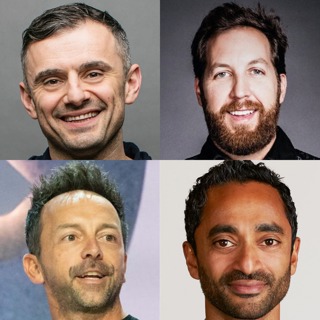
20VC: Chris Sacca, Chamath Palihapitiya, Gary Vee, Brad Gerstner and more on Their Relationship To Money, How It Has Changed with Time and Wealth, How They Bring Up Their Children To Engender the Same Values of Ambition and Hard Work?
Chris Sacca is the Founder and Chairman @ Lowercase Capital, one of the best performing funds in the history of venture capital with a portfolio including Uber, Stripe, Twitter, Instagram, Twilio, Docker and many more. From interviewing some of the world's richest married couples, how did gaining wealth change their relationship and marriage? What does Chris do to actively ensure his children remain hungry and know the value of money? Chamath Palihapitiya is Founder & CEO @ Social Capital. Social's portfolio includes the likes of Slack, Yammer, Front, Intercom and Carta to name a few. What does Chamath mean when he says we need to think through the mindset of "infinite games" not finite games? How does this change how you think about money? How does Chamath think about his relationship to risk today as a result? Brad Gerstner is the Founder and CEO of Altimeter. Brad's notable deals that he has helped lead include Snowflake, Mongo, Bytedance, Gusto, Unity, Okta, dbt, Modern Treasury, EPIC Games, Hotel Tonight and Zillow. What is the most important thing parents can do to ensure that despite wealth, their children remain grounded and ambitious? Why does Brad, despite being a billionaire, still live in a modest house and not spend on the excesses of life? How does Brad embrace essentialism with wealth? Cyan Banister is one of the most successful and renowned early-stage investors in the last decade. Her portfolio includes the likes of SpaceX, Uber, Affirm, Opendoor Postmates, Niantic and Thumbtack to name a few. Why did Cyan used to hate money? Why was she "anti-capitalist"? How does Cyan approach risk management today? Why does she invest every dollar she makes back into the ecosystem? George Zachary is a General Partner @ CRV, one of the nation's oldest and most successful early-stage venture capital firms with a portfolio including the likes of Airtable, DoorDash, Dropbox, Niantic and many more. What did George learn about how the way people view you changes with your increasing wealth? Why does George believe rich people like to hang out with rich people? Biz Stone is best known as the Co-Founder of Twitter and Medium. Biz is also an investor in the likes of Slack, Square, Intercom, Beyond Meat and Blue Bottle Coffee. What does Biz mean when he says, "wealth only serves to amplify the person you are?"
28 Okt 202226min
20Growth: Biggest Growth Lessons from Reddit and Zynga on Scaling to Millions of Users | Why, When and How To Hire Your First Growth Hires | The Biggest Mistakes Founders Make In Hiring, Onboarding and Integration for Growth Teams with Vaibhav Sahgal, VP
Vaibhav Sahgal is VP of Consumer Product @ Reddit where he has been for close to 5 years. Prior to his leading consumer product, Vaibhav spent 3 years as Head of Growth at Reddit. Before Reddit, Vaibhav spent an incredible 8 years at Zynga across different roles including Director of Product and GM for "Words with Friends". In Today's Episode with Vaibhav Sahgal We Discuss: 1.) Entry into Product + Growth: How did Vaibhav come to lead some of the best growth orgs in the world at both Reddit and Zynga? What are 1-2 of Vaibhav's biggest takeaways from working with Mark Pincus @ Zynga? What is the most painful growth lesson that Vaibhav learned that he is also pleased to have learned? 2.) WTF Really is "Growth": How does Vaibhav define growth today? What is it not? How does Vaibhav fundamentally differentiate between value connection and value creation? Is growth an art or a science? What tactics have died a death? What remains stronger than ever? 3.) Hiring Your Growth Team: How does Vaibhav advise founders on when is the right time to hire their first growth professionals? Where should they sit within the org? In product? In marketing? Standalone growth team? What are the biggest mistakes Vaibhav sees founders make when hiring their first growth hires? 4.) The Interview Process: How does Vaibhav structure the interview process for all new growth hires? What are the steps? What are the must-ask questions when hiring for growth? What are good answers? How can founders use case studies and data to determine the quality of a growth candidate? 5.) The Onboarding and Integration: What is the optimal onboarding process for all new growth hires? What are signs in the first 3 days that a growth hire will vs will not work out? What can leaders do to ensure growth hires are integrated with the rest of the teams? What are the biggest mistakes founders make when onboarding growth hires? Items Mentioned in Today's Episode: Vaibhav's Favourite Book: Andrew Chen: The Cold Start Problem
26 Okt 202244min
20VC: Uber's Journey to Becoming the Most Valuable Private Tech Company in History, Raising $3BN From Saudi in Just 60 Days, Uber's $30BN Mistake in Food Delivery, Why Recent Uber M&A Will be the Worst in Tech & Mastering Negotiations and Deal-Making with
Emil Michael is the Former Chief Business Officer at Uber and is commonly referred to as Travis Kalanick's right-hand man. At Uber, Emil was instrumental in raising nearly $15BN from some of the largest investors in the world, making Uber the most valuable private tech company ever. Emil was also core to Uber's China strategy and led deals with Didi and Baidu. Before Uber, Emil spent 9 years at TellMe Networks where he was central to Microsoft raising their acquisition price from $300M to $800M. Emil is also an advisor to some of the greats including Raf @ GoPuff, Zach @ Codeacademy, Jared @ Fundera and many more. In Todays Episode with Emil Michael: 1.) From Politics to Travis's right-hand man at Uber: How did Emil make his way into the world of startups with TellMe networks? Harvard, Stanford, Goldman, Politics, which career shaped Emil the most? When Emil looks at his cohort of Ali and Hadi Partovi, Alfred Lin, and many others, what did they have that Emil believes is core to their success today? 2.) Negotiations 101: A Masterclass: What is Emil's framework for dealmaking? How has it changed over time? What are the single most important elements to remember when making deals? What are the biggest mistakes people make when negotiating? What is the right way to use leverage in negotiations? How can one handle an opponent that is emotional or irrational when negotiating? How did Emil make Steve Ballmer @ Microsoft increase his offer for TellMe from $300M to $800M? What is the single deal that Emil made that he regrets the most? 3.) Uber: The Journey to the Most Valuable Private Company: Why were Emil and Travis removed from Uber? Does Emil think it was fair? Is it true that Travis lost the support of the team? How did his removal take place? How did the Uber China deal go down with Didi? What got DiDi over the line on the deal? How did Emil raise $3BN from Saudi in just 60 days with Travis needing to attend only one meeting? 4.) Uber: The Review: How does Emil assess the management and performance of Uber CEO, Dara Khosrowshahi? If Travis and Emil were still in charge, what would Emil have done differently? Why does Emil think Dara and Uber have made a $30BN mistake in food delivery? Why does Emil think Postmates, Careem, and others have been the worst acquisitions in tech? 5.) The Venture Landscape: Emil entered the world of VC with Coatue, why did he decide that VC was not for him? How does Emil analyze the VC landscape today? Who are risers? Who are fallers? What are the single biggest points of misalignment between founder and VC? What are the core improvements that Emil would like to see made to the VC world? Items Mentioned in Today's Episode: Emil's Favourite Book: Sun Tzu: The Art of War
24 Okt 20221h 2min

20VC: Why 75% of Active Investors Will Disappear in the Next Few Years, The Death of "So So" Venture Firms is Coming, The Rise of Blackstone of Venture Firms and What That Does To Venture Returns, How the World of LPs is Broken and more with Kyle Harrison
Kyle Harrison is a General Partner @ Contrary and one of my favorite writers on the venture space with his blog, Investing 101 2.0. Before joining Contrary, Kyle worked in the ranks of some of the biggest and best names in venture, starting with a spell at TCV before moving to Coatue and making his final stop at Index. Across firms, Kyle has led or participated in investments including Ramp, Pave, Anduril, Gitlab, Databricks and Snowflake to name a few. In Today's Episode with Kyle Harrison: 1.) From Film Lover to Technology Investor: How Kyle went from creating a professional services marketplace around film to joining the ranks of TCV and investing in breakout technology companies? What was Kyle's biggest takeaway from TCV? How did it impact his mindset? What was Kyle's biggest lesson from working with the Laffont's at Coatue? How did it change the way he thinks about price and market sizing? Why was Index such a transformational school of venture for Kyle? How did that experience change how he thinks about what it takes to be a great investor? 2.) The Death of So So Venture Firms: Why does Kyle believe many of the "so so" venture firms will die? What does Kyle believe makes a venture firm "so so"? Who is vulnerable then? How does Kyle think the lifespan and "death" of venture firms will change in the next decade? 3.) The Rise of "The Blackstone of Venture Firms": How does Kyle define "the Blackstone of VCs"? Who are they? With increasing fund sizes will we see VC returns denigrate to PE returns? How is the world of family offices changing the venture environment? Will we see more or less money flood into venture over the coming years? Of the incumbents, who has done "The Blackstone" model well? Why? Who has failed? Why? 4.) The Rise of Community in Venture: What does "community" really mean to Kyle? Why does he believe it will play such a prominent role in the way the best invest in the future? How have existing players failed to build, sustain and productize communities? What are the best opportunities for new entrants to create and utilise communities to invest? Items Mentioned in Today's Episode: Kyle's Favourite Book: Reinventing Knowledge: From Alexandria to the Internet
21 Okt 202248min

20 Sales: How To Structure The Interview Process for All Sales Reps, The Must-Ask Questions When Identifying Potential Sales Talent & The 3 Biggest Mistakes Founders Make When Hiring Their First Reps with Lauren Schwartz, VP of Enterprise Sales @ Fivetran
Lauren Schwartz is Vice President of Enterprise Sales at Fivetran, the leading platform for modern data movement. She has helped scale Fivetran's enterprise business from its infancy to a team of nearly 100, while more than tripling enterprise revenues. Previously, Lauren spent close to 4 years at Segment where she started as the first female AE and ultimately built and led sales teams in enterprise and growth. Lauren earned an MBA from Stanford Graduate School of Business after 6 years at Google where her enterprise sales career began. In Today's Episode with Lauren Schwartz: 1.) How Being Rejected as an Eighth Grader Can Lead to World Class Sales Leader: How Lauren made her way into the world of enterprise sales with Google? Why, for a while, Lauren wanted to get away from the label of a salesperson? Why "salesperson" does not do the job of sales justice? Why does Lauren believe that one of the core traits the best salespeople have is being able to cope with rejection? How has Lauren been rejected? How did she respond? What changed their mind? 2.) The Sales Playbook: What, Who, When: How does Lauren define the term "sales playbook"? What are the nuances? Does Lauren believe the founder should always be the first sales rep? What are the core signs that a founder is now ready to bring in their first sales hires? What are the 3 biggest mistakes founders make when they hire their first sales reps? What are the core traits that the best early sales reps have? 3.) The Hiring Process: Building the Best Sales Team: How does Lauren structure the hiring process? What are the most unconventional but useful questions Lauren uses to determine the depth and quality of potential sales hires? What are the glaring red flags that Lauren looks for in this interview process? How does Lauren use case studies and deal reviews in the interview process to determine the quality of a candidate? 4.) Scaling the Machine: The Onboarding Process: What are the single biggest mistakes founders make when onboarding sales reps? How should sales team onboarding be structured? What materials should the founder have in place for the sales team to learn from on Day 1? How can sales leaders ensure new sales team members engage across functions?
19 Okt 202248min
20VC: Dropbox's Drew Houston on Leadership; Hiring, Firing, Breakpoints in Company Scaling, The Story of Nearly Getting Acquired by Steve Jobs and Apple, How Founders Should Think Through Potential Investors and Acquisitions
Drew Houston is the Co-Founder and CEO @ Dropbox, for over 700 million users and +600,000 teams, Dropbox is the choice for storing and sharing their most important files. Prior to their IPO in 2018, Drew raised funding from some of the best including Sequoia, Index, Greylock, and IVP to name a few. Drew also currently sits on the board of Meta and is a seasoned angel with a portfolio including Gusto, Scale AI, Pilot and Superhuman to name a few. Prior to Dropbox, Drew founded Accolade, a bootstrapped online SAT prep company he started while in college. In Today's Episode with Drew Houston We Discuss: 1.) Entry into Startups and Y Combinator: How did Drew make his way into the world of startups with an SAT prep planning startup? How did Drew convince Paul Graham to accept him and Dropbox into Y Combinator? If we are all a function of our pasts, what is Drew running towards and what is he running away from? 2.) Drew Houston: The Leader and CEO: How does Drew define "high performance" today? How would Drew describe his style of management? How has it changed over time? How did taking an enneagram test change how Drew leads? What did he learn? What have been Drew's biggest hiring mistakes? What mistakes does he see others make? What have been Drew's biggest lessons in how to let people go the right way? 3.) Crucible Moments: Getting Sequoia, Acquisitions and Steve Jobs: How did Drew convince the Sequoia team to invest in Dropbox? How did it all start in a rug shop thanks to Pejman Nozad @ Pear? Has Drew had opportunities to sell the company? Why did he not take them? How does he advise founders on the decision to sell or not? How did Drew come to meet Steve Jobs? How did the meeting go? 4.) Drew Houston: AMA: Is Dropbox a B2B company or a B2C company? What is the hardest element of Drew's role with Dropbox? What has Drew recently changed his mind on? When press cycles were against him, how did Drew get through those tough times? What is Drew's biggest takeaway from joining the Meta board? Items Mentioned In Today's Episode: Drew's Fave Book: High Output Management by And
17 Okt 202243min

20VC: Why The CEO Should Make As Few Decisions As Possible, The Trade-Off Between Freedom and Raising Big From VCs & Why Our Jobs Are Not As Hard As We Think and How To Assess Talent and Potential As a Result with Tristan Handy, Founder & CEO @ dbt Labs
Tristan Handy is the Founder and CEO @ dbt, a data transformation tool that enables data analysts and engineers to transform, test and document data in the cloud data warehouse. To date, Tristan has raised over $400M from the likes of Sequoia, Altimeter, Coatue, ICONIQ and GV with the latest funding round valuing the company at $4.2BN. Prior to founding dbt, Tristan was the VP Marketing @ RJ Metrics and got his break in the world of startups through former 20VC guest, Anthony Casalena with a Director of Operations role at Squarespace. In Today's Episode with Tristan Handy: 1.) Entry into Startups: How did Tristan make his way into the world of startups with his first role at Squarespace? How did Tristan's time with Squarespace impact how he builds dbt today? What does Tristan know now that he wishes he had known when he founded dbt? 2.) Our Jobs Are Not That Hard: Why does Tristan believe that our jobs are not that hard? If going down this line, how does Tristan hire? What does he look for? How does he test for it? When does experience matter? When does it not matter? 3.) dbt: The Company Why does Tristan believe that remote work does not work? What financial packages have dbt put in place to allow their employees this physical interaction? What does Tristan believe is the hardest element of building a hybrid company? When does everything start to break? What are the biggest lessons Tristan and dbt have taken from Gitlab? 4.) Tristan: The Leader How does Tristan conduct and execute on the best performance reviews? How does Tristan create an environment of safety where people feel they can be honest and transparent? What are the elements that you cannot be transparent on? Where does transparency break down? 5.) Trading Freedom for Scale: dbt could have been a small and super profitable company, why did Tristan decide to trade off the freedom and raise big from VCs? How did Tristan raise over $414M without ever talking about an efficiency metric? Is Tristan concerned about living into the $4.2BN valuation in what is a very different time? With the benefit of hindsight, is Tristan pleased he went big and raised venture?
14 Okt 202243min

20 Product: Spotify's Gustav Söderström on Why Product is 100% Science and 0% Art, Why You Should Look at the Competition and then Do Something Completely Different & Why Talk is Cheap and Product Teams Should Do More of it; Structuring the Best Debate
Gustav Söderström is Spotify's Chief Research & Development Officer. He has the CPO & CTO responsibility, overseeing the product, design, data, and engineering teams at Spotify and is responsible for Spotify's product strategy. Gustav is also an entrepreneur and investor who has founded and sold startups that he co-founded to Meta's Oculus in 2014 and then also his first startup which he co-founded and led as CEO, up until their acquisition by Yahoo! Gustav is also the host of the podcast mini-series -- Spotify: A product story -- which offers a glimpse into the decisions that have guided Spotify's product evolution. In Today's Episode with Gustav Söderström 1.) From Selling Companies to Yahoo and Meta to Leading Spotify's Product: How did Gustav first make his way into the world of tech and startups? What was it that made Gustav so compelled to join Daniel Ek and build Spotify? What does Gustav know now that he wishes he had known when he started? 2.) "Never Fight a Macro Wind": What does Gustav mean when he says "never fight a macro wind"? What models can product leaders construct to measure the size, importance and timing of a macro wind? What can product leaders do to change the macro wind and have it blowing in their back and not their face? When did Gustav experience this? What did he change to have the wind blow in his back? How did this alter his mindset and mentality? 3.) "Do Something Completely Different to the Competition": Why does Gustav believe startups should do the complete opposite to the competition? Does this change if your competition is other startups vs incumbents? What is the story of how Spotify did the complete opposite to Youtube? Why did it work? On the flip side, when did Spotify do the complete opposite and it did not work out? 4.) Mastering the Learning Process: How does Gustav approach the learning process for all new skills and disciplines? Why does Gustav believe that all technology leaders have to be the master of their domain? How did this lead to Gustav going back to University to study machine learning? What are the single biggest mistakes people make in the learning process? 5.) Gustav: The Product Leader: Why does Gustav believe that product is 100% science and not art? What does Gustav mean when he says, "talk is cheap and so we should do more of it"? How does Gustav structure internal debates? Who sets the agenda? Who is invited? What makes a good vs a bad internal debate? How does Gustav make everyone feel safe? What can leaders do to ensure an environment where everyone feels they can debate with the boss? 6.) Spotify: The Crucible Moments: What is Gustav's favourite near-death experience in the Spotify journey? Why did Spotify decide to make the move into podcasting and video? How does that additional complexity change the product paradigm of an audio-only platform? How do the single most impactful platforms in the world approach market expansion and when to add new products? What are the best companies in the world not merely technology innovations but also business model innovations? Items Mentioned in Today's Episode: EXCLUSIVE NordVPN Deal ➼ https://nordvpn.com/20vc Try it risk-free now with a 30-day money-back guarantee!
12 Okt 20221h 8min