
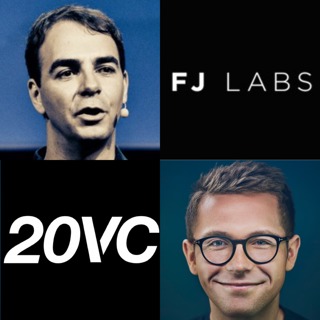
20VC: WTF Is Going On? 3 Outcomes for What Could Happen From Here; What Needs to Happen To Avoid Recession? Why Stagnation is Most Likely and What This Means for Startups and Venture & Why Catastrophe is More Likely Than Ever and Switzerland Could Be a "H
Fabrice Grinda is the Founding Partner @ FJ Labs, with over 700 investments, Fabrice has had over 250 exits and built a portfolio including Alibaba, Coupang, Airbnb, Instacart, Flexport, and Delivery Hero, and many more. Prior to FJ Labs, Fabrice served as CEO for three multinational companies; including OLX, one of the largest websites in the world with over 300 million unique visitors per month. As a result of his incredible investing success, Fabrice was named the #1 Angel Investor in the world by Forbes. In Today's Episode with Fabrice Grinda: 1.) Everything Great Starts Small: How did Fabrice make his way into the world of investing from founding 3 companies? How does Fabrice feel about founders raising funds with external LPs? Why does Fabrice feel that investing as an angel made him a better CEO? 2.) WTF is Going On: The Market Today How does Fabrice assess what is happening in the market today? What is causing the massive public market drops we are seeing? How do inflation rates and interest rates have such an impact on where we are? How much of this is a result of COVID, the shift to goods from services and supply chains? 3.) The Optimistic Case: How does Fabrice think things could get better from here? What needs to happen? What could the Fed do to enable this optimistic outcome to take place? What would need to happen in geo-politics and Russia for this to happen? What is the probability today of this optimistic case happening? 4.) The Great Stagnation: How does Fabrice think the economy could go sideways from here? What are the core drivers of this? Why is this the most likely outcome of all? What is the probability of this happening? 5.) The Catastrophe: How could this market get so much worse? What level of interest rate change would cause this outcome to occur? Why does Fabrice think that Switzerland is a "House of Cards"? What would this mean if Switzerland fell? What other European countries does Fabrice think are vulnerable? 6.) What this Means for Venture: How will LPs respond to these differing situations? How does this impact how Fabrice thinks about his rate of deployment? What segment of the market is Fabrice most excited for; early or growth? Mentioned in Today's Episode with Fabrice Grinda: Fabrice's Favourite Book: Sapiens: A Brief History of Humankind
9 Mai 202257min

20VC: Why the Traditional Seed Fund Model No Longer Works, Why Multi-Stage Funds Investing at Seed Bring Signaling Risk but also Less Pressure, The One Criteria All Potential Sales Hires Need to Have and The Clear Signs of 10x Sales Hires with Jason Lemki
Jason Lemkin is the Founder and Managing Partner @ SaaStr, a social community of 500,000+ SaaS founders and a $100M venture fund. In the past, Jason has made investments in the likes of Algolia, Talkdesk, Pipedrive, and RevenueCat to name a few. Prior to SaaStr, Jason was the Co-Founder and CEO @ Echosign, backed by Emergence Capital, Echosign was bought by Adobe and is Adobe Sign as we know it today. In Today's Episode with Jason Lemkin You Will Learn: 1.) Origins into Venture: How Jason made his way into the world of venture having sold EchoSign? What were some of Jason's biggest lessons from his first 4 investments being unicorns? 2.) The Importance of Ownership & Multi-Stage Funds How does Jason assess the importance of ownership today? If companies can be $20BN, does ownership really matter? How does Jason advise founders who have offers from multi-stage funds at seed? Why does taking multi-stage money at seed result in less pressure for founders? Does Jason believe that signaling risk from large funds is real, when investing at seed? 3.) Building Your Sales Team Does the founder have to be the one to create the sales playbook? What are the nuances? Should you hire a Head of Sales or sales reps first? What should you expect from each? What are the one criteria that you must look for when hiring your first sales reps? What are the signals that a sales rep or leader is a 10x hire? What works when hiring sales reps, 80% of the time? 4.) Boards and VC Value Add: Why has Jason changed his mind when it comes to boards? Why are some inefficient and some very efficient? How do the best founders manage their board? How do they bring in their exec team? What is the right documentation to prepare for board meetings? Why does Jason prefer slide decks over Notion and Coda? How can leaders use board meetings to direct and goal set with functional leads? Item's Mentioned In Today's Episode with Jason Lemkin Jason's Most Recent Investment: Owner
6 Mai 202253min

20VC: The Memo: Chris Sacca on Why We Are Breeding a Generation of Entitled Assholes, Harley Finkelstein on What Great Fatherhood Really Means, Deena Shakir on How Kids Make You a Better Investor and Anne Wojcicki on How Children Change Your Approach to R
Chris Sacca is the Founder and Chairman @ Lowercase Capital, one of the best performing funds in the history of venture capital with a portfolio including Uber, Stripe, Twitter, Instagram, Twilio, Docker and many more. Why does Chris believe we have bred a generation of asshole kids? What is the right way to negotiate with children? How has that impacted how he manages his team? Anne Wojcicki is the Founder & CEO @ 23andMe, offering DNA testing with the most comprehensive ancestry breakdown, personalized health insights, and more. How did having kids change Anne's approach to time allocation and risk? Harley Finkelstein is the President of Shopify. Over the last 12 years, Harley has partnered with Tobi to the tune of building Shopify's revenue to over $4.6BN in 2021 and the team to over 10,000 employees. Does Harley believe he has always been a good father? What changes has Harley made to be more present and there for his children? Why does Harley advise couples therapy as early in a relationship as possible? Deena Shakir is a Partner at Lux Capital, one of the leading firms investing in emerging science and technology ventures at the outermost edges of what is possible. What specific negotiation tactics from parenting can be applied to business? How can a parent show their children they listen, they understand and are there for them? Why does Deena believe children make you more productive and more efficient? Eric Liaw is a General Partner @ IVP, one of the leading later-stage venture capital and growth equity firms of the last decade with $8.7 billion of committed capital and a 40-year IRR of 43.1%. What have been the biggest challenges for Eric of managing family and work? What have been some of Eric's biggest lessons in terms of how he communicates about his work to his family? Scott Dietzen is Vice Chairman of the Board of Pure Storage and served as the Company's CEO from 2010 to 2017. Under his leadership, Pure grew to thousands of employees and completed an IPO in 2015. What can parents learn from nature programs? What core elements of parenting are directly transferrable to management?
4 Mai 202236min

20VC: Scaling to $2BN AUM in 3 years, Fundraising Lessons and Tactics from 2,500 LP Meetings & What it Takes to Build a Firm That Stands the Test of Time with Harley Miller, Co-Founder and Managing Partner @ Left Lane Capital
Harley Miller is the Founder and Managing Partner @ Left Lane Capital, one of the fastest-growing growth equity firms of the last five years. Just yesterday, Left Lane announced the closing of their new fund taking their AUM to over $2BN with an early portfolio including M1 Finance, Masterworks, Choco, GoStudent, to name a few. Prior to founding Left Lane, Harley spent over 9 years at Insight Partners investing in the likes of DeliveryHero, HelloFresh, N26, Calm, Udemy and many more breakout companies. In Today's Episode with Harley Miller You Will Learn: 1.) Origins into Venture: How Harley made his way into the world of venture with his first role at Insight? What were Harley's biggest lessons and takeaways from 10 years at Insight? 2.) Left Lane: Fundraising What are harley's biggest takeaways on fundraising from speaking to 2,500 LPs for Left Lane I? With that experience in mind, what advice does Harley give to other first time fund managers on what it takes to raise successfully? How did the Left Lane pitch to LPs change over time? What worked? What did not work? With the benefit of hindsight, what fundraising elements would Harley have done differently? 3.) Left Lane: Firm Building What are the hardest elements of building a firm today? How did Harley navigate the transition from investor to fund manager? What was challenging? What is Harley's biggest advice to young people in venture looking to scale their career fast? What are 1-2 core inputs aspiring VCs should focus on as they build their career? 4.) Left Lane: Investing and Consumer How does Harley approach portfolio construction with the new fund? How does Harley think through outcome scenario planning and ownership requirements with the new fund? How does Harley think traditional growth equity models can be applied to consumer investing? What will Left Lane be in 20 years? What firm does Harley want to build? Item's Mentioned In Today's Episode with Harley Miller Harley's Most Recent Investment: Masterworks
2 Mai 202249min
20VC: Scaling to $122M ARR IPO with $6M in Net Burn, Olo. The Ultimate Journey of Capital Efficiency, What Worked, What Did Not Work and How Leaders Need To Reshape Thinking Around Resource and Attention Allocation
Noah Glass is the Founder and CEO @ Olo, the interface between restaurants and the on-demand world powering millions of orders per day. Olo is an incredible tale of capital efficiency, at IPO the company had a net burn of just $6M with $122M in ARR. Noah raised from some of the best in the business with names such as David Frankel @ Founder Collective, Danny Meyer, Scott Shleifer @ Tiger Global, all on the cap table. Prior to founding Olo, Noah was International Expansion Manager for Endeavour Global, launching the first African Endeavour affiliate. If that was not enough, Noah is also on the board of Portillo's, Share our Strength and the Culinary Institute for America. In Today's Episode with Noah Glass You Will Learn: 1.) The Founding of Olo: What was the founding a-ha moment for Noah with Olo? What did David Frankel do that compelled Noah, now was the time to start Olo? What have been some of Noah's biggest lessons from working with David Frankel? 2.) Capital Efficiency: Scaling to $122M ARR with $6M Net Burn Why did Noah and the team not raise more money in the early Olo days? How does Noah advise early founders who are concerned if they do not raise, their competition will? What are 2-3 of the core levers that allow Olo to be so efficient? What can others learn from them? What would Noah have done differently fundraise wise, with the benefit of hindsight? 3.) Decision Making: The Secret What does Noah mean when he says; "capital allocation and attention allocation are intertwined"? How has Noah changed and evolved his decision-making as a leader? How does Noah use a CEO coach? What do they discuss? How often? What works? What does not? What decision did Noah make that proved to be the wrong one? How did he come back from it? 4.) Noah Glass: The Father and Husband How does Noah do so much as CEO and also not lose an inch on being an amazing father and husband? What does Noah believe is the secret to a truly successful marriage, while also being public markets CEO? How has Noah changed as a father and husband over the years? What has worked? What has not worked? Item's Mentioned In Today's Episode with Noah Glass Noah's Favourite Book: Setting the Table by Danny Meyer
29 Apr 202237min

20 Sales: Zoom's Head of North America Sales on When To Hire a Head of Sales, Why You Should Hire a Head of Sales Before Sales Reps, The 3 Traits to Look for When Hiring Sales Reps & What Sales Leaders Can Do To Make Their Sales Team Feel Like They Are Wi
Mitch Tarica is Head of North America Sales at Zoom Video Communications. Before joining Zoom, Mitch spent over 5 years at RingCentral including as Senior VP of Worldwide Sales and Customer Success. Finally, before RingCentral, Mitch was at Oracle for over 7 years in numerous different sales roles. In Today's Episode with Mitch Tarica You Will Learn: 1.) Entry into Sales: How did Mitch make his way into sales with one of the first SaaS companies in the world? What were his early lessons on what truly great sales entails? What elements does Mitch fear we have lost in the art of sales over time? 2.) The Playbook: Should the founder be the one to create the sales playbook? What are the signs that the founder has a repeatable and scalable playbook? When is the right time to make the first sales hire? Should it be a Head of Sales or Sales Rep? How does the first hire depend on whether you are PLG or enterprise sales led? 3.) The Hiring Process: How does Mitch structure the hiring process? Step by step, what does he want to achieve? What questions does Mitch ask in the first interview, always? What are the 3 traits that Mitch believes all great sales hires have? How does he test for them? How do Zoom use practical sales tests to determine the ability of a potential sales hire? How does Mitch see many founders make mistakes in the sales hiring process? 4.) Sales Onboarding: What are the crucial steps to do sales onboarding right? How should leaders structure the first 30,60 and 90 days for their new reps? What are some early red flags that leaders should watch for with new reps? What more can leaders do to make sure their reps are as successful as possible in the early days?
27 Apr 202237min

20VC: Why You Should Think Twice Before Taking Multi-Stage Money at Seed, Why Venture Has Never Been Less Collaborative, How Becoming a Parent Made Me a Better Investor and Why We Should Be Optimistic About the Future of Diversity in Venture with Deena Sh
Deena Shakir is a Partner at Lux Capital, one of the leading firms investing in emerging science and technology ventures at the outermost edges of what is possible. Deena has led a number of investments including in Maven Clinic, Mos, Ramp, Alife and SteadyMD to name a few. Before joining Lux, Deena was a Partner at GV and previously led product partnerships at Google for early-stage products in healthcare, AI/ML and search at Google. Before tech and venture, Deena was an aspiring anthropologist, journalist, diplomat, aid worker and was a Presidential Management Fellow at the U.S. Department of State under Secretary Clinton. There Deena helped launch President Obama's first Global Entrepreneurship Summit in 2010. In Today's Episode with Deena Shakir You Will Learn: 1.) Origins into Venture: How Deena made her way from journalism and the world of politics to rockstar healthcare investor? What were Deena's biggest takeaways from seeing her parents build a new life in the US? 2.) Competition in Venture: Why should founders not take multi-stage fund money at seed? What problems does it cause? How do VCs try and justify it? What red flags should founders look for? How does Deena advise her companies when it comes to pre-emptive rounds? When should they take them? When should they not take them? 3.) Deena Shakir: The Person How has becoming a parent changed Deena's operating mentality? Why does Deena believe she has never been better as an investor post becoming a mother? Why does Deena feel so many questions around parenting are wrong? In what ways would she like those questions of female operators and investors to change? 4.) Diversity and Inclusion: We Should Be Optimistic Why is Deena optimistic about the future of diversity and inclusion in tech and venture? What drives her optimism? What remains a cause for concern for Deena on this topic? What more can both companies and venture funds do to improve the landscape? Item's Mentioned In Today's Episode with Deena Shakir Deena's Favourite Book: The Power Law: Venture Capital and the Art of Disruption Deena's Most Recent Investment: Mos: Banking for Students
25 Apr 202236min
20VC: How Today's Market Changes How Companies Should Approach Burn and Runway, Are Financing Markets Closing? How To Know When To Pay Up vs Stay Price Disciplined & Why The Most Important Thing in Venture is Generating Positive Selection with Bill Cilluf
Bill Cillufo is Partner and Head of International Investments at QED, one of the leading fintech venture firms today with a portfolio including Nubank, Kavak, Klarna, Quinto Andar and Bitso to name a few. As for Bill, he has led investments in Nubank, Loft, Wagestream and Creditas among others. Prior to joining QED, he spent nearly 20 years at Capital One, spanning several roles and leading several businesses. During Bill's last 3 years at Capital One, he led its Co-Brand and Private Label credit card business, building the business nearly from scratch to one of the top few players in the US market. In Today's Episode with Bill Cillufo You Will Learn: 1.) Origins into Venture: How Bill made his way from 20 years at Capital One to becoming a Partner @ QED? How did Capital One inform his mindset around unit economics? Having seen booms and busts firsthand with Capital One, how did that impact his investing mindset today? 2.) The Landscape: What is Happening? Where does Bill believe the biggest crunch in funding markets is today? Does Bill believe this will trickle down to the early stage? How does Bill advise his portfolio companies on runway and burn given the environment? What does Bill believe that many have not seen that is coming? 3.) Bill Cillufo: The Investor How does Bill analyse his own relationship to price and price sensitivity? How has Bill changed as an investor over the last 5 years? What caused the changes? How does Bill reflect on reserves management given the new landscape we are in? 4.) QED: The Expansion Does Bill believe that expanding geographically has become easier with time? What has become harder about expanding into new geographies? How important does Bill believe partnering with local firms is when VCs enter new territories? Item's Mentioned In Today's Episode with Bill Cillufo Bill's Favourite Book: Tom Clancy: The Hunt for Red October Bill's Most Recent Investment: Refyne
22 Apr 202241min