
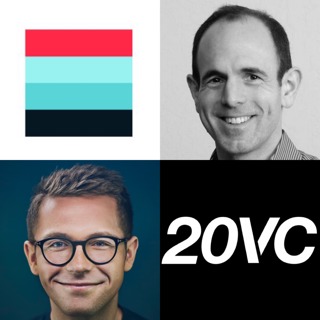
20VC: Keith Rabois on Why Buy Low, Sell High Does Not Work in Venture, Keith's Biggest Lessons from Prior Crashes, Why Today's Public Markets are not an Over-Reaction, Why Valuation is a Trap & Why Wokeness is a Function of Entitlement
Keith Rabois is a General Partner @ Founders Fund, one of the best performing funds of the last decade with a portfolio including Facebook, Airbnb, SpaceX, Stripe, Anduril, the list goes on. As for Keith, he has led the first institutional investments in DoorDash, Affirm and co-founded Opendoor. He has also led investments in Faire, Ramp, Trade Republic, and Stripe. As an operator, Keith has an unparalleled track record as a Senior Exec at Paypal, he then went on to influential roles at Linkedin and being COO at Square. Finally, as an angel, Keith made early investments into Airbnb, Lyft, Palantir, Wish and more. In Today's Episode with Keith Rabois: 1.) Buy Low, Sell High: What BS! Why does Keith believe that "buy low, sell high" does not work in venture? Why would it lead you to very dangerous investment decisions at the early stage? How does the size of your fund impact the appropriateness of "buy low, sell high"? 2.) The Current Landscape: Does Keith believe the current state of public markets is an over-reaction or a new normal? How does Keith respond to the suggestion that Founders Fund has paused new investments given the uncertainty in the market? How does Keith think about investing through cycles and temporal diversification? How does Keith advise young investors today questioning whether they are actually any good at this? What does Keith believe are his biggest fears and insecurities today? 3.) Outcome Scenario Planning and Competitor Analysis: Does Keith believe outcome scenario planning is important? Why does Keith believe you can always tell your biggest hits early? What have been the core signs for him? What have been some of Keith's biggest lessons from Mike Moritz and Vinod Khosla when it comes to upside maximization? What are the right questions to ask? Why does Keith believe you do need to look through public market comps when investing in startups? 4.) Time Allocation and Losing Faith in Founders: How does Keith approach time allocation across the portfolio? Spend time with the winners or help the struggling companies? What have been his biggest lessons here? What does Keith do when he has lost faith in the founder? How does he communicate it to them? What does Kieth believe VCs do wrong when they no longer believe in the founder or company? 5.) Do VCs Add Value? What does Keith believe is the acid test for whether he is doing his job as a VC properly? Why does Keith believe there are only 5 board members that add true value to their companies at scale? Who is the best board member Keith has ever worked with? Why? Why does Keith believe that age is not your friend as an investor? How does he combat this? 6.) The Downfall of SF and Wokeness: Will we see a reduction of wokeness in companies with the public markets correcting and power shifting from employees to employers? Is Keith concerned by the lack of coherence in the US today when it comes to politics? What are the core reasons for the downfall of SF to Keith? Why does he believe it is a net negative to build a company in SF today? Items Mentioned in Today's Episode: Keith's Most Recent Investment: Found
30 Mai 202239min

20VC: Scaling from a $4M Angel Fund to $900M, Why Seed May Be The Best priced Asset Class and Not Overpriced At All & The 3 Stages of Fund Scaling and What it Takes To Build a Firm with Aydin Senkut, Founder and Managing Partner @ Felicis
Aydin Senkut is the Founder and Managing Partner of Felicis. An original super angel turned multi-stage investor, he has been named on the Forbes Midas List for the past nine years (2014-2022). Felicis has been an incredible 16-year journey starting with a $4M Fund I back in 2006, their most recent fund in 2021 was $900M. Along the way, Felicis has invested in over 45 unicorns including Adyen, Canva, Shopify, Notion, Opendoor, and Plaid. Prior to starting Felicis, Aydin was a Senior Manager at Google where he spent an incredible 6 years. In Today's Episode with Aydin Senkut: 1.) The Founding of Felicis: How did Aydin transition from a successful angel to the first $41M institutional fund with Felicis? How did Aydin's mindset change moving from investing personal to LP capital? What does Aydin know now that he wishes he had known when he started Fund I? 2.) Fund Mechanics: Building a Portfolio Why does Aydin believe portfolios need to have 40-50 positions to be diversified enough? Given Aydin being multi-stage, how important is ownership on first check for Aydin and Felicis? Does Aydin believe it is possible to really concentrate capital into your best performers? How does Aydin think through outcome scenario planning? What is his biggest takeaway from this? 3.) Aydin Senkut: The Investor What have been the biggest changes in Aydin's style of investing over the last 16 years? What was Aydin's biggest miss? How did it impact his mindset moving forward? What is Aydin's biggest insecurity as an investor today? How has it changed? Where does Aydin still believe he is weak as an investor? What is he doing to combat it? 4.) The Venture Landscape: Why does Aydin believe that despite the pricing, seed is the best risk-adjusted asset class? How does Aydin evaluate where crossover funds will move with the death of many growth rounds? What segment of the market will be hit hardest by the crunch? What worries with this? What would Aydin most like to change about the venture landscape today? Why? Item's Mentioned In Today's Episode with Aydin Senkut Aydin's Favourite Book: The Black Swan: The Impact of the Highly Improbable
27 Mai 202243min

20 Sales: How To Create and Execute a World-Class Sales Playbook, Why You Should Do Both PLG and Enterprise Sales at the Same Time, Three Non-Obvious Qualities the Best Sales Reps Have & The Four Steps To Sales Team Onboarding with Oliver Jay, Former CRO
Oliver Jay (OJ) is one of the most successful sales leaders of the last decade. Most recently, OJ spent 6 years at Asana where he was hired as the company's first revenue leader. As CRO, OJ was responsible for product-led and sales-led revenue and grew the team from less than 20 to over 450. Before Asana, OJ spent 4 years at Dropbox in a period of hyper-scaling for the business where OJ was Head of APAC and LATAM. At Dropbox, OJ scaled the sales team from 0 to 50 while tripling ARR. If that was not enough, OJ is also an independent board member at Grab, the leading Super app in Southeast Asia. In Today's Episode with Oliver Jay You Will Learn: 1.) Entry into Sales: How did OJ make his way into sales with Dropbox? If OJ were to choose 1-2 lessons from his time at Dropbox and Asana that have stayed with him, what would they be? How did they impact his mindset? What were some of the non-obvious but crucial things Asana and Dropbox did in sales that led to success? 2.) The Playbook: Why does OG disagree with so many definitions of "the sales playbook"? What is the sales playbook to OJ? What are the different chapters? Should the founder be the one to create the sales playbook? What are the signs that the founder has a repeatable and scalable playbook? When is the right time to hire the first sales rep? Should it be a Head of Sales or Sales Rep? How does the first hire depend on whether you are PLG or enterprise sales led? 3.) The Hiring Process: How does OJ structure the hiring process? How does OJ know the qualities that he wants to uncover in each candidate? What questions does OJ ask to unpack whether the candidate has those qualities? How does this differ when hiring sales reps vs sales leaders? How does OJ use the sales demo to test the quality of a candidate? What does he want to see? Who does OJ bring into the interview process? When do they get involved? What are two questions that will immediately tell whether someone is a good manager? 4.) Sales Onboarding: How does OJ segment sales onboarding into 3 crucial steps? Chapter 1: Support: Why does OJ believe it is so important for reps to spend their first week with support? What should they look to learn? What questions should they be asking? Chapter 2: Market Knowledge: How can sales leaders teach and educate new reps on market landscape, dynamics and competition? Why does this have to come before sales training? Chapter 3: Sales Training: In the final step, what does the sales training process? What does OJ look for in the final sales demo? When does OJ let reps speak to customers? How does this differ when comparing enterprise to PLG?
25 Mai 202241min
20VC: Oren Zeev on Raising 3 Funds and $1BN in 12 Months; Why Temporal Diversification is BS, Why Both LPs and GPs are Way Over-Diversified & Why Venture Partnerships are Sub-Optimal and Challenging
Oren Zeev is the Founding Partner @ Zeev Ventures and one of the OGs of solo capitalism. Oren has an incredible portfolio including investments in Audible, Houzz, Chegg, Riverside, Tipalti, TripActions, and Firebolt to name a few. Oren is also very unlike any other VC firm, he does not employ any associates, principals, or staff. He doesn't have partners or partner meetings. No LP meetings. No processes. No investment committees or memos. Nada. Oren is doing it differently. Prior to starting Zeev Ventures, Oren spent 12 years as a GP @ Apax Partners where he c-headed their technology practice in their Silicon Valley office. In Today's Episode with Oren Zeev You Will Learn: 1.) Origins into Venture: How did Oren make his way into venture over 20 years ago? How does the crash of today compare to the dot com and 2008? What is the same? What is different? Why did Oren decide to leave Apax and start Zeev Ventures on his own? 2.) Deployment Pace: Why does Oren believe that the benefits of temporal diversification are overstated? Oren raised 3 funds and over $1BN in a year, how does this current environment impact how Oren thinks about deployment pace? Will he change anything? How does Oren explain deployment pace to LPs who question him? 3.) Ownership: How central a role does ownership play for Oren in terms of his investor psychology? Does Oren believe it is possible to increase your ownership in subsequent rounds, in your best companies? What are the biggest mistakes that big funds make with regards to ownership requirements? Why is there a misalignment between GP and LP when it comes to increasing ownership vs markups? 4.) Price Sensitivity: How does Oren evaluate his own relationship to price today? What have been some of Oren's biggest lessons on price from his biggest wins and losesses? What mistake do the majority of investors make when it comes to price? 5.) Diversification: Why does Oren believe that both GPs and LPs are wildly over-diversified in their portfolios? What is the right amount of companies for GPs to have in their portfolio? How does Oren advise LPs on the right amount of funds for them to be invested with? 6.) Oren Zeev: AMA: What does Oren know now that he wishes he had known when he started his career in venture? What elements of the world of LPs would Oren most like to change? Why does Oren feel that the concept of pro-rata is a lazy one? Item's Mentioned In Today's Episode with Oren Zeev Oren's Most Recent Investment: Bad Blood: Secrets and Lies in a Silicon Valley Startup
23 Mai 202243min
20VC: The Job of the CEO is Do As Little As Possible; How To Hire, What Questions To Ask, Why Pointy People are Always 100xers, How To Tell Great Stories Today & How Leaders Must Determine What To Delegate vs What To Control with Ian Siegel, Co-Founder an
Ian Siegel is the Founder and CEO @ ZipRecruiter, a leading online employment marketplace that uses AI-driven matching technology to actively connect millions of businesses and job seekers to their next great opportunity. Since co-founding the company in 2010, more than 1.8M employers have used ZipRecruiter to find their next great hire and over 500 million job applications have been submitted through the site. Prior to their IPO last year, Ian bootstrapped the company for many years to many millions in revenue before taking venture funding from IVP, Wellington Management and Basepoint Ventures to name a few. Before founding ZipRecruiter, Ian served in key leadership roles at CitySearch, Stamps.com, and Rent.com (an eBay company). In Today's Episode with Ian Siegel You Will Learn: 1.) The Founding of Olo: How did Ian co-found ZipRecruiter from his kitchen with no venture funding and his 3 friends? Why did they decide to not raise venture funding in the early days? What was the catalyst at $50M in revenue for realising now was the right time to raise funding? 2.) The Art of Great Storytelling What does truly great storytelling mean to Ian? What are the components of a great story? Why do so many people today f*** up their product marketing and messaging? Why does Ian believe Version 1.0 is the only one that takes true courage? 3.) CEO's Do As Little As Possible Why does Ian believe his job as CEO is to do as little as possible? How does Ian determine between the things he, the CEO should do, vs those those he should delegate? Why does Ian believe the art of leadership and the art of parenting are the same? 4.) The Art of Hiring: How has Ian's approach to hiring changed over the years? What does Ian mean when he says, "I look for pointy people"? How does he detect them? What are the two qualities that make the best execs? What questions reveal them? 5.) Parenting and Marriage: Does Ian worry that with increasing family commitments, he loses an inch on work? Why does he believe he is in an advantage as a CEO to those that do not have children? What was the biggest argument he has had with his wife? How did it change his perspective? Item's Mentioned In Today's Episode with Ian Siegel Ian's Favourite Book: Living with a SEAL: 31 Days Training with the Toughest Man on the Planet
20 Mai 202246min
20Growth: Five Signs of Top Growth Talent and How to Detect Them, How to Structure and Conduct the Most Efficient Customer Discovery Process & The Framework to Determine Your North Star and When To Change it with Darius Contractor, Former VP Growth @ Airt
Darius Contractor is one of the pre-eminent growth leaders of the last decade. As a growth OG, he has been VP Growth @ Airtable, where he led the growth, engineering, and product teams. Before Airtable, Darius was Head of Product Growth @ Facebook Messenger and finally, before Facebook, Darius spent 4 years as Head of Growth Engineering at Dropbox; here, Darius helped drive Dropbox to $100M in net new revenue through Dropbox Business. If that was not enough, Darius is also an active angel and fund investor with a portfolio including Calm, Airtable, Clubhouse, Census and LP checks in Maven Ventures and Long Journey Ventures. In Today's Episode with Darius Contractor You Will Learn: 1.) Darius Contractor: Entry into Growth: How did Darius make his way into the world of growth? What was that first entry position? What are 1-2 of the biggest takeaways for Darius from his time at Airtable, Dropbox and Facebook? What 1-2 pieces of advice would Darius give to a growth leader starting a new role today? 2.) When is the Right Time: What does the term"growth" really mean to Darius? How do so many confuse it? When is the right time to make your first growth hire as a startup? Should this hire be a junior growth person or a growth leader? Should this initial growth team be placed inside an existing team or as a standalone team? Where do so many startups make mistakes when making this first hire? 3.) Who To Hire: How does one structure the process for your first growth hire? What are the stages? What are the qualities that we are looking to uncover in these first hires? What are the 4 interview stages to go through to test for these qualities? How should founders use case studies and practicals as a way to test for these qualities? 4.) Onboarding and Integration: What does the optimal onboarding process for new growth hires look like? What do the best growth hires do in the first 30/60/90 days? What are some early red flags that a new hire is a mis-hire? How can leaders encourage cross-functional communication between growth and the rest of the org?
18 Mai 202251min
20VC: The Founding of General Catalyst, What it Takes to Build a Firm That Stands the Test of Time, Why VCs Need to Give Founders Greater Permission to Go For It & Why Venture Capital is Like Tennis with David Fialkow, Co-Founder @ General Catalyst
David Fialkow is the Co-Founder and Managing Director @ General Catalyst, one of the leading venture firms of the last decade with a portfolio including Stripe, Snap, Airbnb, Anduril, Canva and many more amazing names. Prior to founding General Catalyst with Joel Cutler, David was a serial entrepreneur building and selling 4 successful companies. In Today's Episode with David Fialkow: 1.) Everything Great Starts Small: How did David and Joel decide on a Hawaiin beach that they wanted to start General Catalyst? Why did they decide to name it General Catalyst? How did the first fundraise go for GC Fund I? 2.) Creating a Firm: The Early Days What design objectives did Joel and David have when they started the firm? How did Joel and David think about firm expansion; going to the West Coast? Coming to Europe? Going multi-stage? What drives their decision to do new products? On reflection, what were some of the toughest elements of the early days with GC? What does David believe they got right? Why? What did they get wrong? How would he change it? 3.) The Partnership: What does David believe makes for a truly successful venture partnership? How does a great venture partnership align to what makes a successful marriage? How does David approach trust? How does he build it with people? What situations would cause David to lose trust? Why do so few people understand it? What does David believe is the true secret to authentic relationship building? 4.) Doing the Impossible: Generational Transition: What does David believe they did so right in their generational transition at GC? What do many firms get wrong in handing over the reins to the next generation? What are the biggest commonalities between venture partnerships and filmmaking? Mentioned in Today's Episode with David Fialkow: David's Favourite Book: The 7 Habits Of Highly Effective People
16 Mai 202249min
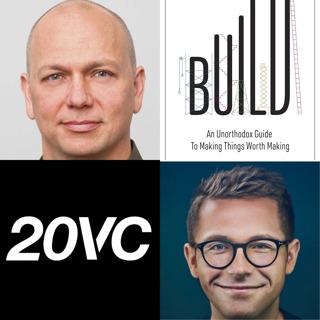
20 Product: iPhone Creator, Tony Fadell on Marketing Lessons Learned from Steve Jobs, What is Truly Great Product Marketing, How The Best Product Teams Do Post-Mortems and Product Reviews & Is Product Art or Science, Data or Gut?
Tony Fadell, often referred to as the father of the iPod is one of the leading product thinkers of the last 30 years as one of the makers of some of the most game-changing products in society from the iPhone and iPod to more recently founding Nest, creating the Nest Thermostat, leading to their $3.2BN acquisition by Google. Tony recently released Build, this is a masterclass taking 30 years of product and company building lessons and packaging them for you, check it out here. In Today's Episode with Tony Fadell: 1.) Everything Great Starts Small: How did Tony make his way into the world of product in the early days? What were his biggest takeaways from the massive flop of General Magic? How did Tony come to Apple and what were the early creation days of iPod and iPhone? 2.) Data and Brand: Does Tony believe great product building is art or science? When should teams listen to their gut vs the data? When was a time that Tony listened to his gut? When was a time Tony listened to the data? How did each situation evolve and turn out? How does Tony think about creating a truly special first mile experience? Where do so many companies go wrong in the first mile today? How does Tony balance between business decisions (COGs etc) and product decisions that will delight customers? 3.) Lessons from Steve Jobs on Product Marketing: How does Tony define great product management? Why do so many people get it wrong? What are Tony's biggest lessons from working with Steve Jobs on what makes great product marketing? Where does Tony see so many companies make the biggest mistakes when it comes to messaging? What is the difference between messaging, marketing and communications? 4.) Hiring Product Teams: What are the clearest signals of the best product talent when interviewing them? What questions does Tony always ask product people to determine quality? How do great product teams remain upbeat when launches fail and remain modest when they are wildly successful? 5.) Apple Watch, iPod and Apple HiFi: Why was the product messaging for the Apple Watch wrong in the early days? How did it change? Why was the iPod a bad business until the 3rd Generation? What changed? Why did the Apple HiFi fail? How did that impact Tony's mindset? Mentioned in Today's Episode with Tony Fadell: Tony's Favourite Book: Only the Paranoid Survive
11 Mai 202253min