
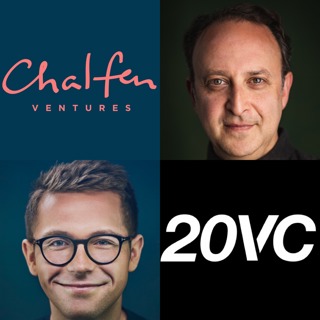
20VC: How to Build Anti-Fragile Venture Portfolios Today | Why Diversification is Overrated in Portfolio Construction | How to Think Through Sizing Investments, Market Sizing and Pricing in Today's Environment with Mike Chalfen @ Chalfen Ventures
Mike Chalfen is a solo GP with Chalfen Ventures and one of the most respected and successful early-stage investors in Europe over the last two decades. Among Mike's incredible portfolio includes the likes of King.com (makers of Candy Crush), Houzz, Tipalti, Snyk, and Tray.io, to name a few. Some incredible facts on Mike, he has a 15x career track record, he has a portfolio value of over $40BN+ and he joined the venture industry, the year of my birth! In Today's Episode with Mike Chalfen You Will Learn: 1.) Entry Into Venture and The Broken Customer Experience of VC: How did Mike make his original entry into venture way back in 1996? What does Mike mean when he speaks of the difference between "managing your career vs the money you invest"? What does Mike believe are some of the greatest challenges of venture partnerships today? What does Mike believe that the customer experience in venture partnerships for founders is broken today? How did seeing the prior booms and busts impact Mike's investing mentality today? 3.) Portfolio Construction 101: How does Mike think about portfolio construction today? With 9-10 core positions, why does Mike disagree with the traditional notion of "diversification"? How does the decision-making framework for Mike change when considering new investments vs re-investments? Does Mike believe that pro-rata is a lazy notion? What does Mike need to see on the upside to re-invest? How does Mike feel about the importance of temporal diversification? Why did Mike increase the cadence of his investing in 2021? Does he regret the increased speed? 3.) The Market 101: How does Mike think about the importance of market sizing? If we always underestimate the size of our winners, is this market sizing exercise not destined for failure? Why does Mike believe so many over the last few years have poorly sized markets they invested in? How does Mike assess market timing risk? What market risk is he willing vs not willing to take? What have been some of Mike's biggest mistakes when analyzing markets in the past? How did it change his perspective? 4.) Boards 101: How would Mike describe his style of board membership today? How has it changed over time? Why does Mike believe that boards at seed are not valuable? When do they become valuable? What is the single biggest mistake Mike sees so many young board members make today? What is his biggest advice to young board members? How does Mike advise founders on preparing for boards? What does he want to see? What are the biggest mistakes founders make when conducting board meetings? Items Mentioned in Today's Episode with Mike Chalfen: Mike's Favourite Books: Don't Let's Go to the Dogs Tonight: An African Childhood, Days Without End Mike's Most Recent Investment: Opply
8 Jul 202257min
20 Product: The Ultimate Guide to Product Reviews: What Makes the Best vs the Worst | How Often Should They Be | Who Should Be Invited | Who Sets The Agenda | How to do Follow-Ups Post Product Reviews
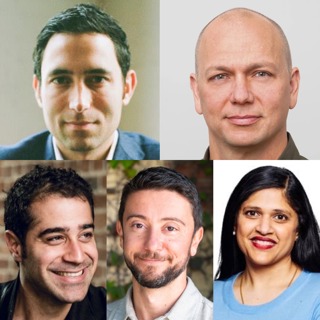
Scott Belsky is an entrepreneur, master of product reviews, author, investor, and currently serves as Adobe's Chief Product Officer and Executive Vice President, Creative Cloud. Tony Fadell, often referred to as the father of the iPod is one of the leading product thinkers of the last 30 years as one of the makers of some of the most game-changing products in society from the iPhone and iPod to more recently founding Nest. Lenny Rachitsky is one of the OGs of product, having spent over 7 years at Airbnb as a product lead he left to start his newsletter, find it here. Kayvon Beykpour is one of the most prominent product leaders of the last decade. For the last 7 years, Kayvon has been at Twitter where he led all of the teams across Product, Engineering, Design, Research and Customer Service & Operations. Aparna Chennapragada is Chief Product Officer @ Robinhood, the company revolutionising consumer finance with commission-free investing. In Today's Episode Breaking Down Product Reviews We Discuss: 1.) What makes a truly great product review? 2.) What are the biggest mistakes that product leaders make when leading product reviews? 3.) Who should be invited to the product review? How does this change with scale? How does this change in a world of remote work and Zoom? 4.) Who should set the agenda for the product review? 5.) How can leaders assign accountability and ensure that the follow-ups from product reviews are executed on? 6.) How can leaders ensure that they do not dominate product reviews with the weight of their words? How can they give designers and devs the space to share their thoughts without being judged?
6 Jul 202234min
20VC: Hiring 101; The Biggest Mistakes Founders Make in the Hiring Process | Fundraising; What to Optimize for, How Profitability Changes Leverage When Raising | SMB to Enterprise; When to Move, What Changes and Dangers of Moving Too Early with Daniel Yan
Daniel Yanisse is the co-founder and CEO of Checkr, a leading HR technology company, currently valued at $5 billion. During the journey, Daniel has raised over $679M for Checkr from some of the best including Accel, Bond, Coatue, GV, Elad Gil and IVP to name a few. Prior to Checkr, Daniel was a software engineer and helped develop prototypes of the Mars Rover for NASA. Daniel has been recognized in Forbes "30 Under 30" and recently Checkr was recognized by Forbes as one of America's best start-up employers. In Today's Episode with Daniel Yanisse You Will Learn: 1.) The Origins of Checkr: The $5BN Company How did Daniel come to co-found Checkr? What was the a-ha moment? How did Daniel's experience with his prior company impact how he thought about building Checkr? What does Daniel know now that he wishes all first-time founders knew when they started? 2.) Hiring 101: What are the single biggest hiring mistakes Daniel made in the early days of Checkr? How does Daniel structure his interview process for new candidates today? How has it changed? How does Daniel test for ego and humility in the interview process? How does Daniel approach giving feedback today? How has it changed over time? What does Daniel believe is the right way to let someone go? How long does one give a team member who is not performing? 3.) Fundraising 101: How does Daniel advise founders going out to raise today in the challenging market conditions? What terms should founders optimize for? What terms should they not optimize for? What are the single biggest mistakes Daniel sees founders make when raising? What does Daniel wish he had done differently with Checkr's raises? What was the hardest raise for Checkr? Why was it so hard? What was the outcome? 4.) Going into Enterprise: Why does Daniel believe they went into enterprise too soon? What was the result of this? How does Daniel advise founders on when is the right time to go into enterprise? What changes in both your company and your product when moving to enterprise? Items Mentioned in Today's Episode with Daniel Yanisse: Daniel's Favourite Book: Accelerate: The Science of Lean Software and Devops: Building and Scaling High Performing Technology Organizations
1 Jul 202239min
20VC: The Memo: Bill Gurley, Doug Leone, Keith Rabois; Investing Lessons from Prior Busts, How Their Investor Psychology Changed, What Can Be Applied To Today's Market
Bill Gurley is a General Partner @ Benchmark Capital, Bill, is widely recognized as one of the greats of our time having worked with the likes of GrubHub, NextDoor, Uber, OpenTable, Stitch Fix, and Zillow. Doug Leone is the Global Managing Partner @ Sequoia Capital, one of the world's most renowned and successful venture firms with a portfolio including the likes of Google, Airbnb, Whatsapp, Stripe, Zoom and many more. Keith Rabois is a General Partner @ Founders Fund, one of the best performing funds of the last decade with a portfolio including Facebook, Airbnb, SpaceX, Stripe, Anduril, the list goes on. Arthur Patterson and Jim Swartz founded Accel in 1983. Under their leadership, they have built Accel into one of the most prominent venture firms of the last 4 decades. Michael Eisenberg is a Co-Founder and Equal Partner @ Aleph, with a portfolio including the likes of Lemonade, Melio and HoneyBook, they are one of the leading early-stage firms of the last decade. Sonali De Rycker is a Partner @ Accel, one of the leading firms of the last 3 decades with a portfolio that includes the likes of UiPath, Miro, Spotify and many more incredible companies. Fabrice Grinda is the Founding Partner @ FJ Labs, with over 700 investments, Fabrice has had over 250 exits and built a portfolio including Alibaba, Coupang, Airbnb, Instacart, Flexport, and many more. In Today's Episode You Will Learn: 1.) How does the current environment compare to prior busts? 2.) How will the changing interest rates impact the startup funding climate moving forward? 3.) Why is the rate of inflation the only true metric which reveals the ultimate fate of the economy? 4.) What are the world's leading investors telling their founders? 5.) How are the best investors in the world thinking through reserves management?
29 Jun 202226min
20VC: Accel's Sonali De Rycker on Building a Generational Defining Venture Firm; Hiring, Culture, Incentives | Investing; Biggest Mistakes, Biggest Lessons from Prior Crashes, Why Market Size is Dangerous to Focus On | Decision-Making; Type 1 vs Type 2 Ri
Sonali De Rycker is a Partner @ Accel, one of the leading firms of the last 3 decades with a portfolio that includes the likes of UiPath, Miro, Spotify, and many more incredible companies. As for Sonali, Sonali led Accel's investments in Avito (acquired by Naspers), Spotify (NYSE: SPOT), Primer, Monzo, Letgo (acquired by Naspers), Kry/Livi, Soldo, Hopin, and Sennder. Prior to Accel, Sonali was with Atlas Venture (now Accomplice). She also previously served on the board of Match.com (NASDAQ:MTCH). In Today's Episode with Sonali De Rycker You Will Learn: 1.) From Small Town in India To Leading Venture Capitalist: How Sonali made her way from a small town in India to becoming one of the most prominent VCs of the last decade? What were some of Sonali's biggest lessons from seeing the booms and busts of 2000 and 2008? What climate does the crash today resemble more? Why so? How does Sonali advise younger investors who have not lived through a downturn? What should their investor psychology be right now? 2.) Firm Building: Accel: What are the most challenging and non-obvious elements of building a firm today? What have been some of the biggest mistakes Accel has made when adding to the team? What qualities do Sonali and Accel specifically look for when interviewing candidates to join the team? What specific questions tease out whether the candidate has these traits? What specific structures does Accel have in place to encourage the team to work together as one cohesive unit? How do they use bonuses as a team incentive? 3.) Sonali: The Investor: How has Sonali's investing style changed over the years? What moments caused these changes to happen? What are some of the biggest mistakes Sonali has made in her investing career? What did she learn from them? On the flip side, from winners such as Spotify and Supercell, what did Sonali learn from her biggest winners? Why does Sonali believe that market sizing and outcome scenario planning is useless and will lead you to make the wrong decision? 4.) Decision-Making and Risk: What does Sonali mean when she speaks of Type 1 and Type 2 decisions? How should one's decision-making process change according to which type of decision it is? What are the two biggest risks startups are facing today? Does Sonali believe that seed-stage companies will take money from crossover funds? What does Sonali do when she loses faith in the founder? How does she communicate that to them in the right way? What have been some of her biggest lessons here? What have been some of Sonali's biggest lessons when it comes to reserves management? How does Sonali determine when to double down vs reserve cash? Items Mentioned in Today's Episode with Sonali De Rycker: Sonali's Favourite Book: A Fine Balance Sonali's Most Recent Investment: BeReal
27 Jun 202248min

20VC: From Kitchen Table to $134M Fund II; Raising Your First Time Fund: Lessons from 400 LP Meetings, How To Find New LPs, What Materials to Use, How To Get LPs To Commit, The Challenges on Minimum Check Sizes and GP Commits and more with Henri Pierre-Ja
Henri Pierre-Jacques is Managing Partner of Harlem Capital, on a mission to change the face of entrepreneurship by investing in 1,000 diverse founders over the next 20 years. From a kitchen table with his Co-Founder, Jarrid, Henri has scaled Harlem in just a few years to their latest fund last year of $134M, well over-subscribed from their $100M target. Prior to Harlem, Henri was in Private Equity at ICV Partners, and before PE was an Investment Banker at Bank of America Merrill Lynch. In Today's Episode with Henri Pierre-Jacques 1.) From Kitchen Table to $134M Fund: How did Henri make his way into venture having had the idea for Harlem at the kitchen table with his best friend? How did Henri use his angel investing strategically to position him to raise Fund I? How did Henri's mindset change when making the transition from angel to VC? 2.) The First Fundraise: Harlem I How long did it take to raise the first fund? How many meetings did they have? What were the most common reasons LPs said no for the first fund? What were their biggest lessons around what potential LPs did and did not like? How does Henri advise new managers when it comes to meeting new LPs? How does Henri use past deal memos to serve as discussion material with LPs? 3.) Building the Firm: The Strategy: What was the portfolio construction for the first fund? How does Henri separate the world of funds into 3 distinct groups? How did they approach reserves management with the first funds? What are some of Henri's biggest lessons when it comes to effective reserves management? How does Henri assess his own relationship to price and ownership? How does that change with fund size? What are some very important nuances that Henri does not believe many managers think about? 4.) It Is Time For Change: Specifically, what are Harlem street doing to ensure the next generation of investors is much more diverse? How do they leverage their intern program to achieve this? What would Henri like to see change in the world of LPs when it comes to allocating to more diverse managers? What legacy does Henri want to leave with Harlem? What will be a success for Henri? Items Mentioned in Today's Episode with Henri Pierre-Jacques: Henri's Most Recent Investment: Mueshi
24 Jun 202244min

20 Sales: Why Founders Should Not Be The One To Create The Sales Playbook, How To Structure Each Interview in the Hiring Process For Sales Reps, How To Use an "Interview Panel" Effectively and more with Zhenya Loginov, CRO @ Miro
Zhenya Loginov is the CRO @ Miro, the leading visual collaboration platform that helps bring teams together and meaningfully improves the way people work. At Miro, I run the go-to-market team of 700+ people across 11 global offices. Prior to Miro, Zhenya was the COO @ Segment where he built and ran the global go-to-market team of 200+ people, expanded the product-market fit into the Enterprise and grew revenue 6x, leading to their acquisition by Twilio for $3.2Bn. Finally, before Segment, Zhenya led a 100-person team at Dropbox across numerous different functional areas. In Today's Episode with Zhenya Loginov You Will Learn: 1.) Entry into Sales as an Outsider: How Zhenya made his way into sales as an outsider and came to be one of the most powerful revenue leaders today with Miro? What are 1-2 of the biggest takeaways for Zhenya from his time at Segment and Dropbox? How did they impact his mindset today? Why did Dropbox not win the enterprise when they had the chance? What mistakes did they make? 2.) The Sales Playbook: What, Why and How: What does "the sales playbook mean to Zhenya? Does the founder need to be the one to create the sales playbook? What are the signs that the founders needs to bring in their first sales hire? Should this sales hire be a sales leader or more junior sales rep? Is is possible to run a PLG and enterprise sales motion at the same time in the early days of the company? What do many founders misunderstand when contemplating adopting an enterprise sales strategy? 3.) Hiring the Team: How does Zhenya structure the interview process for new sales hires? Zhenya spends 5 hours with each candidate, what does he look to get out of each meeting? How does Zhenya break down the criteria for what he wants to see? What are some examples of this? How does Zhenya test to determine if the candidate has these criteria? What questions does he find to be most revealing? Why does Zhenya find case studies to not be useful? How does Zhenya use interview panels to ensure he makes the right hiring decision? Who is on the panel? At what stage do they meet the candidate? How does Zhenya like to use the panel? 4.) Laying the Groundwork: The Onboarding Process: What is the right way to structure the onboarding process for all new sales hires? What are some early signs that a new sales hire is not working? What can sales leaders do to ensure new reps get "early wins" on the board? What can leadership do to ensure the sales team has good cross-functional communication across the org? What works? What does not work? What are some of the biggest challenges of running a remote sales team?
22 Jun 202248min
20VC: Gary Vaynerchuk on The Most Painful Lessons Learned but Why it was Good to Learn Them, Why You Have to Change the Timeframe You Have For Success, His Relationship to Money and How it Has Changed Over Time & His First 3 Angel Investments; Twitter, Fa
Gary Vaynerchuk is a serial entrepreneur and serves as the Chairman of VaynerX, the CEO of VaynerMedia and the Creator & CEO of VeeFriends. Now Gary is a content machine and documents his life as a CEO daily through his social media channels which have more than 34 million followers and garnishes over 272 million monthly impressions/views across all platforms. He is also a five-time New York Times Best-Selling Author and is a prolific angel investor with early investments in companies such as Facebook, Twitter, Tumblr, Venmo, Snapchat, Coinbase and Uber. If this was not enough, Gary serves on the board of GymShark, MikMak, Bojangles Restaurants, and Pencils of Promise. In Today's Episode with Gary Vaynerchuk We Discuss: 1.) From Wine Library to One of The Great Angels in Tech: How did Gary make the transition from scaling the wine library to $60M in revenue to angel investing in Twitter, Facebook and Tumblr? To what extent does Gary think luck plays a role in one's success today? What are Gary's biggest lessons from having FB, Twitter and Tumblr as his first investments? How has his style of angel investing changed over time? 2.) Hard Lessons Learned and Insecurity: What is the most painful lesson Gary has learned that he is also pleased to have learned? How did Gary's relationship with his father impact how he engages with his children as a father today? What are Gary's biggest insecurities today? How does he try and combat them? What works? 3.) Money and Success: How does Gary evaluate his relationship with money today? How has it changed over time? Why does Gary believe that most people think too short-term? What can one do to inspire a more long-term mindset to building? Does Gary believe that everything has a price? What is the one thing for Gary that does not have a price? 4.) Resource and Time Allocation: How does Gary determine the projects to do vs not to do? How does Gary know when to quit a new project? How does Gary advise founders on when something is not working and knowing when to quit? What are some of the biggest mistakes Gary sees founders make when it comes to resource allocation in the early days?
20 Jun 202230min