
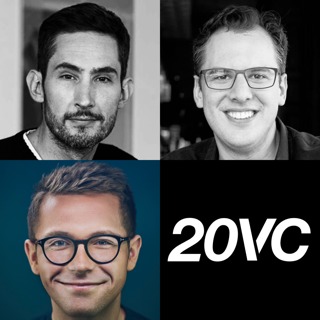
20VC: Instagram Founders Kevin Systrom and Mike Krieger on Why Social Networks Should Be Less Social & The Next Wave of Social | Why San Francisco Will Return with a Vengeance and The Future For Remote Work | Let's Get Personal: Relationships to Money, Be
Kevin Systrom and Mike Krieger are the co-founders of Instagram. Since its release in 2010, Instagram has become of the most significant products in modern society shaping the way millions of people engage with the world around them. In January this year, Kevin and Mike announced their return to the founding arena with the launch of Artifact, a personalized news feed driven by artificial intelligence. In Today's Show with Kevin Systrom and Mike Krieger We Discuss: 1.) The Perfect Partnership: Question from Josh Kushner @ Thrive: What makes Kevin and Mike such a great partnership? What was the last disagreement they had? How was it resolved? They built Instagram in person, in an office. They are building Artifact remotely, what has changed in the way they operate when comparing remote to in-person? 2.) Why Social Networks are Broken & The Next Frontier: Why does Kevin believe social networks today are broken and should be less social? What fundamental premise are social networks built on that Kevin believes is wrong? How will AI and machine learning be central in the next wave of social? How do Kevin and Mike evaluate TikTok and the next wave of content discovery? 3.) Welcome Artifact: The Comeback: Why does Kevin believe they chose the worst idea for their new company? Why is it? Were they nervous about founding Artifact and expectations being so high given Instagram? Why does Kevin argue that Artifact is not actually a "news app"? What does Kevin believe is the biggest lesson Apple taught us about messaging? 4.) Family, Money, San Francisco: Why does Kevin believe that SF will return as the centre of tech once again? Why does Kevin believe that many millennials in the workforce today are entitled and soft? How has becoming a father changed the way Kevin and Mike operate and execute? How do Kevin and Mike assess their relationship with money today? How has it changed? 5.) Hiring, Investing, Managing: What are some of Kevin and Mike's biggest lessons when it comes to hiring? What are the single biggest hiring mistakes they have made? Is it wrong to not hire someone because they are really really boring? What are the biggest lessons for Kevin and Mike from their angel investing?
22 Feb 20231h 4min
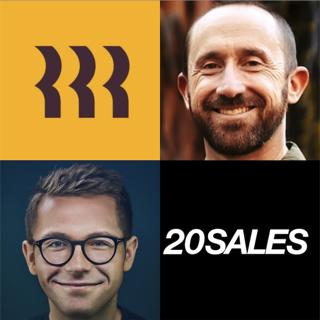
20Sales: What is Sales Engineering? When and How to Hire Them? How They Should Work With AE's? How to Measure Their Success? How They Change Close Rates and Sales Comp Plans with Zach Lawryk, Head of Solutions Consulting @ Rippling
Zach Lawryk is Head of Solutions Consulting @ Rippling, what is solutions consulting? They are the product expert in the solution that ties a business value to help support the sales rep in the execution of their quota. And there is no one better than Zach, prior to leading the solutions consulting team at Rippling, Zach was VP of Solutions Consulting at Slack where he scaled the SE team from 10 to 200. Before Slack, Zach was Head of Solutions Engineering @ Optimizely and before that was Director of Sales Engineering at Box. In Today's Episode with Zach Lawryk We Discuss: 1. ) WTF is Solutions Engineering: What is Solutions engineering and why is it important? How does a software developer turned lawyer become one of the OGs of Solutions Engineering? What is the single biggest piece of advice Zach gives to graduates entering the workforce today? 2.) When and Who: Building the Foundations: When is the right time to hire your first solutions engineer? Should this be a senior hire or a more junior hire? What experience is ideal? Would Zach rather have someone who has sold to the same customer segment or sold to the same deal size? What are the challenges with each? 3.) Making the First Hire: The Process: What is the right hiring process for solutions engineers? Which members of your existing team should be involved in the process? What are some of Zach's favourite questions on the candidates past to determine quality? What are the best case studies and tests to give potential hires to test their aptitude? What are the biggest red flags in the hiring process for solutions engineers? 4.) Integrating into the Team: Making it Work: What is the optimal onboarding process for solutions engineers? Why does Zach think it is important they spend time with customer success in their first month? What is the right way to measure the effectiveness of SE's? How should the entrance of SE's impact the close rate and comp structure for AE's? How can sales leaders prevent division and friction between AEs and SEs?
20 Feb 202334min
20VC: Grammy Nominee Aloe Blacc on Working with Avicii on "Wake Me Up", The Art of Great Storytelling, Behind The Scenes on the Songwriting Process and Why Rules Are Just "Good Suggestions"
Aloe Blacc is a GRAMMY nominee and the voice behind such hits as Wake Me Up, The Man, SOS, I Need A Dollar, and many more. Aloe has toured the world, won countless awards but his latest album, All Love Everything, is the singer-songwriter's first collection of material written as a father. "Becoming a father made me want to share those experiences in music," he says, admitting it's a challenge to translate such a powerful thing into lyrics and melody. If that was not enough, Aloe is also an entrepreneur with the founding of his new company, something we discuss in the show today. In Today's Discussion with Aloe Blacc: 1.) Entry into Music and Running From Fame: How Aloe first fell in love with music and made his foray into the world of music from Ernst & Young? Why does Aloe believe he is running from fame? What does it bring that he does not like? What does Aloe believe he is running towards? How has this changed? 2.) The Art of Storytelling: How does Aloe think about what it takes to be truly great at storytelling? What is the difference between a great vs an average story? How has his style of storytelling changed over time? What are the biggest mistakes that people make in storytelling? 3.) The Songwriting Process 101: What is Aloe's process for writing new songs? How does he take an idea and expand it, test it and execute against it? How did "Wake Me Up" with Avicci come about? What was the creation process there? What was it like working with Avicci? What did Aloe learn from him about being liked? 4.) Marriage, Fatherhood, and Global Stardom: What does Aloe believe is the key to truly successful marriages? How does Aloe retain a sense of romance with intense work pressures? How has becoming a father changed the way in which Aloe thinks and operates? What is Aloe's love language? How has doing this with his wife changed their relationship?
17 Feb 202348min

20Growth: Top Five Growth Lessons Scaling Stitchfix to IPO, How to Master the Art of Paid Marketing, Why CAC/LTV is a BS Metric & How To Use Payback Period as an Alternative to CAC/LTV with Mike Duboe, Partner @ Greylock
Mike Duboe is a Partner @ Greylock where he sits on the board of Builder, Inventa, Novi, Pepper, Postscript. Prior to entering the world of venture, Mike was the first in-house growth hire at Stitch Fix, where he built and led the Growth organization helping take the company through to their IPO. Before Stitchfix, Mike was the first growth hire at Tilt, where he built and oversaw multiple teams, including analytics, marketing, community, and growth product. He also served on YC's growth advisory council and was a growth lecturer at Reforge. In Today's Episode with Mike Duboe We Discuss: 1.) Entry into the World of Growth: How Mike made his way from consulting at Bain to leading the growth team for Stitchfix? What did Mike believe about growth 5 years ago that he no longer believes? What does Mike know now that he wishes he had known when he entered the world of growth? 2.) When and Who To Hire: How does Mike define the term "growth team"? What is their core role and responsibility? Should the first growth hire be a senior growth lead or a more junior analytical lead? What data foundations should founders have in place prior to their growth hire joining? What are the most common ways founders fail to prepare for their first growth hires joining? When does Mike believe is the right and crucial time for growth hires to be made? Should these growth hires join existing teams or be put in standalone "growth teams"? 3.) The Hiring Process: How to Detect and Win the Best: How should founders structure the interview process for their first growth hires? What are the best questions to ask to reveal the quality of a potential growth hire? What are the right case studies and tests to do to assertain their quality? What are the different levels of comp package for different growth execs? What are the single biggest mistakes founders make in the hiring process? 4.) Mastering Paid Marketing: Lessons from Stitchfix: Why is CAC/LTV a BS metric? What should be used instead? When is the right time to start really engaging with paid marketing? How should marketing and growth teams determine budget on a per channel basis? How much is the right mix between paid vs organic? What are Mike's biggest lessons from making paid work so well at Stitchfix? What are the single biggest mistakes Mike sees founders make today with paid marketing?
15 Feb 202352min

20VC: Why This Time Will Be Worse Than The Great Financial Crisis, Why Down-Rounds, Firesales and Shutdowns Will Happen & The Ultimate Startup Survival Guide; 7 Steps to Ensure Your Company Survives The Storm
Tom Loverro is a Partner @ IVP where he has led or was actively involved in investments in Amplitude, Coinbase, Hashicorp and Datadog to name a few. As a result of his investing success, Tom was named to Forbes Midas List in 2021. Prior to joining IVP, Tom was a Principal at RRE Ventures. In Today's Episode with Tom Loverro We Discuss: 1.) The Entry into Venture: How did Tom make his way into venture first with RRE? How did the role with IVP come about? Does Tom believe we will see many venture investors move firms with much of their existing expected carry cut in half with the changing landscape? What is Tom's biggest advice to someone looking to make their way into the venture world? 2.) The Calm Before the Storm: Why does Tom believe now is the calm before the storm? Why does Tom urge founders to go out and raise now before the storm hits? Is Tom already seeing pricing coming down for both early and late-stage companies? 3.) When The Storm Hits: When does Tom believe the storm will hit? Why does Tom believe when it does hit, it will be worse than The Great Financial Crisis? How will VCs respond when the storm hits? How will it impact their investing cadence? How will LPs respond when the storm hits? Will they cut back their manager commitments? Does Tom have hope that their will be a new class of LPs in this new economic cycle? 4.) The Rounds That Happen When The Storm Hits: Does Tom believe we will see a wave of down rounds when the storm hits? Why are they less common than people think? In the eye of the storm, will we see further layoffs? Will we see firesales? Will we see a tidal wave of shutdowns? Will large multi-stage funds with huge amounts of dry powder change their deployment pace? The Survival Guide for the Storm: 1.) Raise Now: Why does Tom believe that startups should raise now, not later? What amount of runway should they raise for in this environment? 2.) Cut, Cut and Cut Some More: What amount of runway should startups be cutting to get to? How will this impact marketing spend? Why are your marketing dollars more powerful now than ever before? 3.) Focus on Survival Not Valuation: What does Tom mean by this? How can founders gain leverage with VCs when raising today? How can founders instil a sense of urgency in their raise with investors? 4.) Bring on Operators with Experience: Why would operators with experience join a struggling startup? Will operators with experience not have a flight to safety and stay at their well-paid FANNG role? Does this potential operator not shorten runway even further as they are often expensive? 5.) Unit Economics over Growth: How can founders show investors a superior profile of unit economics moving forward? Do investors not want both unit econ and growth today? 6.) Play Your Cards Right and Then Go on Offense: How does Tom advise founders on the right time to go on offense? 7.) Be Decisive, Half Measures Rarely Succeed: How does Tom define a half-measure? What is so wrong with half-measures?
13 Feb 202345min
20VC: Boston Celtics' Steve Pagliuca on The Future of Sports Team Ownership; What Happened with the Chelsea Acquisition | Why More Money is Pouring Into Sport Than Ever & Do These Assets Keep Increasing in Value
Steve Pagliuca is a Senior Advisor at Bain Capital, the firm he joined in 1982 and as a Managing Director of Bain Capital, he has helped build the firm into one of the world's leading investment companies with over $160 billion in assets under management. Steve is also a Managing Partner and Co-Owner of the World Championship Boston Celtics Basketball franchise. Steve is also co-owner and co-chairman of the Serie A professional football club, Atalanta Bergamasca Calcio. If that was not enough, Steve currently, serves on the Board of Directors of Burger King, Gartner Group, HCA, Warner Chilcott, and FCI. Huge thanks to Moshe @ Shrug Capital for making the intro. In Today's Episode with Steve Pagliuca We Discuss: 1.) From Duffel Bags at Duke to Buying Sports Teams: How Steve went from having a single duffel bag arriving at Duke University to entering the world of private equity with the founding of Bain's PE funds? Did Steve always know he would be successful? What does Steve think about the importance between luck and timing? How did Steve's mother impact how he approaches parenting and self-belief with his children? 2.) Buying Sports Teams: Not So Different to Companies: When buying and running a sports team, what is the same, and what is different from buying and running a company? What is Steve's biggest advice to new owners of sports teams? What are the single biggest mistakes sports team owners make when they buy a team? What happened with the Chelsea bid? Why did Steve lose? How did debt change the deal? 3.) The Future of Sports Ownership: Why does Steve believe we have seen a massive rise in American and private equity buyers of both global sports teams but also European sports teams? How has "new media" changed the inherent value that can be placed on a team? Why does it change the value? Which forms of "new media" are most important? How much further can the value of these sports teams increase? Does this massive increase in the price and assets of certain clubs not lead to a massive inequality in sports? What can be done to prevent this imbalance? 4.) Steve Pagliuca: The Person and Capital Allocator: What is the single best investment advice Steve has ever received? How does Steve think about his relationship to wealth today? How has it changed over time? What does it take to have an amazing marriage and be at the top of your profession? What were 1-2 elements that made Bain able to scale to the proportions of AUM that they have done? What would he have done differently?
10 Feb 202344min
20VC: Why Salesforce, SAP and Concur Will Die | Scaling 3x and Raising at a $9.2BN Valuation in COVID | How OpenAI is Changing the Travel Industry Forever | Never Before Revealed Margins on Travel and Expense Management with Ariel Cohen, Co-Founder & CEO
Ariel Cohen is the Co-Founder and CEO @ Navan (formerly TripActions), the #1 travel management super-app used by over 8,000 companies. Ariel has raised over $2BN for Navan from some of the best including a16z, Zeev Ventures, Lightspeed, Greenoaks, and Elad Gil. Prior to TripActions, Ariel co-founded streamOnce, a business multimedia integration platform that was successfully acquired by Jive Software, where Ariel had previously served in a senior position following his time at Hewlett-Packard. In Today's Episode with Ariel Cohen We Discuss: 1.) Why Education is Outdated and Wisdom to People Entering the Working World: Why did Ariel not really attend many classes when he was a student? What would be his biggest advice to young people leaving school today? Where would he focus? Why does Ariel believe that traditional education is more outdated now than ever before? 2.) Why SAP and Salesforce Will Die: Why does Ariel believe that SAP and Salesforce have not innovated for a decade? Why does Ariel believe that Slack is a disaster inside of Salesforce? What are the single biggest advantages that startups have over these large incumbents? What can startups do to retain innovation and speed as they scale into becoming an incumbent? Why are the best founders willing to kill their own projects? 3.) Growing a Business 3x and Raising at a $9.2BN Valuation in COVID: How did Ariel grow the business 3x with all travel being banned? What were the tactics to blitz scaling during COVID? How did Ariel approach his investors for a new round in the middle of COVID? How did he get such a high price in the midst of a global pandemic? What is the bull case for how Navan can be a $40BN company? 4.) Margins Matter: Gaining Leverage Through Additional Margin: With Navan's 80% margin, they have 30% higher margins than other competitors, how do they have such high margins? With the additional 30%, how does Ariel plan to scale Navan's reach and use the margin to do so? How does OpenAI play a role in helping Navan increase its margin even further?
8 Feb 202344min
20VC: Thoma Bravo's Orlando Bravo on Why Now is The New Normal, Why Every Company in the World is Worth its Future Cashflows, The Three Core Elements Thoma Bravo Need to See in Any Potential Deal & Orlando's Relationship to Risk, Wealth and Parenting
Orlando Bravo is a Founder and Managing Partner of Thoma Bravo. He led Thoma Bravo's early entry into software buyouts and built the firm into one of the top private equity firms in the world. Today, Orlando directs the firm's strategy and investment decisions. Orlando has overseen over 420 software acquisitions conducted by the firm, representing more than $235 billion in transaction value. Forbes named him "Wall Street's best dealmaker" in 2019, and he was dubbed "Private equity's king of SaaS" by the Financial Times in 2021. In Today's Episode with Orlando Bravo We Discuss: 1.) From Puerto Rico Roots to Wall Street's Best Dealmaker: How did Orlando come to co-found Thoma Bravo? What was that a-ha moment for him? Orlando mentioned 2 mentors that shaped how he thinks, who were they? What are his single biggest lessons from those mentors? What does Orlando know now that he wishes he had known when he started his career? Why does Orlando disagree with setting timelines in life? Why does it not help? 2.) The Secret to Success in Value Investing: What is good value investing today? What is it not? What three things does Orlando look for when doing a deal and acquiring a company? Why is every company in the world worth its future cash flows? How important is price today? How does Orlando reflect on his own price sensitivity? Many suggest Coupa and Anaplan were extremely expensive. How does Orlando respond and defend the prices he paid for companies in 2020-2022? 3.) WTF is Happening In Markets Today: How does Orlando reflect on where the market is today? Is this the new normal? How does Orlando expect the market to change over the next 12 months? Why does Orlando believe that the best companies win in the worst times? Is this the result of quantitative easing on behalf of central banks? Who is to blame? How does Orlando balance the mindset of his team between risk on and taking advantage of lower prices in market but also not catching a falling knife? 4.) Orlando Bravo: The Leader, Father and Husband: What is Orlando's biggest fear in investing? How has this changed over time? How does Orlando reflect on his own relationship to money today? How has that changed? What are Orlando's biggest parenting lessons from his mother? Why does Orlando believe that for most people, their late twenties are their toughest? How does Orlando instill the same drive and ambition in his children that he had, despite very different financial profiles growing up? How does Orlando maintain being at the top of his game in his profession but also being a great husband? What is the secret to a happy marriage? Items Mentioned in Today's Episode: Orlando's Fave Book: The Power of Now: A Guide to Spiritual Enlightenment
6 Feb 202354min