Unveiling the Milky Way's Hidden Glow: Diffuse Gamma Rays measured by LHAASO

Unveiling the Milky Way's Hidden Glow: Diffuse Gamma Rays measured by LHAASO

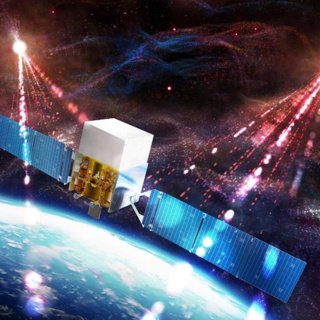
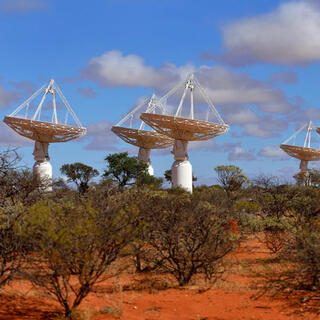
In this episode, we explore the fascinating world of diffuse gamma rays emanating from the Galactic plane. A new study using the Large High Altitude Air Shower Observatory's Water Cherenkov Detector Array (LHAASO-WCDA) has provided unprecedented insights into these mysterious emissions.


What are diffuse gamma rays? These high-energy photons are produced when cosmic rays, energetic particles that constantly bombard our galaxy, interact with interstellar gas and radiation. Studying these gamma rays provides valuable information about the distribution and behavior of cosmic rays, helping us unravel their origins and propagation throughout the Milky Way.


LHAASO-WCDA's groundbreaking observations: The LHAASO-WCDA has detected diffuse gamma-ray emissions across a wide energy range, from 1 TeV to 25 TeV, bridging a crucial gap between previous observations by space-based and ground-based detectors.


Mapping the Galactic plane: The study focused on two distinct regions of the Galactic plane: the inner region (15° < l < 125°, |b| < 5°) and the outer region (125° < l < 235°, |b| < 5°). This wide coverage allowed scientists to create detailed maps of the diffuse gamma-ray emission, revealing intriguing patterns.


Surprising findings: The LHAASO-WCDA measurements show that the diffuse gamma-ray fluxes are significantly higher than predicted by conventional models that consider only interactions between cosmic rays and interstellar gas. This excess suggests the presence of additional, as yet unidentified sources of gamma rays in the Milky Way.


Possible explanations: Several hypotheses have been proposed to explain the unexpected gamma-ray excess.

  • One leading contender is the existence of a population of unresolved sources, such as pulsar wind nebulae or pulsar halos, that emit gamma rays at energies below tens of TeV.
  • Other possibilities include contributions from young massive star clusters or modifications to our understanding of cosmic ray propagation.


Future directions: Combining LHAASO-WCDA's observations with data from other experiments, such as neutrino detectors, will be crucial to pinpoint the origin of the diffuse gamma-ray excess and further illuminate the mysteries of cosmic rays and their journey through our galaxy.


Reference: Zhen Cao et al. "Measurement of Very-high-energy Diffuse Gamma-ray Emissions from the Galactic Plane with LHAASO-WCDA" (arXiv:2411.16021v1)


Acknowledements: Podcast prepared with Google/NotebookLM. Illustration credits: LHAASO Collaboration

Denne episoden er hentet fra en åpen RSS-feed og er ikke publisert av Podme. Den kan derfor inneholde annonser.

Episoder(112)

Peering Through the Ice: The Milky Way’s High-Energy Neutrino Signal

Peering Through the Ice: The Milky Way’s High-Energy Neutrino Signal

Peering Through the Ice: The Milky Way’s High-Energy Neutrino Signal Episode Summary: In this episode, we explore a major breakthrough in astrophysics: the IceCube Neutrino Observatory has established...

31 Jul 20min

The Schmidt Observatory System unlocking the Transient Universe

The Schmidt Observatory System unlocking the Transient Universe

In this episode, we dive into the Eric and Wendy Schmidt Observatory System, a groundbreaking initiative designed to pioneer a new paradigm for astronomical research through rapid development, modular...

27 Jul 21min

GUANO, NITRATES, and GLIMPSE: The Pipelines Powering Multi-Messenger Astronomy

GUANO, NITRATES, and GLIMPSE: The Pipelines Powering Multi-Messenger Astronomy

In this episode, we dive into the cutting-edge of time-domain and multi-messenger astrophysics with a deep look at BAT-GLIMPSE, a revolutionary new open-source pipeline developed for the Neil Gehrels ...

20 Jul 20min

The Dynamic Radio Sky: Unveiling Transients with the SKAO

The Dynamic Radio Sky: Unveiling Transients with the SKAO

Welcome to a deep dive into the fast-paced, explosive universe of time-domain astronomy! In this episode, we explore how the upcoming Square Kilometre Array Observatory (SKAO) will revolutionize our u...

13 Jul 19min

X-Raying the Earth: Neutrino Tomography at the South Pole

X-Raying the Earth: Neutrino Tomography at the South Pole

Welcome back to the podcast! Today, we are exploring a groundbreaking new way scientists are looking deep inside our planet. For a century, our understanding of the Earth's interior has relied almost ...

8 Jul 23min

SVOM's First Year: From Gamma-Ray Bursts to Blazars

SVOM's First Year: From Gamma-Ray Bursts to Blazars

In this episode, we dive into the exciting early results from the SVOM (Space-based multi-band astronomical Variable Objects Monitor) mission, which launched in June 2024. Originally designed to hunt ...

6 Jul 20min

SN 2024jlc: Bridging the Gap Between Supernova Classes

SN 2024jlc: Bridging the Gap Between Supernova Classes

In this episode, we dive into the fascinating discovery of SN 2024jlc, one of the closest and least luminous super-luminous supernovae (SLSNe) ever found. We explore how this extraordinary event is ch...

3 Jul 20min

Cosmic Accelerators: Unlocking the Secrets of Microquasar GRS 1915+105

Cosmic Accelerators: Unlocking the Secrets of Microquasar GRS 1915+105

In this episode, we dive into the extreme and fascinating world of microquasars—binary systems where a compact object, like a black hole, feeds off a companion star and launches powerful, relativistic...

26 Jun 20min

Populært innen Vitenskap

fastlegen
tingenes-tilstand
rss-nysgjerrige-norge
romkapsel
liberal-halvtime
rekommandert
jss
villmarksliv
dekodet-2
tomprat-med-gunnar-tjomlid
rss-paradigmepodden
vett-og-vitenskap-med-gaute-einevoll
fjellsportpodden
abels-tarn
sinnsyn
rss-rekommandert
rss-overskuddsliv
diagnose
nordnorsk-historie
rss-inn-til-kjernen-med-sunniva-rose