The Enigma of G35.6−0.5: Supernova, HII Region, or Hidden Pulsar?

The Enigma of G35.6−0.5: Supernova, HII Region, or Hidden Pulsar?

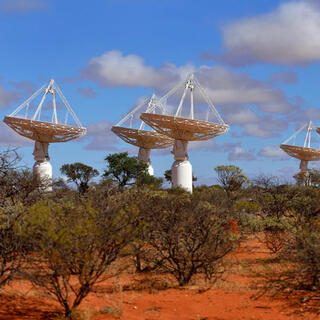
The discovery of a new ultra-high-energy gamma-ray source, 1LHAASO J1857+0203u, by the Large High Altitude Air Shower Observatory (LHAASO) suggests the presence of a PeVatron, a cosmic accelerator capable of boosting particles to peta-electron volt energies. This source is particularly interesting because it is located in a region with complex multi-wavelength features, including the supernova remnant (SNR) G35.6−0.4 and the HII region G35.6−0.5.


The study, published in "An Enigmatic PeVatron in an Area around HII Region G35.6−0.5" by Cao et al., explores three possible origins for the observed gamma-ray emission:

  • HII region scenario: The gamma rays originate from the HII region G35.6−0.5, possibly accelerated by the stellar winds of massive stars. While no such stars have been directly observed yet, their presence cannot be ruled out, especially if they are embedded within molecular clouds.
  • Supernova remnant scenario: The gamma rays are produced when protons that escaped from the SNR G35.6−0.4 interact with nearby molecular clouds. However, the current analysis suggests that the mass of the observed clouds is insufficient to explain the observed gamma-ray flux.
  • Pulsar wind nebula (PWN) scenario: The gamma rays are emitted by a PWN powered by an as-yet undiscovered pulsar. This scenario is plausible given the potential for mature PWNe to be bright in gamma rays while remaining undetected at other wavelengths.


Further observations across the electromagnetic spectrum are needed to definitively determine the origin of the gamma-ray emission from 1LHAASO J1857+0203u.** Future observations with instruments like the Large-Sized Telescope (LACT), ASTRI, and the Cherenkov Telescope Array (CTA) could help distinguish between these scenarios thanks to their enhanced angular resolution.


Reference:

Cao, Z., Aharonian, F., Axikegu, et al. "An Enigmatic PeVatron in an Area around HII Region G35.6−0.5". Draft version December 3, 2024. *Typeset using LATEX twocolumn style in AASTeX631.*


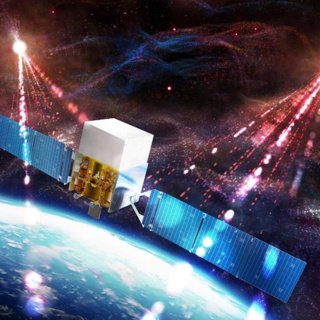
Acknowledements: Podcast prepared with Google/NotebookLM. Illustration credits: LHAASO

Denne episoden er hentet fra en åpen RSS-feed og er ikke publisert av Podme. Den kan derfor inneholde annonser.

Episoder(101)

Record-Breaker: Catching Gamma Rays from the Distant Quasar OP 313

Record-Breaker: Catching Gamma Rays from the Distant Quasar OP 313

In this episode, we dive into a groundbreaking astronomical discovery: the detection of very-high-energy (VHE) gamma rays from the quasar OP 313. Located at a redshift of $z = 0.997$, OP 313 has shatt...

1 Jun 20min

Ripples in Spacetime: Unpacking the GWTC-5.0 Catalog

Ripples in Spacetime: Unpacking the GWTC-5.0 Catalog

In this episode, we dive into the monumental release of the Gravitational-Wave Transient Catalog version 5.0 (GWTC-5.0) and the open data from the second part of the fourth observing run (O4b) by the ...

29 Mai 21min

SN 2017egm : Fermi-LAT's Breakthrough Gamma-Ray Detection

SN 2017egm : Fermi-LAT's Breakthrough Gamma-Ray Detection

In today’s episode, we dive into the mystery of superluminous supernovae (SLSNe)—rare, extreme astronomical events that shine 10 to 100 times brighter than standard core-collapse supernovae. For years...

22 Mai 23min

Supernovae on the RISE: Why Dead Stars Wake Up Decades Later

Supernovae on the RISE: Why Dead Stars Wake Up Decades Later

In this episode, we explore the fascinating phenomenon of core-collapse supernovae that refuse to fade away quietly. Years, or even decades, after their initial explosion, some of these stellar deaths...

20 Mai 17min

The SVOM Satellite: A New Era in Multi-Messenger Astronomy

The SVOM Satellite: A New Era in Multi-Messenger Astronomy

In this episode, we dive into the fascinating world of gamma-ray bursts (GRBs) and high-energy transients through the lens of the SVOM (Space-based Multi-band Variable Object Monitor) mission. Launche...

29 Apr 24min

Chasing the Flash: Hunting Neutron Star Mergers with CTAO

Chasing the Flash: Hunting Neutron Star Mergers with CTAO

In this episode, we dive into the thrilling world of multi-messenger astronomy! Ever since the historic detection of GW170817, scientists have known that binary neutron star (BNS) mergers can produce ...

14 Apr 19min

Tiling the Sky: A New Strategy for Finding Elusive GRBs

Tiling the Sky: A New Strategy for Finding Elusive GRBs

In this episode, we dive into the intense and fast-paced world of **Gamma-ray bursts (GRBs)—the most luminous and rapidly evolving transients in the Universe**. While space-based instruments like the ...

13 Apr 19min

Fast Radio Bursts & Magnetar X-Rays: A Peculiar Discovery

Fast Radio Bursts & Magnetar X-Rays: A Peculiar Discovery

In this episode, we dive into the deep cosmos to explore a recent astronomical breakthrough linking Fast Radio Bursts (FRBs)—enigmatic, millisecond-long cosmic transients—to extreme stellar objects kn...

7 Apr 22min

Populært innen Vitenskap

fastlegen
tingenes-tilstand
jss
rekommandert
liberal-halvtime
sinnsyn
forskningno
tomprat-med-gunnar-tjomlid
villmarksliv
kvinnehelsepodden
tidlose-historier
rss-paradigmepodden
rss-zahid-ali-hjelper-deg
rss-overskuddsliv
dekodet-2
rss-rekommandert
hva-er-greia-med
rss-inn-til-kjernen-med-sunniva-rose
abels-tarn
nevropodden