15 Years Under the Sea: ANTARES’ Final Search for Galactic Neutrinos

15 Years Under the Sea: ANTARES’ Final Search for Galactic Neutrinos

The Search for Galactic Neutrinos


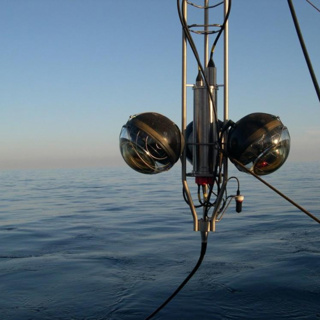
This episode explores the final results from the ANTARES neutrino telescope, which operated in the Mediterranean Sea off the coast of Toulon, France. Researchers analyzed the full, 15-year dataset (2007–2022) to search for diffuse Galactic neutrinos. These neutrinos are produced when cosmic rays (CRs) interact with interstellar matter (gas and radiation fields) in the Milky Way. Understanding this diffuse flux is key to deciphering cosmic ray transport mechanisms.


Testing Theoretical Models

The study utilized an unbinned maximum likelihood analysis to test several phenomenological models of neutrino emission, including KRA$\gamma$ models, DiffUSE, CRINGE, and Fermi-LAT $\pi^0$. These models incorporate different assumptions about CR diffusion and source distribution. ANTARES used three data samples—one track-like and two shower-like—and its location and use of water provided superior angular resolution compared to other detectors, making it well-suited for observing the central Milky Way. Furthermore, the shower-like events extended the analysis down to the hundreds of GeV energy range.


Results: Constraints and Clues

While the ANTARES low statistics dataset did not allow for a significant discovery, the analysis placed **upper limits** on the diffuse neutrino flux that are compatible with results obtained by other experiments.

  • Model Constraints: The results did not yield stringent constraints on the tested models. The highest observed significance was a small hint of 1.28$\sigma$ for the KRA5PeV$\gamma$ model.
  • The Galactic Ridge Hint: Importantly, a model-independent analysis of the Galactic Ridge (|$\ell$| < 30$^\circ$ and |$b$| < 2$^\circ$) confirms a hint of a Galactic signal at 1.9$\sigma$**. This result confirms a finding from a previous ANTARES analysis.


This analysis methodology, which carefully preserves the spatial-energy correlation of the templates and convolves them with detector response, is promising for testing Galactic diffuse emission models with larger future datasets, such as those from KM3NeT.


Article Reference

Search for Diffuse Galactic Neutrinos with the Full ANTARES Telescope Dataset, ANTARES Collaboration et al. (A. Albert, S. Alves, M. André, et al.); preprint, 2511.01687


Acknowledements: Podcast prepared with Google/NotebookLM. Illustration credits: CEA/Irfu

Denne episoden er hentet fra en åpen RSS-feed og er ikke publisert av Podme. Den kan derfor inneholde annonser.

Episoder(101)

Record-Breaker: Catching Gamma Rays from the Distant Quasar OP 313

Record-Breaker: Catching Gamma Rays from the Distant Quasar OP 313

In this episode, we dive into a groundbreaking astronomical discovery: the detection of very-high-energy (VHE) gamma rays from the quasar OP 313. Located at a redshift of $z = 0.997$, OP 313 has shatt...

1 Jun 20min

Ripples in Spacetime: Unpacking the GWTC-5.0 Catalog

Ripples in Spacetime: Unpacking the GWTC-5.0 Catalog

In this episode, we dive into the monumental release of the Gravitational-Wave Transient Catalog version 5.0 (GWTC-5.0) and the open data from the second part of the fourth observing run (O4b) by the ...

29 Mai 21min

SN 2017egm : Fermi-LAT's Breakthrough Gamma-Ray Detection

SN 2017egm : Fermi-LAT's Breakthrough Gamma-Ray Detection

In today’s episode, we dive into the mystery of superluminous supernovae (SLSNe)—rare, extreme astronomical events that shine 10 to 100 times brighter than standard core-collapse supernovae. For years...

22 Mai 23min

Supernovae on the RISE: Why Dead Stars Wake Up Decades Later

Supernovae on the RISE: Why Dead Stars Wake Up Decades Later

In this episode, we explore the fascinating phenomenon of core-collapse supernovae that refuse to fade away quietly. Years, or even decades, after their initial explosion, some of these stellar deaths...

20 Mai 17min

The SVOM Satellite: A New Era in Multi-Messenger Astronomy

The SVOM Satellite: A New Era in Multi-Messenger Astronomy

In this episode, we dive into the fascinating world of gamma-ray bursts (GRBs) and high-energy transients through the lens of the SVOM (Space-based Multi-band Variable Object Monitor) mission. Launche...

29 Apr 24min

Chasing the Flash: Hunting Neutron Star Mergers with CTAO

Chasing the Flash: Hunting Neutron Star Mergers with CTAO

In this episode, we dive into the thrilling world of multi-messenger astronomy! Ever since the historic detection of GW170817, scientists have known that binary neutron star (BNS) mergers can produce ...

14 Apr 19min

Tiling the Sky: A New Strategy for Finding Elusive GRBs

Tiling the Sky: A New Strategy for Finding Elusive GRBs

In this episode, we dive into the intense and fast-paced world of **Gamma-ray bursts (GRBs)—the most luminous and rapidly evolving transients in the Universe**. While space-based instruments like the ...

13 Apr 19min

Fast Radio Bursts & Magnetar X-Rays: A Peculiar Discovery

Fast Radio Bursts & Magnetar X-Rays: A Peculiar Discovery

In this episode, we dive into the deep cosmos to explore a recent astronomical breakthrough linking Fast Radio Bursts (FRBs)—enigmatic, millisecond-long cosmic transients—to extreme stellar objects kn...

7 Apr 22min

Populært innen Vitenskap

fastlegen
tingenes-tilstand
jss
rekommandert
liberal-halvtime
sinnsyn
forskningno
tomprat-med-gunnar-tjomlid
villmarksliv
rss-paradigmepodden
fjellsportpodden
kvinnehelsepodden
tidlose-historier
dekodet-2
rss-zahid-ali-hjelper-deg
rss-overskuddsliv
hva-er-greia-med
rss-rekommandert
rss-inn-til-kjernen-med-sunniva-rose
grunnstoffene