The Catiline Conspiracy
In 63 BC, Rome faced a conspiracy that threatened to tear the Roman Republic apart. At its centre stood two figures: Marcus Tullius Cicero, the grand old orator of Rome and Lucius Sergius Catilina, ac...
2 Aug 1h 4min
Alexander the Great's Mad Scientist
WARNING: graphic descriptions of violence and warfareMeet Diades, Alexander the Great’s overlooked military engineer, the man who made the impossible siege of Tyre happen.Tristan Hughes and Professor ...
30 Jul 1h 12min
Hollywood’s Odyssey: The Historians' Verdict
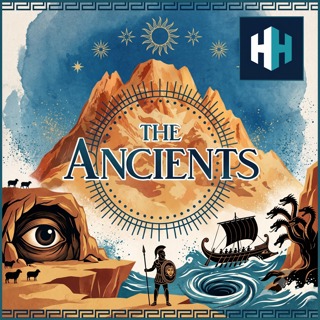
Christopher Nolan’s blockbuster film Odyssey brings Homer’s epic roaring back to life and Tristan Hughes and Dr. Emily Hauser are here to unpack every storm, monster and star-making turn. From the bri...
26 Jul 1h 10min
The First New Zealanders
What if the first New Zealanders crossed an ocean, landed in a brand-new world, and built a whole society in just a few generations?Tristan Hughes and Dr Richard Walter tell the story of East Polynesi...
23 Jul 56min
Odyssey | Sea of Monsters & Slaughter of the Suitors
When Odysseus finally returns to Ithaca, his homecoming turns into a ruthless reckoning. Tristan Hughes and Dr. Emily Hauser dive into the shocking climax of Homer’s Odyssey, where hospitality, vengea...
19 Jul 1h 8min
Caral: Oldest City in the Americas?
Long before the age of the Inca and Maya, a remarkable city once flourished on the coast of modern Peru. Founded more than five thousand years ago, the sacred city of Caral is home to monumental pyram...
16 Jul 57min
Odyssey | Cyclops, Circe and Calypso
What if the world’s most famous homecoming was really a nightmare of monsters, gods, and one very stubborn king trying to get back to Ithaca?In our new series Tristan Hughes and classicist Dr. Emily H...
12 Jul 1h 4min
Egypt's Book of the Dead
For over a thousand years, the Book of the Dead guided ancient Egyptians through the afterlife. Filled with powerful spells these remarkable texts were designed to help the dead overcome the dangers o...
9 Jul 50min