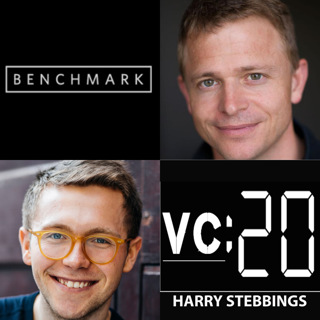
20VC: Benchmark's Peter Fenton on The Single Question That Defines The Art of Early Stage Venture, Marketing Timing Risk, Why The Oversupply of Capital Is Good & His Biggest Lessons from 12 Years On The New Relic Board
Peter Fenton is a General Partner @ Benchmark, one of the great venture firms of the last 3 decades with a portfolio including the likes of SNAP, Twitter, eBay, New Relic, Stitchfix and many more. As for Peter, he has led deals, sits or has sat on the boards of Elastic, New Relic, Digits, Docker, Optimizely, Yelp and Zuora to name a few. Prior to Benchmark, Peter was a General Partner @ Accel Partners in San Francisco. As a result of his incredible track, Peter has been on the Forbes Midas List more times than I have done podcast episodes! In Today's Episode with Peter Fenton You Will Learn: 1.) How a round of golf led to Peter Fenton leading the New Relic Series A? What did the deal look like both in check size and valuation? What does Peter think that round would be in today's market? 2.) How does Peter create an environment of safety with entrepreneurs where they feel they can be vulnerable with him? How does Peter approach building relationships of trust in compressed fundraising timelines? In what way has Peter seen relationships go bad? What can been done to mitigate that and optimise the Founder <> VC relationship? 3.) How does Peter assess market timing when making investments today? What does Peter mean when he says, "you have to understand whether you are unlocking consumption"? What does unlocking consumption look like in reality? How does Peter think about positive or negative externalities that could impact the business? 4.) Does Peter agree with Bill Gurley that the biggest challenge today is the "oversupply of capital"? Where does the oversupply of capital become a real challenge? What does Peter advise growth-stage founders do to prevent this from damaging them? How does Peter think about capital efficiency in the companies where he is on the board? 5.) What were Peter's biggest lessons on what it takes to be a great board member from his 12 years at New Relic? How did he see his style of board membership change? On the founder side, how do the very best founders manage and navigate their board? What do most boards misunderstand or mismanage? Item's Mentioned In Today's Episode with Peter Fenton Peter's Favourite Book: Nonviolent Communication: A Language of Life As always you can follow Harry and The Twenty Minute VC on Twitter here! Likewise, you can follow Harry on Instagram here for mojito madness and all things 20VC.
29 Mar 202134min

20VC: Nubank CEO David Velez on Scaling Nubank to a $25BN Company, Why What Makes a Great Founder Does Not Make a Great CEO & The Responsibility Framework and How Leaders Can Use It To Drive Efficiency
David Velez is the Founder & CEO @ Nubank, one of the fastest growing digital banks in the world with operations in Brazil, Mexico, Argentina and Colombia. To fuel this growth, David has raised over $1.5BN for Nubank from some of the best in the business including Doug Leone @ Sequoia, Micky @ Ribbit, Thrive, Founders Fund, DST, Tiger and more. Before changing the world of LATAM finance, David was a Partner @ Sequoia where he was responsible for all LATAM investments. Prior to Sequoia, David was the co-founder of General Atlantic's South American investment programme. In Today's Episode You Will Learn: 1.) How David made his way into the world of startups through becoming a Partner @ Sequoia? How that led to his founding of Nubank? How his time at Sequoia impacted how he thought about building Nubank? 2.) How does David think about the relationship between growth and quality in company scaling? When scaling so fast, what are the first things to break? How does one know when is the right time to expand geographically? What is the right thought process to go through when determining how to know when is the right time to expand product lines? 3.) Looking at the market today, how does David for-see the future of digital banks? Will we seen increased consolidation over the coming years? How does David think through the verticalisation of neo-banks? What does the reduction in barriers to creating neo-banks really mean? How did Nubank scale to the scale it is today with $0 CACs? 4.) How has David seen his leadership style change with the growth of the company? Why does David feel it is wrong that the titles of Founder & CEO are so inextricably linked? What element of being a great founder are actually not good for CEOs to have? What elements of great CEOs are bad for founders to have? What has David found the hardest to scale in himself? 5.) How does David use "the responsibility framework" when making decisions today? What are David's thoughts on imposter syndrome within leaders today and how it can be harnessed for good? How does David approach head vs heart when it comes to decision-making today? Does David engage with regret minimisation as part of this? Item's Mentioned In Today's Episode David's Favourite Book: One Hundred Years of Solitude As always you can follow Harry and The Twenty Minute VC on Twitter here! Likewise, you can follow Harry on Instagram here for mojito madness and all things 20VC.
26 Mar 202137min
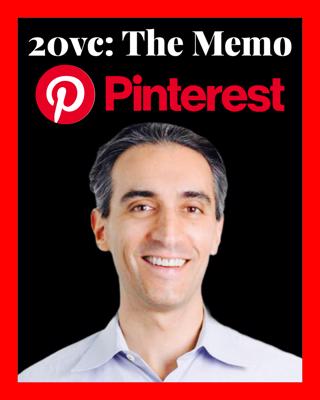
20VC: The Pinterest Memo: Bessemer's Jeremy Levine on The Secret To Success within User Generated Content Plays, Where Most Investors Make Mistakes When Analysing Consumer Social and How The Pinterest Deal Wouldn't Have Happened without a Diverse Partners
Jeremy Levine is a Partner @ Bessemer Venture Partners, one of the leading venture firms of the last 2 decades with a portfolio including the likes of Pinterest, Shopify, LinkedIn, Yelp, Twilio and many more. As for Jeremy, five of his early-stage investments—LinkedIn, MindBody, Pinterest, Shopify and Yelp—grew into billion-dollar publicly traded companies. As a result of his incredible portfolio, he has featured on the Forbes Midas List for several years running. In Today's Episode with Jeremy Levine You Will Learn: 1.) How Jeremy came to make one great decision and make one big mistake all in one rainy afternoon in Palo Alto? What was the story behind meeting the Pinterest team for the first time? Who was there? How did it go down? 2.) Market: How did Jeremy analyse the market at the time of the investment? What had been some core lessons Jeremy had learned on what made successful user-generated content plays? Where was Jeremy wrong in how he analysed the market? In what way is Jeremy surprised with how the market evolved? How does Jeremy analyse market timing today? 3.) Team: Jeremy has previously called Ben Silberman a "product visionary", what made Jeremy say this about Ben? How did Jeremy get over the concern of many VCs that Pinterest did not have a technical co-founder? Having seen Ben change over the last decade, what have been the biggest changes in Ben's leadership style over the last 10 years? 4.) Traction: When evaluating traction, where does Jeremy think so many investors make mistakes today? How should founders determine what is their core North Star metric? What gave Jeremy the confidence Pinterest could "cross the chasm"? How did the early Pinterest cohorts look both from usage and retention? What elements surprised and impressed? 5.) Pre + Post Mortem: What did Jeremy see as the likely reasons why Pinterest would not work? How did Jeremy think through what it took for UGC platforms to monetise at the time? Where was he wrong here? What did Jeremy see as the upside? What did he believe Pinterest could be if all the stars aligned? As always you can follow Harry and The Twenty Minute VC on Twitter here! Likewise, you can follow Harry on Instagram here for mojito madness and all things 20VC.
24 Mar 202143min
20VC: Basecamp CEO Jason Fried on His Relationship To Risk, Money, Vulnerability and Self-Doubt, Fantasising About Being Fired, How To Optimise Decision-Making and Minimising Regret
Jason Fried is the Founder & CEO @ Basecamp, the project management and team communication tool trusted by millions. Over an incredible 22 year journey, they have scaled to over 3.5M accounts and in 2020 they went back to being a multi-product company with the launch of their integrated email client & service, HEY. Jason is also the co-author of the widely acclaimed, ReWork and has also made several angel investments in the likes of Intercom, Gumroad and Hodinkee to name a few. In Today's Episode You Will Learn: 1.) How Jason Fried made his way into the world of startups and came to found one of the leading project management and team communications tools in the form of Basecamp? 2.) How does Jason analyse and evaluate his relationship to money? Why does Jason believe that he has this inherent downside protection when it comes to money? How does he structure his personal finances between stocks, cash, crypto etc etc? What have been some of Jason's biggest lessons when it comes to tying happiness to monetary levels? 3.) What does Jason mean when he says, "I have a fantasy of getting fired"? How does Jason think about knowing when is the right time to step away from the business? What would he like to do with that time? How does Jason feel about the challenge of tying his identity to his company? What are the dangers of doing so? 4.) How does Jason approach decision-making frameworks? What does Jason believe is the right way to respond when a decision does not go as planned? Where do many make mistakes here? Does Jason feel regret with decisions? How does Jason try and minimise regret? 5.) How does Jason feel about his biggest insecurities as a leader and CEO today? What are Jason's views on a CEO's ability to have self-doubt and be vulnerable? How have his views on this changed over the years? In what way has having kids impacted Jason's operating mindset? How has it changed what he values and appreciates? Item's Mentioned In Today's Episode Jason's Favourite Book: In Praise of Shadows As always you can follow Harry and The Twenty Minute VC on Twitter here! Likewise, you can follow Harry on Instagram here for mojito madness and all things 20VC.
22 Mar 202143min
20VC: Rappi Founder Simón Borrero on Growth vs Profitability, Capital Efficiency, Raising $1.7Bn as a LATAM Company and Why Uber Eats Did More To Help Than To Hurt Rappi
Simón Borrero is the Founder & CEO @ Rappi, the startup that has become a cornerstone of the Latin American mobile ecosystem, coined as "the next Everything Store of Latin America". To date, Simon has raised over $1.7Bn for the company from the likes of Sequoia Capital, a16z, Softbank, DST Global, Y Combinator and more. Prior to Rappi, Simon was the founder of multiple former companies including Imaginamos, a software studio he grew to over 300 people. In Today's Episode You Will Learn: 1.) How Simon made his way into the world of startups and came to found "the next Everything Store of Latin America" in Rappi? 2.) How does Simon think about the importance of zone density for a business like Rappi? What are the number of deliveries required for Rappi to make for the business to be breakeven? What is the key metric that determines the success of the business for Rappi today? 3.) How does Simon approach the balance of capital efficiency vs growth? How does one know when to pour fuel on the fire and go for growth? When is the right time to really focus on unit economics? Why does Simon believe expanding Rappi can be analogised to scaling a coffee shop? 4.) Rappi has now raised $1.7Bn from some of the best investors in the world, what does Simon believe Rappi did to enable them to be so successful fundraising? Was it a difficult shift for Simon to make moving from lean to capital abundance with the successful fundraises? What changed? How did Simon change as a leader? What is the story of Sequoia coming in? 5.) Customer acquisition: What were some of the biggest challenges when it came to initial customer acquisition for Rappi? What does Simon mean when he says "donuts for downloads"? What is the story there? 6.) Driver acquisition: In the UK and the US, driver acquisition is a big challenge, what did Rappi to do enable them to scale their driver supply so efficiently? What works? What does not work? 7.) Restaurant acquisition: What were the hardest elements of onboarding the first restaurants? How did Uber Eats entering the market actually make Rappi so much more efficient as a business and service? Item's Mentioned In Today's Episode Simon's Favourite Book: The Prosperity Paradox As always you can follow Harry and The Twenty Minute VC on Twitter here! Likewise, you can follow Harry on Instagram here for mojito madness and all things 20VC.
18 Mar 202130min
20VC: Tony Fadell "The Father of The iPod" on Mentors, Self-Doubt, Vulnerability, His Relationship To Money, Why Entrepreneurs Need to Be Coachable, Why VCs Need To Be More Direct & Why The First Trillionaire Will Innovate Around Climate Change
Tony Fadell, often referred to as "the father of the iPod," is currently Principal @ Future Shape, a global investment and advisory firm coaching engineers and scientists working on foundational deep technology. Prior to Future Shape, Tony was the Founder & CEO @ Nest Labs, the company was ultimately acquired by Google for a reported $3.2Bn. Before Nest, Tony spent an incredible 9 years at Apple Inc, where, as SVP of Apple's iPod division, he led the team that created the first 18 generations of the iPod and the first three generations of the iPhone. Fun facts, Tony has filed more than 300 patents for his work and is also a prolific angel investor having invested in the likes of mmhmm and Nothing to name a few. In Today's Episode With Tony Fadell You Will Learn: I. The building blocks of an entrepreneur What was the moment that Tony realised that he wanted to be an entrepreneur? "I got my first money when I was in third grade, because I had an egg route. We'd go get eggs from the farmer, and I'd load them in my wagon. Then my younger brother and I would go door to door around the neighborhood, and we'd sell eggs. And that was an every week or every other week situation. And I got money in my hands. And I was like, Oh my God, I can do whatever I want with that money – I don't have to ask anybody, I can just do it. And so that was the level of freedom that, especially when you're young, feels really cool. And then as I got older, I started to buy Atari video game cartridges for my 2600 (yes, I'm that old!), and that was really, really fun too." What was the biggest lesson that Tony learned from his father on sales and building trusted relationships? "And he said, very clearly, Look, this is a relationship. If I make this person successful, he's gonna want to come back to me over, and over, and over. But if I sell him something and it doesn't sell, and he has to discount and he loses money, he's not going to come back. Even if I don't have the right product, I'll tell him where to go to get the right product they're looking for, or if they're picking the wrong one, I'll tell them, here's the right one, because my job is to make them successful. Because if they're successful, they'll come back to me year after year after year. And even when we have a down year, they're going to trust me, and they're going to come back." II. Reflections on experience How does Tony Fadell think about and assess his own relationship to money? How has it changed over the years? "So my relationship to money now is that it's just a means to make change happen. And so literally, for me, I can just have a backpack, my computer, my phone, a couple of roller bags with my clothes. And that's enough to live life with my family. I don't need all this other stuff. COVID taught me that even further." How does Tony determine true friendships vs transactional relationships? "If it's not a reference – if it's not coming from somebody saying, Hey, you really need to meet this person – I take everything with a grain of salt. With anybody who comes to me cold, I think they probably want something. I try to find that out through the network, Do you know this person? What are they about?" III. Tony Fadell on becoming a mentor Why does Tony Fadell believe that founders have to be "coachable"? "I think anybody who's trying to do something that the world has never seen before, or trying to work with people who are, they'd better be coachable. Because you're going to be so narrowly focused, you're going to be so heads down, you're going to be so on a mission, that sometimes you'll be blinded, and you'll need somebody to come from left field and go, Wait a second, dude, you're not thinking about this right." What are the core signs that an individual is coachable? Trustworthiness 2. Willingness to listen What does Tony believe is the right way to deliver advice without fluff? "First, it's about trust. You have to be able to have a trusted relationship with somebody. And second, there are different ways of delivering a message. You can deliver a message the first time in an iron-fist-in-a-velvet-glove kind of way. But sometimes the velvet glove is going to come off." How do people make mistakes when giving advice? "I'm in too many board meetings; we have over 200 investments. I've seen all kinds of different CEOs and different boards, where the investors don't want to feel like they're going to get a bad rep because the CEO is going to say something if they say something negative." What does Tony Fadell advise founders when it comes to finding mentors? "Usually, a really great mentor is going to be highly selective. They're going to be like, I don't want to work with you. They only have so much time for people who are actually coachable." What are the characteristics of the best mentors? "You're gonna have tough love with them, you're gonna say things that they don't want to hear, you're not going to be liked all the time. Hopefully, one day, you'll be respected if not liked. And that's what it means to be a mentor." IV. Changing perceptions How does Tony assess his own relationship to self-doubt? "Everyone goes through imposter syndrome. Everyone does. We all have gone through it, I go through it. Because you know what, when you're doing stuff you've never done before, and you're changing the world, no one else has done it either. No one else has done it either. That means it's okay. And I always say, if you don't have butterflies in your stomach each day, you're either not paying attention, or you're not pushing hard enough and taking enough risk." What are Tony's views on failure? "Now, there's taking stupid risks versus risk mitigation and taking calculated risks. But you should always be living on the edge of pushing yourself because that's where the growth is, that's where the change is happening." Does one learn more from success than from failure? "How we do and change the world is through the same method. We go do, and then we fail, and then we learn from that, and then we do again." What does Tony mean when he says, "do, fail, learn." "Look, it's do, fail, learn; do, fail, learn. There's no such thing as learn and then you're able to do. No, no, no. When you really learn in life is after you've tried to do it." What is the right way for entrepreneurs to present their boldest of ambitions? "Look at Elon now. If he was pitching what he's doing now 15 years ago, people would go, No way! A few people, like Jurvetson and others, said, Yeah, sure, okay, great. But very few people would get behind that huge boldness." "So what they do is – and this is what I've had to do – they start and just pitch that simple 'What's the next three to four years look like?' and never tell anybody about the big picture. Because you scare most people off." How do investors need to change how they think about ambition and upside? 5.) Why does Tony believe the first trillionaire will originate from the climate change space? Why is the majority of plastics recycling total BS today? Why does Tony believe we need to fundamentally transform our economies? How do funding markets need to change to fund this structural reshaping of society?
15 Mar 202148min
20VC: NEA's Scott Sandell on SPACS and Why Liquidity is One of the Challenges of our Time, Why We Are At An Inflection Point For Secondaries & Why There Is Nothing To Suggest The Boom Will Not Continue
Scott Sandell is the Managing General Partner of NEA, one of the leading firms of the last 3 decades with now close to $24Bn under management and a portfolio including the likes of Salesforce, Robinhood, Plaid, Databricks and many more incredible companies. As for Scott, since joining the firm in 1996 he has led investments in many industry-transforming technology companies including Salesforce.com, Tableau Software, WebEx and Workday. Scott also serves on the board of rocketships including Robinhood, Cloudflare, Coursera and Divvy to name a few. As a result of this investing success, Scott is among the most frequently named venture capitalists to the Forbes Midas List. In Today's Episode You Will Learn: 1.) How Scott made his way into the world of venture close to 3 decades ago back in 1996? How he came to be Managing General Partner of NEA today? What is entailed in the role of "Managing General Partner"? 2.) What has been the single biggest change in the venture landscape that Scott has observed since his entering in 1996? How did the boom and bust of the dot com and 2008 impact his investing mindset? Consequently, how does Scott advise founders to think about capital efficiency and business model flexibility? What concerns Scott today? 3.) Why does Scott believe "this is an incredible moment in history for the asset class of venture"? How does Scott think about the core physics of company building changing? How is it companies are able to scale and grow so much faster today? Does their speed of growth change their capital requirements? 4.) Does Scott agree with Bill Gurley, "the biggest challenge is the oversupply of capital today"? How does Scott analyse his own relationship to price and price sensitivity? What is Scott's framework for determining when to pay up vs when to remain disciplined? How does Scott feel about the rise of SPACs? How will this shake out over the coming years? 5.) How much have NEA companies raised over the last decade? Of that, how much did NEA invest? Is the answer to continuously scale AUM? How does NEA approach investment decision-making with the size of partnership it has? What does Scott mean when he says, "we vote on the process"? How do you create a partnership of trust at scale? Item's Mentioned In Today's Episode Scott's Favourite Book: The Old Man and the Sea Scott's Most Recent Investment: Loanpal As always you can follow Harry and The Twenty Minute VC on Twitter here! Likewise, you can follow Harry on Instagram here for mojito madness and all things 20VC.
11 Mar 202137min
20VC: Spotify Founder Daniel Ek on Optimising Decision-Making, Structuring Effective Learning Processes, The Trials and Tribulations in The Transition From Founder To CEO & The Future of Building Prima Materia with Shakil Khan
Daniel Ek is the founder, Chief Executive Officer, and Chairman of the board of directors of Spotify, the world's most popular audio streaming subscription service with 345m users, including 155m subscribers, across 170 markets. In Today's Episode With Daniel Ek You Will Learn: 1.) How Daniel made his way into the world of startups and came to found the most popular audio streaming subscription service in the world in the form of Spotify? 2.) How does Daniel approach effective decision-making today? What is his core process? How does Daniel determine between reversible and irreversible decisions? What does Daniel's learning process look like for new topics and material? How does this differ from topic to topic? What does Daniel mean when he says "I look to become the Chief of X Officer" for a time? 3.) How does Daniel think about the transition from Founder to CEO? Why is the topic not discussed enough? Where does Daniel see many founders struggle to make the transition? Which elements did Daniel find the most challenging? How has he scaled into them over time? Is it possible to change who you are as a person with this transition? 4.) How does Daniel think about what it takes to create an environment of safety where everybody can feel free to express their ideas, thoughts and concerns? What sort of failure does Daniel accept? What sort of failure does Daniel not accept? How does good news flow through an organisation differently to bad news? How does Daniel determine when to quit a project vs when to persist and stick to it? 5.) Prima Materia: Why is Prima not just another fund? How is Prima fundamentally different? What does Daniel believe Shak is world-class at? A walkthrough of Shak and Daniel's decision-making process for choosing to partner with each other on Prima? What has been their first investment? Why gave them the conviction to write this check as their first? Item's Mentioned In Today's Episode with Daniel Ek Daniel's Favourite Book: Shantaram As always you can follow Harry and The Twenty Minute VC on Twitter here! Likewise, you can follow Harry on Instagram here.
8 Mar 202150min