The PanRadio Collaboration’s First Results – The 400-Day Afterglow of GRB 230815A

The PanRadio Collaboration’s First Results – The 400-Day Afterglow of GRB 230815A

This episode dives into the extraordinary 400-day observing campaign of Gamma-ray Burst (GRB) 230815A, the first major result from the Panoptic Radio View of Gamma-ray Bursts (“PanRadio GRB”) program.


**The PanRadio Program**

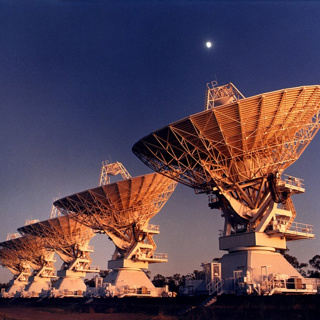
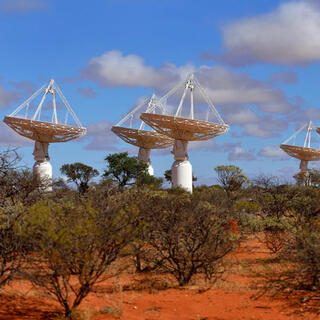
The PanRadio GRB program is a systematic, multi-year radio survey carried out on the Australia Telescope Compact Array (ATCA). Its goal is to provide comprehensive, multi-frequency (1–50 GHz), and high-cadence radio monitoring of all southern *Swift* GRB events, following their afterglow evolution from within an hour to years post-burst. Crucially, this program provides a **more unbiased view** of GRBs, targeting events like GRB 230815A that typically would not receive traditional radio follow-up because they lack known redshifts or comprehensive multi-wavelength coverage due to high line-of-sight extinction ($A_V = 2.3$).


**Key Findings from GRB 230815A**

GRB 230815A was a long-duration GRB, likely originating from a collapsar. The 400-day observing campaign revealed a key conflict in its behavior:


* **The X-ray Afterglow:** An early X-ray jet break was observed at approximately $\sim 0.1$ days post-burst. This implies a very narrow jet opening angle, estimated to be about $2.1^\circ$.

* **The Radio Afterglow:** The radio light curves, traced over an unusually long duration of 400 days, evolved approximately according to the standard self-similar expansion expected for a relativistic blast wave in a homogeneous environment. Critically, the radio evolution was **at odds** with the early X-ray break.

* **The Solution: A Two-Component Jet:** Researchers reconcile this conflict by proposing a **two-component jet structure**. The early X-ray break originated from the **narrow, fast component** ($\sim 2.1^\circ$), while the delayed or absent jet break in the radio light curves stems from a separate, **wider component** with a half-opening angle estimated to be $\gtrsim 35^\circ$.


**Long-Term Impact**

The extensive follow-up confirmed that after 400 days, the blast wave showed no evidence of transitioning to the non-relativistic regime, which constrains the ratio between the blast wave kinetic energy and the circumburst medium (CBM) density. The PanRadio program will build a large, unbiased sample to rigorously inspect the microphysical and dynamical parameters of GRBs, revealing the true diversity of their outflows and environments.


**Article Reference**

These results are published in the draft article: **"First results from the PanRadio GRB Collaboration: the 400-day afterglow of GRB 230815A"**. https://arxiv.org/pdf/2511.07644


Acknowledements: Podcast prepared with Google/NotebookLM. Illustration credits: CSIRO

Denne episoden er hentet fra en åpen RSS-feed og er ikke publisert av Podme. Den kan derfor inneholde annonser.

Episoder(101)

Record-Breaker: Catching Gamma Rays from the Distant Quasar OP 313

Record-Breaker: Catching Gamma Rays from the Distant Quasar OP 313

In this episode, we dive into a groundbreaking astronomical discovery: the detection of very-high-energy (VHE) gamma rays from the quasar OP 313. Located at a redshift of $z = 0.997$, OP 313 has shatt...

1 Jun 20min

Ripples in Spacetime: Unpacking the GWTC-5.0 Catalog

Ripples in Spacetime: Unpacking the GWTC-5.0 Catalog

In this episode, we dive into the monumental release of the Gravitational-Wave Transient Catalog version 5.0 (GWTC-5.0) and the open data from the second part of the fourth observing run (O4b) by the ...

29 Mai 21min

SN 2017egm : Fermi-LAT's Breakthrough Gamma-Ray Detection

SN 2017egm : Fermi-LAT's Breakthrough Gamma-Ray Detection

In today’s episode, we dive into the mystery of superluminous supernovae (SLSNe)—rare, extreme astronomical events that shine 10 to 100 times brighter than standard core-collapse supernovae. For years...

22 Mai 23min

Supernovae on the RISE: Why Dead Stars Wake Up Decades Later

Supernovae on the RISE: Why Dead Stars Wake Up Decades Later

In this episode, we explore the fascinating phenomenon of core-collapse supernovae that refuse to fade away quietly. Years, or even decades, after their initial explosion, some of these stellar deaths...

20 Mai 17min

The SVOM Satellite: A New Era in Multi-Messenger Astronomy

The SVOM Satellite: A New Era in Multi-Messenger Astronomy

In this episode, we dive into the fascinating world of gamma-ray bursts (GRBs) and high-energy transients through the lens of the SVOM (Space-based Multi-band Variable Object Monitor) mission. Launche...

29 Apr 24min

Chasing the Flash: Hunting Neutron Star Mergers with CTAO

Chasing the Flash: Hunting Neutron Star Mergers with CTAO

In this episode, we dive into the thrilling world of multi-messenger astronomy! Ever since the historic detection of GW170817, scientists have known that binary neutron star (BNS) mergers can produce ...

14 Apr 19min

Tiling the Sky: A New Strategy for Finding Elusive GRBs

Tiling the Sky: A New Strategy for Finding Elusive GRBs

In this episode, we dive into the intense and fast-paced world of **Gamma-ray bursts (GRBs)—the most luminous and rapidly evolving transients in the Universe**. While space-based instruments like the ...

13 Apr 19min

Fast Radio Bursts & Magnetar X-Rays: A Peculiar Discovery

Fast Radio Bursts & Magnetar X-Rays: A Peculiar Discovery

In this episode, we dive into the deep cosmos to explore a recent astronomical breakthrough linking Fast Radio Bursts (FRBs)—enigmatic, millisecond-long cosmic transients—to extreme stellar objects kn...

7 Apr 22min

Populært innen Vitenskap

fastlegen
tingenes-tilstand
jss
rekommandert
liberal-halvtime
sinnsyn
forskningno
tomprat-med-gunnar-tjomlid
villmarksliv
rss-paradigmepodden
fjellsportpodden
kvinnehelsepodden
tidlose-historier
dekodet-2
rss-zahid-ali-hjelper-deg
rss-overskuddsliv
hva-er-greia-med
rss-rekommandert
rss-inn-til-kjernen-med-sunniva-rose
grunnstoffene