
5: How to Create a Positive Relationship with Your Writing

5: How to Create a Positive Relationship with Your Writing

How do you feel when you think about writing? You are never going to write and publish as much as you want if you feel yucky about your writing. But feeling good about your writing doesn't just happen randomly or by accident. You have to create that positive relationship with your writing.

In this episode I'm talking all about creating a positive relationship with your writing in order to get more writing done and feel better doing it. I call this creating "positive feedback loops." It means that when you write, you feel positive feelings, which make you want to write again, in a super-happy loop of unicorns and rainbows.I exaggerate, but you get what I mean.

These positive feelings are created by you by implementing certain writing behaviors.

Actions to Take to Cultivate a Positive Relationship with Writing

It doesn't happen on it's own, and it doesn't happen by wishing for it, but you can take actionable steps to make yourself feel better about writing, with reinforces your desire to do it.

  • Start with small wins. Getting in one hour of focused writing per week consistently is the first small step.Then you can expand to two or three hours. Do this during your "tiger time" (not sure what that is? Take a listen to episode 2!) The idea is to set yourself up to win at writing. Small goals, consistency, writing with focus so that the writing feels good. Be purposeful and gentle on yourself.

  • Reward yourself. Set up an easy-to-maintain reward system so that you are giving yourself positive feedback for small and large writing successes. For small successes (completing your one hour sessions to start with) try something like a gold star on the calendar, or what a member of the I Should be Writing Facebook group does: putting a pebble in a glass vase for each day that you meet a small writing goal.

When you meet a large goal (submitting for publication or some other large project) be sure to give yourself a bigger reward: go out to dinner, open a nice bottle of wine, or maybe just an at-home dance party in your living room.

Get into the habit of acknowledging your work by creating a positive experience for yourself.

  • Adjust your mindset. So much of writing is about mindset. We all struggle with impostor syndrome, guilt, and overwhelm at one time or another. There is so much pressure around writing and publishing in academia because the stakes are very high: getting the job, keeping the job, getting the promotion, getting the grant. Much of it is dependent on your publication record. Sometimes all the pressure can lead us to believe things about our writing that aren't true, and certainly aren't helpful. Adjusting our mindsets may need to include reprogramming how we think.

"We have to actively learn to reprogram our negative writing stories so that we can get our big message out into the world."

How to Unlearn and Relearn Writing in Academia

Most of us aren't trained in writing as a practice, so we are making up systems and behaviors as we go along. When these systems and behaviors come from a place of pressure and fear, they can end up creating negative cycles of feedback between us and our writing.

Instead, you must realize that writing is about caring for yourself and your career. It is about getting your message out into the world, where it can change your field and help people.

Your teaching and research are better when you feel good about your writing, and you are happier. Here's how to accomplish this mindset switch.

  • Identify the stories you have been telling yourself about your writing. These are all the messages that come up when you sit down to think about your writing. For example:

"I'm a bad writer."

"I have nothing new to say."

"This is going to get a desk reject."

"I don't have time to write."

  • Flip the script. Now take each story and literally flip it on its head. Write exactly the opposite.

I don't know how to write→ I know how to write.

I have nothing new to say→ I have new and important things to say.

  • Reprogram. Changing our default thoughts takes diligence. Try writing your new writing stories on a paper and hanging it up on the wall, or set an alarm on your phone and read your new stories aloud to yourself several times per day.

When your old stories come back, shoo them away with a phrase like "not helpful." If you have to say it out loud, do it! Do whatever it takes to relearn that relationship to writing. If you were a writer as a kid, remember the reasons you wrote then: you had a story to tell, a message to communicate, something to say! You can connect with that kiddo again–and believe her that you have something important to say.

"Writing is worth your time, reflection, and energy, perhaps more than any other academic undertaking."

Conclusion

We all know writing is vital to our academic careers. In order to maintain our productivity and our sanity, we need to intentionally cultivate a positive relationship with that part of our academic lives. No amount of pushing ourselves to write will be as effective if we don't get this right first.

If you need more ideas on how to find time to write, head here to grab my FREE PDF download: 10 ways to make time to write.

Start taking action today to write and publish more and FEEL BETTER about it!

Connect with me:

Website

Facebook Group

Facebook Page


Originally published at https://www.cathymazak.com/episode5

Denne episoden er hentet fra en åpen RSS-feed og er ikke publisert av Podme. Den kan derfor inneholde annonser.

Episoder(369)

What Is Your Job?

What Is Your Job?

Why do some academic papers seem to move smoothly toward submission, while others get stuck somewhere between research, writing, and revision? One reason might be that you're doing the wrong job for t...

9 Sep 26min
"It's Not a Quick Fix, It's an Anchor"

"It's Not a Quick Fix, It's an Anchor"

If your looking for a quick fix for your stalled-out publication pipeline, Navigate is NOT for you. But if, like guest Katie Starkweather, you're looking for a fundamental change to how you manage you...

25 Aug 28min
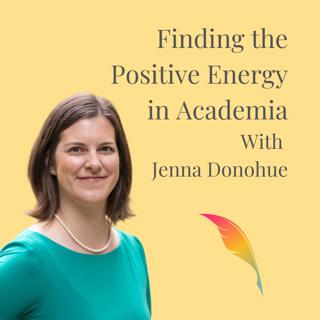
Finding the Positive Energy in Academia With  Jenna Donohue

Finding the Positive Energy in Academia With Jenna Donohue

Navigate helped Jenna find the positive energy in academia! In this episode, you will learn how Navigate changed her relationship with her writing. Enrollment closes August 28. Apply now for Navigate:...

19 Aug 19min

How Navigate Helped Augusta Williams Submit 6 Articles Last Year

How Navigate Helped Augusta Williams Submit 6 Articles Last Year

Augusta Williams joined Navigate to help ease the transition from a federal job back into academia. Navigate not only helped her do that, it also helped her manage her co-authoring with students more ...

13 Aug 22min
Fall Writing Planning Workshop 2026

Fall Writing Planning Workshop 2026

Surprise! Here's the audio from yesterday's Fall Writing Planning Workshop! It was so much fun, I just had to share it with all of you! In this workshop I walk you through my 3x3x3 writing planning me...

11 Aug 1h 19min

Zombie Projects

Zombie Projects

What do you do with those writing projects that keep hanging around in your publication pipeline, but you never work on them? I call these Zombie Projects, and they are holding you back from submittin...

4 Aug 17min
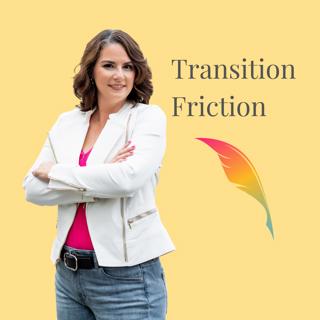
Transition Friction

Transition Friction

Why do projects get stuck? This summer I developed new curriculum around this question, and on today's podcast I'm sharing a concept from that new curriculum: transition friction. Many stuck writing p...

28 Jul 18min
How Close To "Done" Is Your Paper?

How Close To "Done" Is Your Paper?

I know you want to submit that almost-done article in three days, so hear me out. Before you join me for my Submit Your Almost-done Article in 3 Days LIVE Workshop, you need to PICK which of your ar...

21 Jul 30min

Populært innen Business og økonomi

stopp-verden
dine-penger-pengeradet
e24-podden
rss-penger-polser-og-politikk
lydartikler-fra-aftenposten
rss-borsmorgen-okonominyhetene
rss-skravla-gar
rss-pa-konto
pengepodden-2
utbytte
rss-orjasater
livet-pa-veien-med-jan-erik-larssen
finansredaksjonen
tid-er-penger-en-podcast-med-peter-warren
pengesnakk
stormkast-med-valebrokk-stordalen
lederpodden
morgenkaffen-med-finansavisen
rss-markedspuls-2
liberal-halvtime