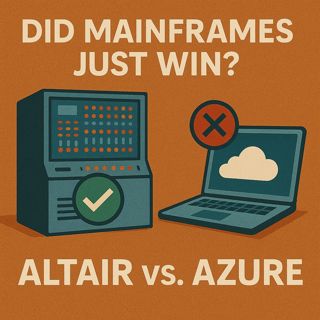

Did Mainframes Just Win? How Altair, Terminals and Shared Compute Explain Azure and Modern Cloud Design

Did Mainframes Just Win? How Altair, Terminals and Shared Compute Explain Azure and Modern Cloud Design

In 1975 you programmed an Altair 8800 by flipping switches and watching LEDs; in 2025 you click once and Azure spins up global infrastructure, AI models and multi‑tenant services in seconds. The surface looks completely different, but the underlying ideas—shared resources, programmable access, centralized capacity—never really went away. In this episode, we use the story of the Altair and classic mainframes to show how those same patterns now shape Microsoft 365, Power Platform and Azure, and how understanding them makes you better at cost optimization, automation and architecture today.

We start with the Altair box of switches, because it forces you to see computing without any abstractions. With only a tiny amount of memory and a row of toggles, every bit mattered and every instruction was deliberate, creating a discipline that today shows up in how you size cloud resources, design flows and avoid waste. The Altair also represented a power shift: for the first time, individuals could own a computer instead of begging for time on a centralized mainframe, even if that “computer” was brutally limited by modern standards. You’ll hear how that mindset of control and transparency—seeing state directly, tracing output back to exact inputs—maps onto modern tools like APIs, CLIs and low‑code platforms, where the most effective builders still think like architects working under constraints.

Then we zoom out to the patterns that refused to die. Classic mainframes ran as shared pools of compute in locked rooms; your terminal was just a window into that one precious resource. Today, Azure looks like the opposite—frictionless, on‑demand scale—but the model is strikingly familiar: multi‑tenant capacity, centralized orchestration and workload scheduling behind the scenes. We explore why the industry keeps returning to centralization (cost, efficiency, flexibility), how this shapes everything from Microsoft 365 throttling to Azure resource limits, and what it means for the way you design solutions that live inside a shared cloud rather than on “your” hardware.

From there, we talk about the quiet renaissance of the terminal and text‑based interfaces. Even with rich portals and AI copilots everywhere, serious work in Azure and Microsoft 365 keeps falling back to CLIs, shells and APIs—because they offer speed, repeatability and automation that visual tools can’t match. You’ll see how a terminal window in 2025 has more in common with a 1970s terminal than with a modern dashboard: clear commands in, precise responses out, no distraction. We connect that to practical workflows in your own environment: replacing fragile portal clicks with scripts, using APIs as the “toggle switches” of today, and treating automation as the default instead of the upgrade.

Finally, we bring it back to your day‑to‑day decisions in Microsoft 365, Power Platform and Azure. Once you see that the same old patterns—centralized capacity, shared infrastructure, constrained resources—are still with us, it becomes much easier to reason about cost, resilience and performance. You’ll walk away with a set of questions and mental models that help you design tenant governance, app architectures and automations that respect the realities of the shared cloud you’re actually running on, instead of the illusion of infinite, isolated power.

WHAT YOU’LL LEARN
  • How the Altair 8800 and mainframes still influence modern cloud thinking.
  • Why centralized, shared compute never really disappeared—it scaled into Azure.
  • How terminals, CLIs and APIs became the modern “switches and lights” for serious work.
  • How these patterns should change the way you design Microsoft 365, Power Platform and Azure solutions.
THE CORE INSIGHT

The core insight of this episode is that cloud computing didn’t kill the mainframe; it generalized it. The sooner you think in terms of shared pools, constraints and programmable access—like the early Altair and mainframe pioneers did—the easier it becomes to build cloud systems that are efficient, resilient and understandable instead of magical black boxes.

WHO THIS EPISODE IS FOR
  • Microsoft 365 and Azure architects who want clearer mental models for cloud design.
  • Power Platform makers who need to reason about limits, throttling and shared capacity.
  • Developers and IT pros who like history analogies that translate directly into better decisions today.
ABOUT THE AUTHOR / HOST

Mirko Peters is a Microsoft 365 and Azure architecture consultant and host of the M365.FM podcast, helping organizations treat history’s computing patterns as practical design tools for modern cloud systems. He works with teams on Microsoft 365, Power Platform and Azure to turn vague “cloud is just someone else’s computer” jokes into concrete strategies for optimization, resilience and automation they can explain to both engineers and business leaders.

Become a supporter of this podcast: https://www.spreaker.com/podcast/m365-fm-modern-work-security-and-productivity-with-microsoft-365--6704921/support.

Denne episoden er hentet fra en åpen RSS-feed og er ikke publisert av Podme. Den kan derfor inneholde annonser.

Episoder(766)

Managed Identities - Simply Explained

Managed Identities - Simply Explained

Managing passwords, connection strings, client secrets, and certificates has always been one of the biggest challenges when building secure cloud applications. Every application that connects to Azure...

16 Jul 16min
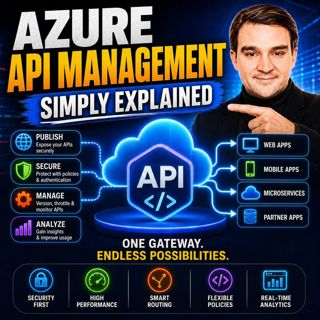
Azure API Management - Simply Explained

Azure API Management - Simply Explained

Azure API Management (APIM) is one of the most important services in Microsoft Azure for organizations building modern cloud applications, microservices, and enterprise integrations. While APIs make i...

16 Jul 14min
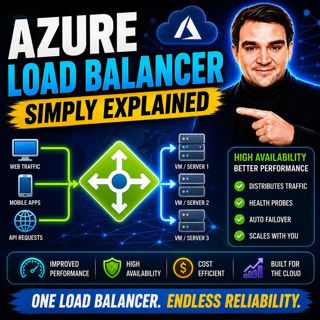
Azure Load Balancer — Simply Explained

Azure Load Balancer — Simply Explained

Every application starts small. A single virtual machine serves your website, processes customer requests, and handles all incoming traffic. At first, everything works perfectly. But as your user base...

16 Jul 15min
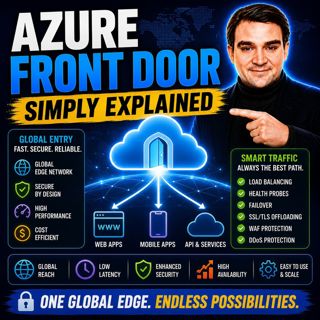
Azure Front Door - Simply Explained

Azure Front Door - Simply Explained

Building a website that performs well for users around the world is far more challenging than simply deploying a web application to Azure. A server hosted in North America may respond quickly for user...

16 Jul 17min
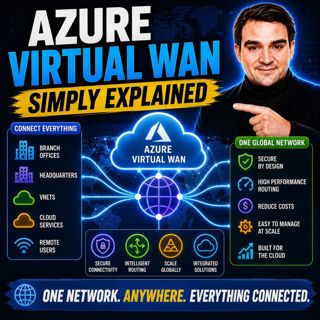
Azure Virtual WAN - Simply Explained

Azure Virtual WAN - Simply Explained

Building a global Azure network manually becomes increasingly difficult as your organization grows. What starts as a simple hub-and-spoke deployment quickly turns into a maze of virtual network peerin...

16 Jul 14min
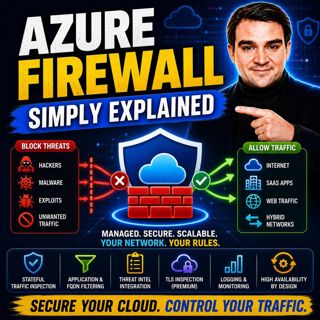
Azure Firewall - Simply Explained

Azure Firewall - Simply Explained

Securing a traditional office network was relatively straightforward—you installed a physical firewall at the edge of your network and inspected everything entering or leaving your building. But cloud...

16 Jul 13min
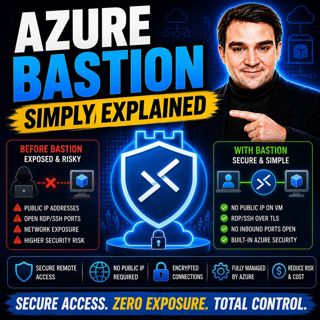
Azure Bastion - Simply Explained

Azure Bastion - Simply Explained

Secure remote access is one of the biggest challenges in cloud infrastructure. For years, administrators connected to Azure virtual machines by assigning public IP addresses and opening RDP or SSH por...

16 Jul 11min
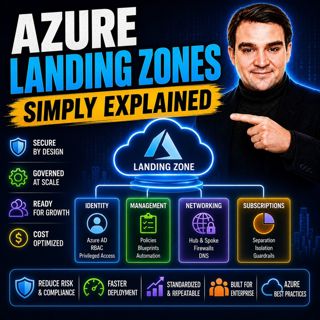
Azure Landing Zones - Simply Explained

Azure Landing Zones - Simply Explained

Building workloads in Azure is easy. Building an Azure environment that remains secure, scalable, compliant, and manageable for years is much harder. Without a solid foundation, organizations quickly ...

16 Jul 16min

Populært innen Politikk og nyheter

giver-og-gjengen-vg
aftenpodden-usa
aftenpodden
fotballpodden-2
forklart
stopp-verden
popradet
det-store-bildet
hanna-de-heldige
rss-gukild-johaug
rss-ness
dine-penger-pengeradet
aftenbla-bla
rss-utenrikskomiteen-med-bogen-og-grasvik
lydartikler-fra-aftenposten
nokon-ma-ga
rss-penger-polser-og-politikk
e24-podden
rss-hor-na-krim-2
rss-espen-lee-usensurert