Is Your Dataflow Reusable or a One‑Trick Disaster? How To Fix Schema Drift, Hardcoding & Fragile Fabric Dataflows

Is Your Dataflow Reusable or a One‑Trick Disaster? How To Fix Schema Drift, Hardcoding & Fragile Fabric Dataflows

Picture this: your lakehouse looks calm, clean Delta tables shining back at you. But without partitioning, schema enforcement, or incremental refresh, it’s not a lakehouse—it’s a swamp that eats performance, chews through storage, and turns your patience into compost. The uncomfortable truth is that many “working” dataflows are actually hanging by a thread: they refresh today, then silently fail the moment a column changes, a CSV layout shifts, or volumes grow beyond demo size. In this episode, we walk through a 60‑second checklist you can run against any Dataflow Gen2—parameters, modular queries, Delta targets, partitioning, and schema handling—to decide whether it’s a reusable asset or a fragile one‑off that will explode the next time your upstream system twitches.

WHY YOUR “WORKING” DATAFLOW IS ACTUALLY A TIME BOMB

Most teams treat “it refreshed” as the finish line, but that’s like calling a car road‑worthy because it started once. The real danger is schema drift: add a field, tweak a type, change order, and suddenly joins, filters, and calculations collapse—taking Finance dashboards, Marketing reports, and exec slides down with them in a chain reaction. We break down how fragile assumptions in Dataflows Gen2 (fixed columns, static file paths, brittle joins) create hidden debt, why tools like Delta tables and controlled schema evolution are your best defense, and how dynamic schema handling plus metadata‑driven mappings can absorb change instead of detonating your pipelines. By the end, you’ll see why survival isn’t about a single successful refresh, but about designing flows that keep working when your CRM, ERP, or CSV sources inevitably zigzag.

THE THREE DEADLY SINS OF DATAFLOW DESIGN

Under the microscope, most broken dataflows share the same three sins: hardcoding, spaghetti logic, and ignoring scale. We walk through why static file paths and magic dates turn every environment change into a manual rescue job, how unstructured chains of 20+ steps turn Power Query into a plate of noodles nobody can debug, and how testing only on tiny sample data leads to refresh queues melting down when real volumes hit. You’ll learn how to replace hardcoded values with parameters and metadata tables, split logic into named, single‑purpose queries and M functions, and test with production‑like volumes early—using tactics like coalesce, sensible partitioning, and offloading heavy transformations to Spark or lakehouse layers when Fabric’s dataflow engine becomes the bottleneck.

THE SECRET SAUCE: MODULARITY AND PARAMETERIZATION

Reusable dataflows aren’t accidents—they’re the result of modular design and parameterization baked in from the start. We show how to carve your transformations into small, reusable functions (for dates, paths, standardization), build parameter‑driven queries that can switch sources or environments without rewrites, and centralize config in metadata tables instead of copy‑pasting logic between workspaces. You’ll also see how to combine Delta targets, incremental refresh, defensive joins, and realistic scale testing into a simple design pattern: land raw data predictably, transform in readable blocks, then serve curated tables that can be reused across multiple reports and projects without turning your refresh schedule into a ticket machine.

WHAT YOU’LL LEARN
  • How to spot whether your Dataflow Gen2 is a reusable asset or a fragile one‑off.
  • Why schema drift breaks “working” dataflows and how to defend against it with Delta and schema evolution.
  • The three deadly sins of dataflow design—hardcoding, spaghetti logic, ignoring scale—and how to fix each.
  • How to use parameters, metadata, and modular M functions to make dataflows portable across environments.
  • When to keep transformations in Dataflows Gen2 vs push them into Spark notebooks or lakehouse layers.
  • A 60‑second checklist you can run on any dataflow to decide if it’s production‑ready.
THE CORE INSIGHT

The core insight of this episode is that a dataflow that “just works” once is not a success—it’s often a debt bomb waiting for the next schema change or volume spike. Real reliability comes from designing for drift, reuse, and growth: treating parameters, modular queries, Delta targets, and realistic scale tests as non‑negotiable architecture, not nice‑to‑have polish. Once you adopt that mindset, your lakehouse stops being a swamp of disposable pipelines and becomes a platform of reusable building blocks your whole organization can trust.

WHO THIS EPISODE IS FOR
  • Data engineers and BI developers building Dataflows Gen2 on Microsoft Fabric.
  • Analytics leads and architects responsible for lakehouse and ETL design.
  • Power BI and Fabric admins fighting constant refresh failures and schema‑driven outages.
  • Consultants and partners who need reusable patterns across multiple tenants and projects.
ABOUT THE AUTHOR / HOST

Mirko Peters is a Microsoft 365 and data platform consultant and host of the M365.FM podcast, helping organizations treat Microsoft 365, Fabric, and their lakehouse stack as an integrated operating system instead of a pile of one‑off reports and pipelines. He works with teams running on Microsoft 365, Azure, and Fabric to design architectures, governance, and ETL patterns that prioritize reuse, observability, and resilience—so dataflows stop being time bombs and start acting like stable infrastructure.

Become a supporter of this podcast: https://www.spreaker.com/podcast/m365-fm-modern-work-security-and-productivity-with-microsoft-365--6704921/support.

Denne episoden er hentet fra en åpen RSS-feed og er ikke publisert av Podme. Den kan derfor inneholde annonser.

Episoder(801)

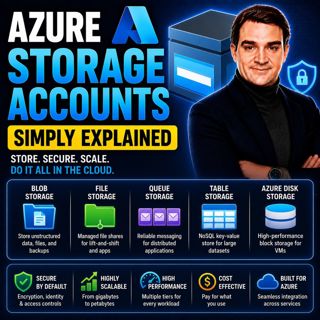
Azure Storage Accounts - Simply Explained

Azure Storage Accounts - Simply Explained

An Azure Storage Account is the foundation of Microsoft's cloud storage platform and acts as a single container that brings together multiple storage services under one roof. Rather than creating sepa...

18 Jul 13min

Azure DDoS Protection - Simply Explained

Azure DDoS Protection - Simply Explained

Azure DDoS Protection is Microsoft's managed service for defending internet-facing applications against Distributed Denial-of-Service (DDoS) attacks. These attacks attempt to overwhelm websites, APIs,...

18 Jul 16min

Azure Network Security Groups - Simply Explained

Azure Network Security Groups - Simply Explained

Azure DDoS Protection is Microsoft's managed service for defending internet-facing applications against Distributed Denial-of-Service (DDoS) attacks. These attacks attempt to overwhelm websites, APIs,...

18 Jul 14min

Azure Virtual Network - Simply Explained

Azure Virtual Network - Simply Explained

An Azure Virtual Network (VNet) is your own private network inside Microsoft Azure. It provides the secure foundation for virtually every cloud workload you deploy, including virtual machines, databas...

18 Jul 17min

Azure Private Link - Simply Explained

Azure Private Link - Simply Explained

Azure Private Link is Microsoft's networking service that enables secure, private connectivity between your Azure Virtual Network and Azure Platform-as-a-Service (PaaS) resources such as Azure Storage...

18 Jul 16min

Azure Traffic Manager - Simply Explained

Azure Traffic Manager - Simply Explained

Azure Traffic Manager is Microsoft's global DNS-based traffic distribution service that directs users to the most appropriate application endpoint anywhere in the world. Instead of sending every user ...

18 Jul 16min

Azure DNS - Simply Explained

Azure DNS - Simply Explained

Azure DNS is Microsoft's fully managed Domain Name System (DNS) hosting service that translates human-friendly domain names like contoso.com into the IP addresses computers use to communicate. Instead...

18 Jul 15min
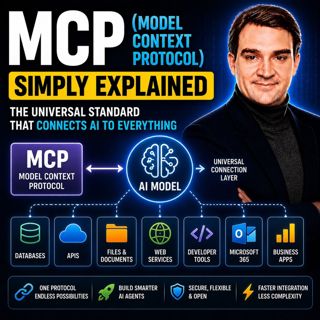
MCP (Model Context Protocol) - Simply Explained

MCP (Model Context Protocol) - Simply Explained

The Model Context Protocol (MCP) is an open standard that allows AI models to securely connect to external tools, applications, and data sources using a single, consistent protocol. Before MCP, every ...

17 Jul 15min

Populært innen Politikk og nyheter

giver-og-gjengen-vg
aftenpodden
aftenpodden-usa
fotballpodden-2
forklart
stopp-verden
popradet
rss-gukild-johaug
det-store-bildet
hanna-de-heldige
rss-ness
aftenbla-bla
nokon-ma-ga
dine-penger-pengeradet
rss-penger-polser-og-politikk
bt-dokumentar-2
lydartikler-fra-aftenposten
rss-utenrikskomiteen-med-bogen-og-grasvik
e24-podden
unitedno