AI Agents vs Automation: OPA Loop, Governance & Why Most “Agents” Are Just Scripts

AI Agents vs Automation: OPA Loop, Governance & Why Most “Agents” Are Just Scripts

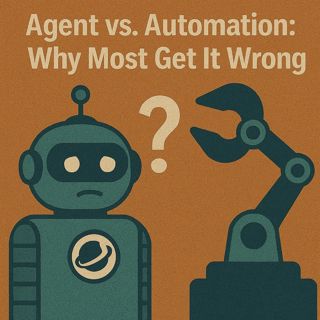
AI agents vs. automation, Observe‑Plan‑Act (OPA) loop, governance, guardrails and reliability – this episode is for people searching “what is an AI agent?”, “agent vs automation difference”, “OPA loop explained”, or “how to govern AI agents at work” and wanting a clear, practical breakdown rather than marketing buzzwords. We start with where most confusion begins: you press a button, something runs, and it looks smart – but under the hood, most so‑called “agents” are just scripts wearing a new label, and that has real consequences for risk and expectations in your organization.

From there, we unpack the illusion of automation: why highly polished scripts can feel intelligent, where they break the moment context shifts, and why that brittleness matters if you’re about to hand critical workflows to “bots”. You’ll hear why automation is more like a vending machine – reliable, repeatable, zero awareness – while genuine agents behave more like a junior teammate who watches what’s happening, remembers what worked last time, and adjusts on the fly when reality doesn’t match the script.

Then we dive into the Observe‑Plan‑Act engine as the real heart of an agent, not a marketing label. We walk through how agents observe systems and signals, plan their own next steps, act through your existing tools and APIs, and loop through feedback instead of just replaying a macro – plus what this means for error‑handling, safety and trust when things go wrong. Finally, we map the five “organs” of an agent body – perception, memory, reasoning and more – so you can see what must be in place before you put an agent anywhere near real‑world workflows, customers or data.

WHAT YOU WILL LEARN
  • Why most “agents” in marketing are actually just glorified automation scripts.
  • How automation works, where it excels, and where it fails the moment context changes.
  • The core difference between a vending‑machine workflow and an agent‑like teammate.
  • How the Observe‑Plan‑Act loop makes agents adaptive instead of purely mechanical.
  • The five core “organs” every serious agent system needs to be reliable.
  • Why mislabeling automation as agency leads to broken trust and governance problems.
  • When you should deliberately choose simple automation instead of agents.
  • Practical implications for safety, guardrails and decision‑rights in agent design.
THE CORE INSIGHT

The core insight of this episode is that calling everything an “agent” doesn’t make your systems smarter – it only blurs the line between safe, predictable automation and genuinely autonomous behavior. Once you understand the Observe‑Plan‑Act loop and the five organs of an agent body, you can design systems that either remain clean automation on purpose, or step into true agency with the governance, guardrails and expectations that level of autonomy demands.

WHO THIS IS FOR
  • Engineering and platform teams exploring AI agents in production workflows.
  • Product leaders and founders trying to decide when to build agents vs. automation.
  • Architects and governance leads defining policies for AI systems and autonomy.
  • Data and AI practitioners who want a clear mental model of OPA‑based agents.
  • Leaders burned by “intelligent bots” hype who want realistic expectations and language.
ABOUT THE HOST

Mirko Peters is a Microsoft 365 consultant and host of M365.FM, where he explores modern work, AI and productivity with a focus on how systems behave in real organizations, not just demos. He helps teams translate concepts like agents, automation, governance and guardrails into practical designs that are understandable to both IT and business stakeholders.

Become a supporter of this podcast: https://www.spreaker.com/podcast/m365-fm-modern-work-security-and-productivity-with-microsoft-365--6704921/support.

Denne episoden er hentet fra en åpen RSS-feed og er ikke publisert av Podme. Den kan derfor inneholde annonser.

Episoder(801)

Azure Storage Accounts - Simply Explained

Azure Storage Accounts - Simply Explained

An Azure Storage Account is the foundation of Microsoft's cloud storage platform and acts as a single container that brings together multiple storage services under one roof. Rather than creating sepa...

18 Jul 13min
Azure DDoS Protection - Simply Explained

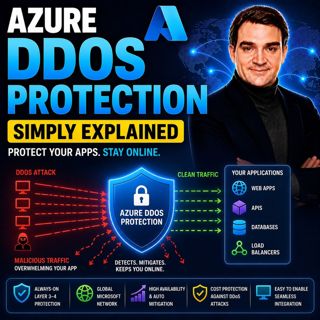
Azure DDoS Protection - Simply Explained

Azure DDoS Protection is Microsoft's managed service for defending internet-facing applications against Distributed Denial-of-Service (DDoS) attacks. These attacks attempt to overwhelm websites, APIs,...

18 Jul 16min

Azure Network Security Groups - Simply Explained

Azure Network Security Groups - Simply Explained

Azure DDoS Protection is Microsoft's managed service for defending internet-facing applications against Distributed Denial-of-Service (DDoS) attacks. These attacks attempt to overwhelm websites, APIs,...

18 Jul 14min
Azure Virtual Network - Simply Explained

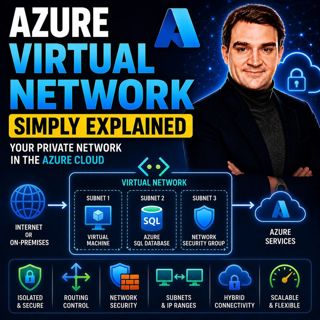
Azure Virtual Network - Simply Explained

An Azure Virtual Network (VNet) is your own private network inside Microsoft Azure. It provides the secure foundation for virtually every cloud workload you deploy, including virtual machines, databas...

18 Jul 17min
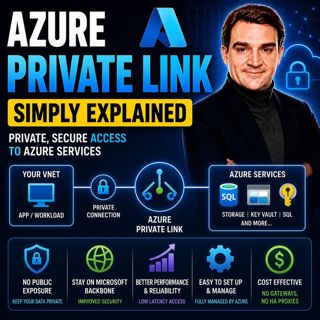
Azure Private Link - Simply Explained

Azure Private Link - Simply Explained

Azure Private Link is Microsoft's networking service that enables secure, private connectivity between your Azure Virtual Network and Azure Platform-as-a-Service (PaaS) resources such as Azure Storage...

18 Jul 16min
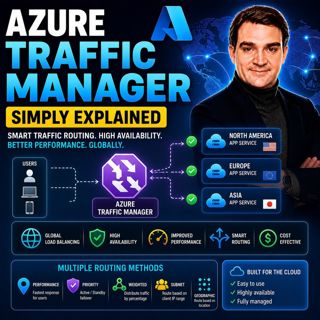
Azure Traffic Manager - Simply Explained

Azure Traffic Manager - Simply Explained

Azure Traffic Manager is Microsoft's global DNS-based traffic distribution service that directs users to the most appropriate application endpoint anywhere in the world. Instead of sending every user ...

18 Jul 16min
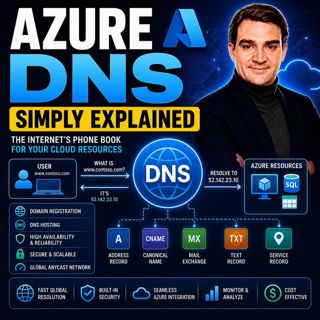
Azure DNS - Simply Explained

Azure DNS - Simply Explained

Azure DNS is Microsoft's fully managed Domain Name System (DNS) hosting service that translates human-friendly domain names like contoso.com into the IP addresses computers use to communicate. Instead...

18 Jul 15min
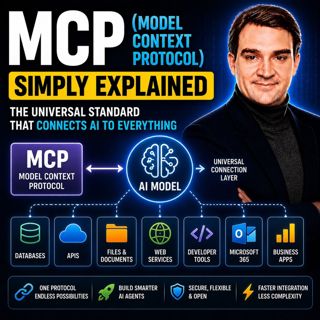
MCP (Model Context Protocol) - Simply Explained

MCP (Model Context Protocol) - Simply Explained

The Model Context Protocol (MCP) is an open standard that allows AI models to securely connect to external tools, applications, and data sources using a single, consistent protocol. Before MCP, every ...

17 Jul 15min

Populært innen Politikk og nyheter

giver-og-gjengen-vg
aftenpodden
aftenpodden-usa
fotballpodden-2
forklart
stopp-verden
popradet
rss-gukild-johaug
det-store-bildet
hanna-de-heldige
rss-ness
aftenbla-bla
nokon-ma-ga
dine-penger-pengeradet
rss-penger-polser-og-politikk
bt-dokumentar-2
lydartikler-fra-aftenposten
rss-utenrikskomiteen-med-bogen-og-grasvik
e24-podden
unitedno