Anunnaki Ancient Mystery: Decoding the Secrets of an Ancient Civilization

Anunnaki Ancient Mystery: Decoding the Secrets of an Ancient Civilization

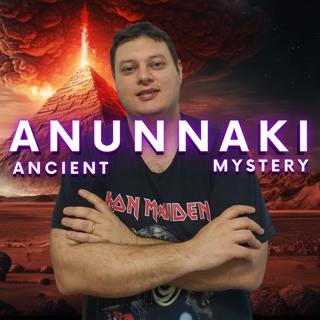
Uncover the secrets of the past with Anunnaki Ancient Mystery—a podcast that explores the enigmatic origins and hidden truths of the Anunnaki. Delve into ancient texts, myths, and archaeological discoveries to unravel one of history's greatest mysteries. For history buffs and those fascinated by the unknown. #AnunnakiAncientMystery #AncientHistory #ConspiracyTheories #MythologyPodcast #HiddenTruths #PodcastLovers This Podcast is produced by Lucas M. Kern. I'm a Brazilian librarian with a post-graduate degree in Philosophy and People Management. I am passionate about mythology, philosophy, history, and the theories of ancient aliens and ancient astronauts. The Anunnaki Ancient Mystery channel was created to present my studies on the Anunnaki subject. It is a channel entirely dedicated to the Anunnaki topic, focused on the ancient aliens theory, but with a different and totally innovative approach. To narrate, I rely on an electronic voice, as I believe it does more justice to the storytelling than my Brazilian accent would.

Episoder(97)

Exploring Phase Two and AI-Dubbed Content

Exploring Phase Two and AI-Dubbed Content

In this episode, we celebrate a milestone of 300,000 subscribers. Thank you to everyone who has been part of this journey. As we transition into what I call Phase Two, I'm excited to announce the release of ten videos originally from my Portuguese channel. These have been dubbed into English using a new AI tool with my voice. This series offers a scientific foundation on the Anunnaki, including both theoretical insights and practical demonstrations on locating and analyzing real Sumerian tablets. The channel has expanded into multiple languages, including French, German, Italian, and Spanish. Subscribe to the channels in the language you understand to ensure optimal algorithm performance. If you haven't yet, join us as we explore ancient history, the Anunnaki, and the roots of human belief systems. #Anunnaki #Sumeriantablets #AIdubbing #ancienthistory #multilingualchannel See show notes: https://inlet.fm/anunnaki/episodes/687bdd9b9e50c67027d52434 Learn more about your ad choices. Visit podcastchoices.com/adchoices

21 Jul 13min

Unearthing Evidence of the Anunnaki in Mesopotamian History

Unearthing Evidence of the Anunnaki in Mesopotamian History

The Anunnaki are more than a mere conspiracy theory; they have a foundation in historical and archaeological evidence. Discover the Anunnaki's origins in ancient Mesopotamia, particularly within the Sumerian civilization, known as the earliest civilization in human history. This transition marked the dawn of cities, laws, writing, and organized religious systems, known as the Neolithic Revolution. Sumerians documented their world on clay tablets in cuneiform, preserved in places like the Library of Nineveh. Deciphering these tablets was possible through the Behistun Inscription, akin to the Rosetta Stone. These texts mention beings called the Anunnaki, interpreted as “those who came from the heavens to Earth” or “offspring of the god Anu.” The Anunnaki were seen as literal gods, with creation myths depicting them creating humans to serve them. The evolution from polytheism to monotheism is evident through archaeological findings. Sumerian gods were part of a divine hierarchy, influencing later traditions. Abraham, a pivotal figure in monotheistic faiths, hailed from the Sumerian city Ur. This historical backdrop indicates early monotheism emerged from polytheistic contexts. Zecharia Sitchin's works proposed speculative ideas about the Anunnaki as extraterrestrial beings from Nibiru, genetically modifying humans for mining purposes. His theories, although controversial, sparked interest in these ancient narratives. Sitchin's fictional work, The Lost Book of Enki, incited debate on the intersection of mythology, archaeology, and science. Despite many untranslated clay tablets and fragmented narratives, the Anunnaki's role in the Sumerian pantheon was significant, with no symbolic implications. They were regarded as literal deities, maintaining order and governance. The study of Anunnaki and Sumerian civilization is ongoing, with historical evidence and scholarly research vital for understanding ancient beliefs. The Anunnaki were central to ancient Mesopotamian culture, shaping their understanding of deities, governance, and society. #Anunnaki #Sumeriancivilization #Mesopotamia #cuneiform #ZechariaSitchin #NeolithicRevolution #polytheism #monotheism #archaeology See show notes: https://inlet.fm/anunnaki/episodes/6872a317b4829d4fd7bb14ff Learn more about your ad choices. Visit podcastchoices.com/adchoices

14 Jul 1h

Unveiling Simulation Theory: The Scariest Truth About Our Universe

Unveiling Simulation Theory: The Scariest Truth About Our Universe

The concept of reality as a simulation has gained traction not only in science fiction but also among physicists, philosophers, and ancient mystics. This episode dives deep into simulation theory, exploring it through the lens of quantum physics, Gnostic cosmology, and historical spiritual teachings. It suggests that our world is a constructed replica, designed to house consciousness. Drawing on Gnostic texts like the Nag Hammadi and the idea of the Archons, the episode explores suppressed ancient beliefs that claim the material world is a counterfeit created by non-human intelligences. This false reality is maintained through belief systems and emotional manipulation, with fear activating a perceptual virus known in various cultures as Wetiko or Mara. Quantum physics, particularly the observer effect and the double-slit experiment, supports the idea that reality solidifies only when observed, paralleling the concept of a digital simulation. The philosophical theories of Nick Bostrom and Elon Musk further suggest the likelihood that we are living in one of countless simulations rather than base reality. The Mandela Effect and other anomalies are interpreted as evidence of the simulation being updated or modified, suggesting it's not perfectly stable. Ancient texts and myths from Egyptian, Platonic, and Gnostic traditions support the idea of a false world, designed to contain consciousness. A key theme is awakening through heart coherence and intuition, with studies suggesting that love and resonance can disrupt the simulation. The episode concludes that consciousness cannot be simulated, pointing to a higher realm that remains obscured but not erased. The material world is seen as pixelated, behaving like digital code, where truth arises from meaning, not material substance. The core message is that humans possess a divine spark, a frequency older than the simulation, guiding consciousness back to its origin. Escaping the simulation means recognizing this essence and operating from a frequency the system cannot contain. #simulationtheory #quantumphysics #Gnosticcosmology #Archons #MandelaEffect #NickBostrom #ElonMusk #consciousness #observereffect #digitalsimulation #heartcoherence #intuition #divinespark #awakening #Wetiko #Mara See show notes: https://inlet.fm/anunnaki/episodes/68602e1bd635e11369612528 Learn more about your ad choices. Visit podcastchoices.com/adchoices

30 Jun 50min

Revealing the Hidden Truths About UAPs and Ancient Sky Beings

Revealing the Hidden Truths About UAPs and Ancient Sky Beings

Unidentified Aerial Phenomena (UAPs), once dismissed as pseudoscience, are now officially recognized by global military and government agencies. The U.S. Pentagon, through the All-domain Anomaly Resolution Office (AARO), confirms over 1,600 UAP cases, with 22 showing flight characteristics beyond known technology. Former Air Force officer David Grusch and Navy Commander David Fravor share experiences with objects exhibiting extraordinary speed and maneuverability. These raise the question of whether we're encountering something new or rediscovering historical phenomena. Ancient cultures across Mesopotamia, India, Mesoamerica, and the Near East recorded interactions with sky beings and advanced aerial vehicles. The Sumerians' Anunnaki, described as heavenly visitors, are believed to have shaped human society. Ancient Indian texts describe Vimanas, flying machines with mercury propulsion. In Genesis, the term “Elohim” might reference powerful beings, paralleling Sumerian narratives involving Enki and Enlil. Examples persist through history. In 1561, Nuremberg citizens witnessed an aerial event with numerous flying objects, and similar sightings occurred in Basel in 1566. In 9th-century Ireland, monks reported encounters with airborne ships. Native American traditions mention the Sky People and Kachinas, while the Dogon people of Mali knew about the Sirius star system before telescopic confirmation. The Maya describe sky deities like Quetzalcoatl arriving and departing from the sky. Interest in UAPs increased post-2017 after the New York Times exposed the Pentagon's Advanced Aerospace Threat Identification Program (AATIP). Declassified videos like “FLIR1,” “Gimbal,” and “GoFast” show crafts without visible propulsion performing advanced maneuvers. UAPs are reported near nuclear sites and military zones globally. In Brazil, the 1986 “Night of the UFOs” involved 21 radar-tracked objects, and recent sightings in 2022 featured luminous blue objects over Rio Grande do Sul and Santa Catarina. The link between modern UAP sightings and ancient records points to continuity. Zecharia Sitchin's interpretations of Mesopotamian texts suggest extraterrestrial involvement in early human development. His work connects the Anunnaki with Nibiru, a planet on a 3,600-year orbit, linked to historical events and potential future returns. Texts from the Book of Revelation to Zoroastrian and Mayan prophecies hint at sky beings' return during global transitions. Contemporary theories propose UAPs as surveillance entities or precursors to such events. With rising UAP reports and official disclosures, there's renewed focus on understanding these phenomena's origins and intent. The convergence of mythology, archaeology, military evidence, and astronomy suggests human history may have extraterrestrial influences. As research continues, the emphasis is shifting from UAP existence to their implications for humanity's timeline. #UAPs #Anunnaki #DavidGrusch #DavidFravor #AATIP #Sumerians #Vimanas #Elohim #ZechariaSitchin #Nibiru See show notes: https://inlet.fm/anunnaki/episodes/684db90dad3789b502bfc154 Learn more about your ad choices. Visit podcastchoices.com/adchoices

16 Jun 39min

Exploring The Epic of Gilgamesh: A Deep Dive into Ancient Mythology

Exploring The Epic of Gilgamesh: A Deep Dive into Ancient Mythology

The Epic of Gilgamesh, over 4,000 years old and crafted in Mesopotamia, is the oldest epic known. Initially discovered in 1872, it changed the belief that the Bible and ancient Greek texts were the earliest records. This ancient tale, predating the Iliad and the Odyssey by 1,500 years, provides invaluable insight into mythology, history, and religious practices. The narrative follows Gilgamesh, a semi-divine king of Uruk, on a life-altering journey of adventure, friendship, loss, and the quest for immortality. Embedded in Mesopotamian culture, his story influenced numerous cultures and religious narratives, including accounts like Noah’s Flood. Gilgamesh is documented as a 26th-century BCE ruler in the Sumerian King List and was later revered as a deity. His architectural triumph, the walls of Uruk, symbolize humanity’s quest for permanence. Initially, a tyrannical ruler, Gilgamesh is countered by Enkidu, a wild man created by the gods, who becomes his dearest friend after a fierce battle. Together, they venture to the Cedar Forest, defeating Humbaba, the divine guardian, which leads to divine repercussions. After rejecting the goddess Ishtar, who sends the Bull of Heaven as retribution, the divine council decides one of them must die, and Enkidu succumbs to a fatal illness. Stricken by Enkidu’s death, Gilgamesh seeks Utnapishtim, the sole immortal man, to understand eternal life. Utnapishtim’s story of surviving a Great Flood parallels the biblical Noah. Despite Gilgamesh's efforts, he learns that true immortality is not attainable but lies in one’s legacy. He returns to Uruk, understanding that his deeds and the city's walls are his enduring legacy. This epic, a foundational hero’s journey, explores themes of mortality and the search for meaning, influencing countless myths and religious ideas. It questions how myths transmit across civilizations, with theories suggesting the Anunnaki, deities of Mesopotamian lore, might represent advanced beings impacting early societies. This work also delves into mysticism and altered states of consciousness in Gilgamesh's journey to the underworld. In the underworld, Gilgamesh aims to reclaim sacred symbols of power, and Enkidu attempts to assist but becomes trapped among the dead. Gilgamesh's grief leads to a vision of Enkidu's spirit, who reveals that the remembered live in peace, while the forgotten suffer, emphasizing memory as a path to immortality. The Epic of Gilgamesh, a cornerstone of ancient literature, continues to shape mythology, philosophy, and religious thought. Script and editing by Lucas Martins Kern. #EpicofGilgamesh #Mesopotamia #Gilgamesh #Enkidu #Utnapishtim #immortality #mythology #SumerianKingList #Anunnaki #CedarForest #Humbaba #Ishtar #Noah'sFlood #underworld See show notes: https://inlet.fm/anunnaki/episodes/6844bdd002b952b060e8ec0d Learn more about your ad choices. Visit podcastchoices.com/adchoices

9 Jun 1h 15min

Movie 2025: Complete Saga of the Anunnaki Timeline Explained

Movie 2025: Complete Saga of the Anunnaki Timeline Explained

This captivating Anunnaki film offers a comprehensive retelling of their epic story. With a runtime of 2 hours and 20 minutes, it reimagines the saga as never seen before. Immersing viewers in the Anunnaki narrative, this adaptation is rooted in the Lost Book of Enki. Key events unfold in a streamlined and engaging way, making it the most accessible Anunnaki documentary to date. The film features a unique starship model reminiscent of symbols from Egyptian, Assyrian, Sumerian, and Zoroastrian myths. Crafted through dedication, it combines ancient symbolism with modern storytelling. Visual advancements bring characters like Enki, Enlil, and Anu to life with consistent appearances. Notably, the Anunnaki's mysterious skin color adds depth to their portrayal. Despite AI assistance, human effort and creativity were central to crafting this film, which adapts biblical names for modern audiences while preserving the story's heritage. This version expands on previous iterations, uniting episodes into a singular, cohesive documentary. The Anunnaki timeline begins 445,000 years ago with their arrival from Nibiru, landing in the Persian Gulf to establish Eridu. Faced with labor shortages, the Anunnaki genetically engineered Homo sapiens. The film covers events from mankind's creation to a cataclysmic flood and nuclear conflicts, painting a comprehensive picture of our ancient past. Inspired by Zecharia Sitchin's work, the documentary melds mythology, archaeology, and ancient astronaut theory, offering one of the most provocative views on human origins. Prepare for an unforgettable journey through the Anunnaki's history, enriched by extensive research and visual storytelling. #Anunnaki #timeline #LostBookofEnki #Eridu #Homosapiens #ZechariaSitchin #ancientastronauts #Nuclearconflict #ancientpast #mythology See show notes: https://inlet.fm/anunnaki/episodes/683191a03b178c9637f14437 Learn more about your ad choices. Visit podcastchoices.com/adchoices

26 Mai 2h 28min

Understanding the Prophecies of Anunnaki's Return

Understanding the Prophecies of Anunnaki's Return

This episode explores the idea that the return of ancient gods, as described in various scriptures, mythologies, and religious prophecies, is not merely symbolic but a literal event that might already be occurring. Across different cultures and faiths, there's a recurring theme: powerful beings from the sky once walked among humans and promised to return. From the Book of Revelation's white horse rider to the Mahdi of Islam, the Jewish Messiah, Hindu Kalki, and Buddhist Maitreya, these figures might indicate ancient extraterrestrials known as the Anunnaki or Elohim. Ancient structures like the pyramids of Egypt and the ziggurats of Mesopotamia align with celestial events and possibly served as astronomical markers to track planetary cycles and prepare for the reappearance of non-human intelligences. These cultures viewed time as cyclical—always anticipating the return of the gods. Their influence shaped early civilizations through advanced knowledge and intervention. The narrative of Jesus is reinterpreted within this larger cosmic context. Some theories suggest he was a divine hybrid with celestial heritage. Symbols like the Holy Grail may refer to the Sang Real, or royal blood, and the words “this is my blood” gain new significance. Gnostic texts like the Gospel of Judas present a version of Jesus closely aligned with forbidden knowledge, hinting at conflicts between divine factions. The episode traces the impact of gods like Enlil, Enki, and Marduk throughout ancient geopolitical events. Cities like Babylon and Jerusalem were strategic points in cosmic power struggles. The construction of the Tower of Babel, the rise of Abraham, and the empires of figures like Cyrus and Alexander the Great can be seen as moves in a larger war. Bloodlines, religious institutions, and imperial agendas served as tools for maintaining influence long after the gods left the public eye. Modern phenomena such as UFOs, UAPs, and declassified government data are linked to this ancient narrative. Advanced technologies in ancient texts—like the Ark of the Covenant or flying Vimanas—suggest a divine presence never fully vanished. It's possible these beings still covertly guide human affairs through hidden bloodlines and secret societies. The planet Nibiru from Sumerian texts is proposed as either a celestial body or a symbol of a returning cycle, associated with global upheaval and societal collapse. These events align with today's instability, suggesting the timeline for return is accelerating. Religious systems are evaluated not as divine revelations but as strategies for control. Competing divine factions used religion to divide humanity and claim spiritual territory. Thus, the return of the gods will dismantle these institutions rather than validate them. The apocalypse is reframed as disclosure—a revelation of humanity’s true origins and the nature of those once worshipped as gods. The episode questions future leadership. If gods return, will Enki, associated with wisdom, or Enlil, linked to law, lead them? This decision could shape the next chapter of human evolution. Signs are aligning, prophecies are awakening, and the silence of the gods may soon be broken, challenging beliefs about divinity and human existence. #Anunnaki #prophecies #ancientgods #extraterrestrials #Elohim #ancientstructures #pyramids #ziggurats #celestialevents #Jesus #HolyGrail #Gnostictexts #Enlil #Enki #Marduk #Babylon #Jerusalem #UFOs #UAPs #Nibiru #apocalypse See show notes: https://inlet.fm/anunnaki/episodes/682a832d9f8b8b4e4db75511 Learn more about your ad choices. Visit podcastchoices.com/adchoices

19 Mai 52min

The Anunnaki Departure: When Celestial Gods Left Earth

The Anunnaki Departure: When Celestial Gods Left Earth

The Anunnaki, hailed in ancient Sumerian lore as “Those Who from Heaven to Earth Came,” were sophisticated beings believed to have journeyed from a remote planet called Nibiru, orbiting the sun every 3,600 years. Ancient cuneiform records suggest they arrived on Earth seeking gold to mend their planet's failing atmosphere. Upon their arrival, they established early civilizations like Eridu, Nippur, and Uruk, imparting wisdom in agriculture, astronomy, law, and writing, thus being venerated as gods. Through advanced genetic engineering, the Anunnaki created Homo sapiens, known as Adamu, by blending their DNA with early hominids. Initially designed for labor, humans later became crucial to divine governance, with kings acting as semi-divine intermediaries. These kings enacted divine instructions via temples, which served as communication hubs between Earth and Nibiru. Priestly rituals might have encoded technological knowledge. Over time, rivalry grew among the Anunnaki, notably between Enlil’s and Enki’s factions. These conflicts escalated through their progeny, especially Ninurta and Marduk. Marduk’s ambition for supremacy sparked significant upheavals, including erecting the Tower of Babel, challenging the divine order. This climaxed in the deployment of catastrophic Weapons of Terror, likely nuclear, leading to the ruin of cities like Ur and the tainting of sacred lands. The Anunnaki's exodus was coordinated, not abrupt. Ancient sources imply Mars was utilized as a transition station, with Earth-based launch sites perhaps including Peru's Nazca plateau, famed for sky-viewable geoglyphs. Various cultures—from Mesopotamia to Mesoamerica—recount gods ascending to the heavens amid fire and sound. Documents such as the Harran inscriptions and the Book of Ezekiel describe mechanical, luminous crafts linked to divine entities, resonating with similar accounts from India, Egypt, and the Americas. Post-Anunnaki withdrawal, human societies evolved. Religious rituals persisted, yet the gods ceased to respond. Their identities were retained in new cultural forms: Enlil likely became El or Yahweh, Enki morphed into Ptah or Poseidon, Inanna transitioned into Ishtar and Aphrodite, and Marduk’s legacy endured in Jupiter or Zeus. Temples shifted from functional to symbolic, and remembrance replaced direct interaction. Despite their absence, numerous ancient traditions prophesied their return. Sumerian texts cite the “Day of the Returning Lords,” while biblical, Christian, Islamic, and other faiths narrate apocalyptic scenarios with celestial signs and divine intervention. These beliefs often tie to the precession of the equinoxes, denoting shifts in astrological ages. The shift from Pisces to Aquarius is perceived by some as the dawn of a new epoch, possibly indicating the Anunnaki’s resurgence. Modern observations of gravitational anomalies beyond Pluto have fueled speculation that Nibiru may once more be drawing near. According to some, the Anunnaki’s impact never fully vanished but persists subtly, awaiting the opportune moment to resurface. Their legacy endures in myths, ruins, and enigmatic ancient knowledge. As science revisits history, the notion that humanity’s beginnings and destiny are intertwined with these ancient visitors continues to provoke reflection and discussion. 00:00 – Why Did the Gods Leave Earth? 00:29 - A Time of Gods and Men 05:05 - A Time of Gods and Men 10:44 - The Final Phase of Divine Rule 16:46 - Humanity Inherits the Earth 22:14 - Eye-Witnesses of the Departure 26:50 - Exodus to the Heavens: Mars and the Nazca Mystery 31:48 - Earth After the Gods: A World in Mourning 38:24 - Will They Return? 00:00: Why Did the Gods Leave Earth?00:29: A Time of Gods and Men05:05: A Time of Gods and Men10:44: The Final Phase of Divine Rule... Learn more about your ad choices. Visit podcastchoices.com/adchoices

14 Mai 46min

Populært innen Samfunn

giver-og-gjengen-vg
rss-spartsklubben
aftenpodden
konspirasjonspodden
aftenpodden-usa
popradet
rss-nesten-hele-uka-med-lepperod
sophie-leser
wolfgang-wee-uncut
intervjuet
grenselos
relasjonspodden-med-dora-thorhallsdottir-kjersti-idem
frokostshowet-pa-p5
synnve-og-vanessa
rss-dette-ma-aldri-skje-igjen
alt-fortalt
opptur-med-annette-og-ingeborg
min-barneoppdragelse
198-land-med-einar-trnquist
fladseth