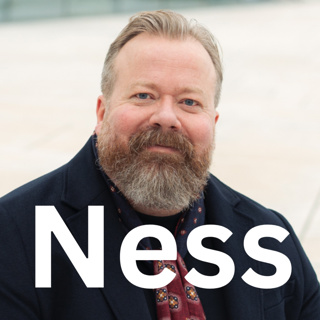
Jon Mesko: Thinking deeper and celebrating Festivus
Jon Mesko sincerely hopes you had a merry Christmas. He really does. He’s no Scrooge or Grinch. But there’s another holiday he loves, a “Festivus for the rest of us!” Those not indoctrinated with the classic Seinfeld episode, allow Frank Castanza, father of George Castanza, explain. “At the Festivus dinner, you gather your family around, and tell them all the ways they have disappointed you.” “Is there a tree?” “No, but there’s a pole. No decorations. I find tinsel distracting.” “Festivus is back!” Frank declares in the episode that aired on Dec. 18, 1997. He couldn’t have possibly realized that, indeed, 21 years later, it would be back, at Mesko’s new – and popular amongst the beach volleyball crowd – restaurant, Serve on Second. But does Mesko have any grievances to air? Any long held grudges with the beach volleyball community? “I’m here to air the grievances for Festivus,” he said, grinning, on SANDCAST: Beach Volleyball with Tri Bourne and Travis Mewhirter. “I got a lot of problems with you people and now you’re going to hear about it.” He said this with a smile, one that suggests he was half-joking, half-serious. If you’ve messed with his nets, or his courts, or his cables, well, you might be getting a grievance from Mesko, who is so particular about the heights of his nets – formerly located on eighth street in Hermosa, now on 35th – that, prior to this year’s Manhattan Beach Open, he went out on center court, measured it, and – aha! He knew it! – the net was an inch low. “The AVP has historically put it an inch and a half low, and the FIVB has put it an inch to an inch and a half high,” he said. “So what I decided was, ‘I’m going to walk out to the Manhattan Open final, right before Nick and Phil played Jake and Taylor,’ and it was one inch low, and that’s what the AVP sets it at, and that’s fine, so that’s what I set my net at now. I want to play what AVP, domestic tournaments are playing at.” It is, among other enviable traits, this borderline OCD attention to detail that has allowed Mesko to be so successful in so many endeavors, and in risky fields – beach volleyball, the restaurant business – too. “I enjoy just kind of making things a little bit better and improving things,” he said. “When I arrived at eighth street, it was pretty much just Rosie’s Raiders, hanging out and drinking, and I put out a new net and cables, putting down lines, and people just strted showing up to play. It culminated one day in 2012 with Brink and Reckermann and Jake and Rosie and the Russians and New Zealand and China and it was everybody. I just stood back and looked at it and thought it was pretty fun to watch. People just hung out after practice on my porch.” Ah, yes, Mesko’s porch. If you’re in beach volleyball, you have likely hopped the Strand wall in Hermosa Beach and hung out on Mesko’s porch, either talking volley, losing money in backgammon, betting on something or other, perhaps measuring your height on the once-famed wall, which has since been torn down with his old place on eighth. The wall grew so famous, in fact, it had its own spread in DiG Magazine. “The most amusing part for me was watching people tell Adam [Roberts] what they thought their height was and then seeing their real height,” he said. “Almost everybody was about an inch high except for Phil [Dalhausser], who said ‘I’m 6-9’ and, yeah, he was 6-9.” The wall. The backgammon. The porch. The set up. The constant, top-tier talent, both international and domestic, practicing on his courts. Not bad for a guy from Michigan who hadn’t played much beach volleyball prior to moving to California in 2002 and qualifying, for the first time, in 2006, seeded Q60 with Billy Allen. Since, he has played in more than 100 domestic tournaments, won the NVL Soul Award, enjoyed some NORCECA – don’t ask him about the net height in NORCECAs – success and built not one but two unofficial training centers, where players gravitate towards his courts like moths to a flame. “I’ve always been kind of a bigger picture, swing for the fences, shoot for the stars kind of guy, so I really try to ask the right questions,” Mesko said. “If you really want to play high level volleyball, you’re going to end up in the South Bay or Rio or Southeast Florida. That’s where you’re going to end up. “So at that time, 15 years ago, I was interested in girls and bikinis and playing really good volleyball and everything in between. That was Hermosa Beach. And I started looking around and thought it would be really cool to live on the Strand, so I started asking questions, ‘Well, what does it take?’ And a guy said ‘It’s going to cost $5 million dollars, minimum’ and I used that as a bar, ‘What would it take for me to make that much money?’ And I used that algorithm to maybe get there. I suppose we’re there now.”
26 Des 20181h 37min
Billy Kolinske and Miles Evans: Climbing the world rankings by going all in
Bill Kolinske won’t forget looking at the hill, the one with his car parked at the top. Earlier that morning, he had parked there for his first beach volleyball tournament, and he did what he had always done for all of his grass tournaments: He lugged a cooler packed of food and drinks for the day. At the earliest, he’d be finished by one in the afternoon, maybe, if the day went well, 5 p.m. But this wasn’t grass. It was beach. And when Kolinske got spanked by a couple of guys in their mid-40s, his day was over by 9:15. “I remember I lost, and I was so pissed, and I’m like ‘I’m not lugging this thing all the way back up,’” Kolinske recalled on SANDCAST: Beach Volleyball with Tri Bourne and Travis Mewhirter. “I’m at least eating a sandwich. I remember that day, I lugged that cooler all the way back up, and I’m like ‘I’m figuring out how to play this game.’” He has since figured it out quite well. In 2016, just his third year playing multiple AVPs, Kolinske logged four top-10 finishes, including a third in New York with Avery Drost. This past year, he took to the FIVB full-time for the first time, making a $10,000 commitment at the start of the season, beginning a circuitous year with Miles Evans that took them from Morocco to China, Sydney to Iran, Lucerne to the Czech Republic. And, yes, it also took them to France and the Eiffel Tower. Just, uh, well, don’t bring that one up. “It was our second FIVB, which we didn’t actually end up playing,” Evans said, smiling ruefully. “Bill booked the flight, $2,000 bucks, probably could have been about $400. So we go down there, and it’s the first time that there’s a qualifier for a one star, so they have a 12 page document, and on the sixth page it says there’s a players meeting that we need to attend, and there’s never been a players meeting before. So we miss the players meeting, and we tell them 10 minutes after it ends that we’re there. We told them a week before that we’d be there, and they don’t let us into the tournament.” As it can sometimes go with international tournaments. Sometimes your bag gets delayed when playing in Morocco and you have to play in some hideous board shorts just to get something that matches. Sometimes you win a silver and a bronze medal in the Netherlands and Australia and still come away down more than $1,000. Such is the nature of the beach volleyball ladder: You invest $10,000. You get your finishes. You build your points. Now Evans and Kolinske are in four-star main draws, their first being at The Hague after the New Year. Now they’re one of the top teams in the United States. Now they’re playing against the best in the world, and holding their own when they do so. “It’s been an interesting year for us,” Kolinske said. “We’ve been playing tournaments these last 14 months pretty consistently, which I like playing year-round. I think it’s worked out well for us.”
18 Des 20181h 3min
Molly Turner: Following the perfectly unorthodox path to success
It’s difficult to blame Grand Canyon beach volleyball coach Kristen Rohr for forgetting. That when she looked around at her group of players, the one that began the 2018 season ranked No. 10 in the country, and said how they had chosen every one of them to come there, she forgot about Molly Turner. “I was like, ‘Not me,’” Turner said, laughing, on SANDCAST: Beach Volleyball with Tri Bourne and Travis Mewhirter. “I was the only one that wasn’t chosen by any of the coaches.” Coming out of a small club in Naperville, Illinois, a suburb west of Chicago, Turner wasn’t specifically chosen by any college program. Her first choice was more of a blanket choice: Any school in California would do. So she sent out emails to “every single school I could,” she said, naming, specifically, USC and Long Beach State. She didn’t hear back. So she tried the neighboring states, finding Grand Canyon University, a school in Phoenix with an enrollment of just more than 20,000. “I’ll pretty much do anything to be on your team,” she recalled writing the coach in an email. “She said ‘I can’t really guarantee anything’ so I went and took a risk. I kind of went for volleyball even though I didn’t really have a spot yet but I got invited to walk on and I just kept playing.” And playing quite well, quite fast. A 5-9 freshman season preceded an 18-8 sophomore campaign, one that began with an 8-match win streak. Then came a junior season in which Turner and Tjasa Kotnik won 22 matches to just three losses, culminating in All-American honors. “Honestly the only difference between my freshman, sophomore and junior seasons was that I moved to San Diego over the summer and trained there,” Turner said. “So maybe that was it.” Not that everyone noticed. “One time we went to practice at GCU and there were some people on the courts, and we had our jerseys on and asked them to leave so we could practice, and they were like ‘Well, who are you with?’” Turner said, laughing, per usual. “‘We’re the beach volleyball team.’ It was small when I originally got there but it’s grown so much.” As has Turner. To the point that, rest assured, after a sensational rookie season, one directly succeeded by her senior year at GCU, there is no more forgetting about Molly Turner. After losing early in qualifiers in Austin and New York City – granted, she had to play against then-top-ranked Canadians Melissa Humana-Paredes and Sarah Pavan in New York – Turner qualified in Seattle, San Francisco, Hermosa and Chicago. Three weeks after finishing 13th in her hometown, she played her first international tournament, a NORCECA alongside Falyn Fanoimoana, winning gold over UCLA’s Megan and Nicole McNamara. “I like the path I went through,” Turner said. “It was pretty tough, and it still is kinda tough.” Indeed. Turner still works three jobs. She trains four to five times a week to go along with conditioning and weight lifting. She’s learning how to recover. Not the most orthodox of systems, but then again, when has Turner’s path – cut from her indoor team, ignored by most every college aside from GCU, moving to San Diego on her own, to California for the AVP while working three jobs – has been orthodox, anyway? “I don’t want to stop,” she said. “I just enjoy it so much.”
12 Des 201858min
Travis Mewhirter releases new beach volleyball book: We Were Kings
Travis Mewhirter published his book, We Were Kings, on December 5. You can order it on Amazon and Barnes and Noble! I’ll always remember the first interview. It was September of 2016. I was sitting on my bed in my studio in Newport Beach. That bed also doubled as my office, seeing as my apartment was roughly 600 square feet and had room for a bed, kitchen, and TV, all within arm’s length of each other. On the other end of the phone was Tri Bourne – Tri Bourne! The guy I watched roof John Mayer on match point of the 2015 AVP Huntington Beach Open on the first weekend I had moved to California. The guy I had dug deep into YouTube to watch virtually every snippet of film I could find. That Tri Bourne. And for an hour and a half, Tri talked about whatever it was that I wanted to talk about. You’re writing a book? Cool. What’s it on? It was a great question at the time, and it remained a great question over the next two years. The umbrella topic was easy enough: It was on beach volleyball. It was on beach volleyball because, when I had first picked up the game at a bar in Florida called Juana’s Pagodas, I had done what all good nerds do when assuming a new hobby: I went to Amazon and ordered every piece of literature I could on the topic. Which was nothing. There were drill books, sure, and instructional stuff. But I wanted to know about the game. I wanted its history, in all its rich detail. I wanted to know the players, the people, the events. I wanted to know everything. Only, in book form, there wasn’t much of anything to know. So my second interview was with a man named Kevin Cleary. My good friend, John Braunstein, set it up in a way. I told him I was working on writing a book o beach volleyball, and he told me Cleary was a guy I needed to talk to. So I sent Cleary a message on Facebook, waited a month or two for a reply, and when he did, we decided to play a AA CBVA in Manhattan Beach together. It wound up being an all-day affair, Cleary regaling me tales of beach volleyball’s past, how he became the AVP’s first president, how the AVP was formed in protest of rule changes, how things were done in the old-school days. Slowly, I began picking the contact lists of Bourne and Cleary. From Bourne’s list, I was digging into the modern player; from Cleary’s, the first generation of professionals. In a single week, I’d speak to Sinjin Smith and Carl Henkel, the 1996 Olympic team and the cause of so much unnecessary controversy, and also Riley and Maddison McKibbin. I’d talk to Karch Kiraly and Tim Hovland, followed up by Casey Patterson and Jake Gibb – the legends of past and present. Within a year, I had interviewed more than 100 players across various generations of beach volleyball, and when I sat down to look over the roughly 800 pages of notes, I still had absolutely no clue where to begin or what, exactly, I was doing with all of this information, which was pure, untainted beach volleyball gold. Becoming a player helped clarify that. To be clear, my name, in the context of playing beach volleyball, should not be mentioned in the same sentence as men like Bourne, Patterson, Gibb, Dalhausser, Lucena, all of whom have enormous roles in the book. But becoming a player, experiencing the wondrous grind of working up the ranks in beach volleyball as it stands today, illuminated exactly the project I wanted to publish: Why in the world do people spend so much time, energy and money and sacrifice so much of themselves to play beach volleyball? Financially, it makes no sense. The term fiscal responsibility is a paradox when spoken of in the realm of beach volleyball. In the mid-to-later playing days of Kiraly, Dodd, Smith, Stoklos – all the names you’ll see in the CBVA Hall of Fame – it wasn’t so incomprehensible, to be financially stable and a beach volleyball player. They could gross half a million in a single year. But over the years, with the AVP changing hands so frequently, from Leonard Armato to Jeff Dankworth to Jerry Solomon to Armato to Donald Sun with various hedge funds and financial institutions subbing intermittently in between, the game has struggled to find a firm footing. As such, it’s struggled to provide the type of consistency that its athletes could live off of, all of which served to create two fascinating questions for me: How do men even stumble into this game, and why do they continue to do it? I sent my first manuscript, a 120,000-word monster of a thing, to my wizard editor lady, Ann Maynard, who has overseen a number of New York Times bestsellers. The content was great, she said, and the stories captivating. But I covered too much ground too fast. She felt like she was in a literary drag race that was at once exhilarating and severely confusing. She gave me two options: Pick half the book and focus only on that, repurposing the other material for blogs, stories, magazines, whatever. Or just split the book in two – one digging into the modern player, the other detailing beach volleyball’s ascent to becoming an Olympic sport. It made sense to publish the former option first, seeing as the information was going to be dated very quickly, while the latter, being historical, has no expiration date or need for expediency. So the next year, that’s what I set out to do, separating the information, outlining, outlining again, outlining one more time, then another, before sending it to Ann. We settled on a structure, with each chapter being a stop in the 2016 season, each stop digging into a different facet of the game – the difficulty of qualifying, the difficulty of qualifying enough to be a consistent main draw player, the difficulty of sustaining being a main draw player while also holding enough side jobs to stay afloat, the difficulty of sustaining being a main draw player while also holding enough side jobs to stay afloat while also attempting to raise a family. Each chapter adds another layer, another dynamic of this game that, to me, is nothing short of fascinating. Throughout, you’ll read the stories of men who are at the top and the bottom, of the Dalhaussers of the world and the Chris Luerses – the legends and the constant qualifiers. You’ll read about men who have made it and men who are still trying and might never actually do it. And you’ll read about why – why they continue going for it, despite so much suggesting they should do otherwise, why they love the game that so rarely loves them back in any tangible way. Why they continue to push for just one more day at the beach.
5 Des 20181h 21min
Stafford Slick: Beach volleyball's Viking duck hunter
As if his path to beach volleyball wasn’t unique enough – raised in Minnesota, little to no volleyball background aside from a little club indoor, not a clue who men named Todd Rogers and Phil Dalhausser were – in his nine-year career thus far, Stafford Slick may have authored his own personal record book. Name another who has played with six different Olympians, including three gold medalists. Or anyone crazy enough to play in 17 – 17! – different NORCECAs with eight different partners. “We might have to do some fact checking,” Slick said on SANDCAST: Beach Volleyball with Tri Bourne and Travis Mewhirter. “But I think I’ve played with more Olympians than anyone else. I played with Dain [Blanton], retired him, put him out to pasture. I played with Rogie [Todd Rogers] in his last event, so I retired him. I played with Rosie [Sean Rosenthal], I played with Casey [Patterson], I played with Adrian [Carambula], who wasn’t an Olympian at the time, but he is now. And then I played with Reid Priddy. That’s another thing I might have a record for: I have a lot of partners too.” For an individual who has been playing beach volleyball for a hair over nine years, indeed, Slick has gone through his fair share of partners, though that’s less a detractor from his talent than it is an indicator of it. It’s only so often you get a coordinated, athletic, hand-setting 6-foot-8 blocker out of Minnesota. “I guess those guys saw something in me,” Slick said. And of all people, it was Blanton, a gold medalist, who saw it first. Slick was in his cabin in Minnesota for a July 4 getaway in 2010 when he got the call: Blanton, a gold medalist alongside Eric Fonoimoana in the 2000 Sydney Games, wanted to give Slick a shot. They’d be automatically in the main draw, Slick’s first. He wouldn’t even have to qualify. “It was huge for me,” Slick said. “Dain was kinda poking around, looking for a big man to play with because it was the tenth anniversary of his gold medal. So he was kind of connected with some of the people in the USA office and they dropped my name.” And just like that, Slick had his first of many accomplished partners. And yet, funnily enough, his unofficial Olympic partnership record may have never happened without his willingness to play in his unofficial record number of NORCECAs that, frankly, borderlines on absurd. “I don’t think that would happened without me playing all those NORCECAs,” he said. Because about those NORCECAs: They were on a lower international tier than they are now. When Slick moved to California in 2009, NORCECAs didn’t count for international points. The prize money, even if you won, wouldn’t cover the expenses for the majority of the tournaments. The incentive for American teams was, well, what was the incentive? In Slick’s case, to put your name on the map. “In 2009 and 2010, it was trying to scrounge and figure out a way to keep playing, and at the time, NORCECAs didn’t count for international points, so it was just sign up,” Slick said. “Back when I started playing it was ‘Hey can we play in this tournament?’ and they said ‘Great!’” So he did. He played with Mark Burik and Billy Allen, Even Engle and Will Montgomery, John Mayer and Casey Jennings, Priddy and Marcin Jagoda. Seventeen of them. Enough to get Slick on the map. Enough to get him a partnership with a gold medalist in just his second year attempting to qualify. Enough to kickstart a career that, two years from now, could turn Slick into an Olympian himself. Indeed, he has come a long way from the guy with the blonde Viking locks who didn’t know who Todd Rogers and Phil Dalhausser were. Back with Allen, with whom he won his first AVP tournament, Slick is no underdog to make Tokyo, should that be their goal. "When it came time to make that decision, it was something that just fit," he said. "It was something that just made sense. That was a big part of our conversation was 'Do our goals align? Are we making a run for Tokyo?' I"m excited. I'm hopeful." Popular on SANDCAST: SANDCAST: Eric Zaun, the Happy Gilmore of the AVP Tour SANDCAST: Taylor Crabb, AVP Seattle champion SANDCAST: Sarah Sponcil, Pac-12 Champ, National Champ, AVP Finalist SANDCAST: Jake Gibb ain't finished playing yet! SANDCAST: Tri Bourne is BACK ON THE BEACH Train like the pros, with the pros, at VolleyCamp Hermosa! Recover the right way with Firefly: Accelerated Athletic Recovery Choose the ball the pros use. Choose Wilson and use our discount code: WILSONSAND FOR 20 PERCENT OFF!
28 Nov 20181h 17min
John Mayer turns focus to full-time coaching
It’s fitting that John Mayer would spend much of his retirement podcast talking about everyone except John Mayer. Much of it was spent discussing Trevor Crabb, despite Mayer even catching himself midway through and mentioning that he didn’t want it to be “a full Trevor Crabb podcast.” It didn’t stop him from singing Crabb’s praises further, though, nor did it stop him from elaborating on the positives of former partners Jeremy Casebeer, Ryan Doherty, Brad Keenan as well as his podcast partner, Billy Allen. Almost anyone who Mayer came into contact with over the course of a career that spanned from 2003-2018, he made sure to bring up. It was a podcast as fitting as the manner in which he made his retirement known, which is to say, completely on accident. “I didn’t want to make a deal of it,” he said on SANDCAST: Beach Volleyball with Tri Bourne and Travis Mewhirter. “I had known this year – it’s just been so hard to do LMU and play at a high level, and I felt like I was being average at both. And plus, my passion’s gone to coaching. I just love it, I get consumed by it. I thought this might be my last year [playing]. I just thought I’d see how I feel in the off-season, if I felt like I was missing something. I still loved all the coaching and I wasn’t missing the lifting and conditioning. “I told my wife on our way to the AVP banquet, because she’s the one who would say something, just ‘Please don’t say anything. I don’t have a speech prepared, not that anyone would care’ but I knew she might say something to Mark [Schuermann, the AVP’s emcee]. She said ‘Oh, yeah, I won’t say anything,’ so the night was going through fine, ‘Alright, I’m off the hot seat, having a good time, just hanging out,’ and at the end of the night, Mark starts talking about me, and I’m like ‘What is he doing?’ And he says ‘Come up here!’ And I’m like ‘Why do I have to go up there?’ And he says ‘You gotta say something!’ My absolute nightmare.” The reception, of course, was warm across the board. Quiet and humble, soft-spoken and endearingly self-deprecating, Mayer is retiring as one of the most respected players in the country, both for the way he played and the manner in which he carried himself. Retiring, too, almost seems like a misnomer. He’s retiring as a player, yes, but Mayer actually might be on the beach more now than in the past decade. With the time he’d typically devote to the weight room, he’s now available to coach beach teams, the first of which to hire him is Billy Allen and Stafford Slick. He’s helping launch a beach division of Gold Medal Squared. He’s devoting more of himself to Loyola Marymount, the program he has helped improve from 6-17 to 15-14 to 22-14. And even the unquestionable, objective improvement he has overseen at LMU, he had to shed the credit. “I think I just scheduled more matches so we could get more wins,” he said, laughing. Ah, yes, it’s never to his own credit. The four AVP wins, two FIVB gold medals, 2015 AVP, 2015 Best Defensive Player – all a credit to someone else who helped him along the way, be it a coach (“I owe Tom Black everything,” he said), a partner, his wife, anyone. That’s Mayer. He even mentioned that perhaps he would have had a more successful career in spots had he chosen to focus on improving himself a little more as opposed to always, always, always attempting to bring the best out of his partner. But that just wouldn’t have been Mayer. He’s a coach, after all. Through and through. Now he’s set aside to become the best he can be at that, a role in which his own improvement will mean the inevitable improvement and development of those around him. A role befitting the man who has always put others first.
21 Nov 20181h 17min
SANDCAST anniversary episode: We made it!
It was funny, what kept happening over the course over the year, a comical little motif that never failed to boggle my mind. People would thank me. They thanked me in Austin. To the great amusement and bafflement of my parents, they thanked me in New York. They thanked me in San Francisco. One person went as far as to ask for my autograph in Seattle. Mark Schuermann thanked me during my introduction on my stadium court match in Hermosa. A few lovely Georgians expressed their gratitude in Chicago. Not for playing, mind you. No, for speaking. No, that’s not quite right, either. For asking questions, and then taking the audio answers of those questions from very accomplished individuals and putting them on iTunes, where people can then listen to them in podcast form. They thanked me for SANDCAST: Beach Volleyball with Tri Bourne and Travis Mewhirter, which as of a few weeks ago hit its one-year anniversary. These thanks have always been curious to me. Thank me? No, no. Thank Tri Bourne. The podcast was his idea, anyway. We initially met over the phone, the first interview I conducted for a book I’ve been working on that’s set to release this December. Then we met in person at the Manhattan Beach Open, where we did the livestream together. He loved it. I loved it, mostly because I got to talk to Tri Bourne – Tri Bourne! THE Tri Bourne! Ranked top-10 in the world Tri Bourne! He liked the give and take we had, with his deep knowledge of how to play the game and its various nuances and my geeky knowledge of the game and an abnormal capacity for random and mostly useless numbers on BVBinfo. So we met at the Ocean Diner a month later and hashed out some ideas. He needed something to do while he was recovering from an autoimmune disease. I was the only beach volleyball writer or media member or whatever it is you’d like to call me that he knew. He thought we’d make a good team. Turns out, he was right, the first of many times he has steered us in the correct direction. Thank me? No, no, thank the players. They’re the ones who voluntarily – though sometimes coaxed with wine and podsnacks – give up the two most precious things in life, the ones you cannot get back: time and stories. April Ross gave up two-plus hours despite a schedule I cannot begin to describe in terms of busyness. Same with Phil Dalhausser. Two of the most successful players in the history of beach volleyball volunteered a good chunk of their time for no other reason than because – well, I don’t really know why. But they’re two of the most popular episodes we’ve done, despite being so early in our podcasting journey. Ah, yes, the start of the podcast. For that, you can thank VolleyballMag, and the editor, Lee Feinswog, who oversees all of the stories that accompany the episodes. He’s the one who landed our initial sponsor, Marriott Vacation Club Rentals, which fronted the money for all of our equipment. It kept us from, at any point, going in the red. We launched a project without a single investment from our end. Thank me? No, thank the sponsors who have continued to climb aboard to keep the show running. Thank Firefly Recovery and Wilson. Thank Pacific Coast Wealth Management and VolleyCamp OC. Thank the anonymous donor who funded our pet project, the SANDCAST Wildcard. Tri and I had been looking for a way to truly help grow the game. So often we were thanked for the work we were doing, but what were we really doing? We were providing a platform, dispensing information, sure, but nothing to really help the players. We came up with the idea of a wildcard, a way to fund qualifier players to their next tournament, to remove the sting of the $500 plane ticket and $100 entry fee to maybe, maybe, make $1,000 in main draw. Only, we didn’t have the funding. Until we did. An email from a fan of the show, looking to help. And help he did, giving us the cash we needed to help 14 teams get to their next tournaments. A project that cost well into five figures, one that we didn’t fund on our own. And we got the credit? Nah, don’t thank me. Thank that guy (except he’s chosen to remain anonymous, so thank him mentally or something). We have not been a perfect show. We’ve had our fair share of mishaps and audio bungles, and for that, we thank you for your patience. I accidentally deleted what is quite possibly the best interview I’ve ever done in 11 years as a journalist. Thank me? Nah, thank Ed Ratledge, who delivered that perfect, perfect interview, and is willing to do another, despite my bungling of his first. We’re figuring this thing out, Tri and I. Our first few shows were clumsy at times, mostly because I used to loathe interviews with multiple interviewers. I typically have topics and paths I’d like to steer the interviews towards, which is why I hate press conferences and other multi-interviewer formats. Tri would want it to go one way, I’d take it another. It took a minute for us to develop a working rapport, a type of silent communication where I could feel when he was ready to go and vice versa. And while we’re on Tri, I’ll say this: He is without a doubt the most invaluable aspect to the show. You want to know why April and Phil and Taylor Crabb, three typically reserved athletes, were suddenly so open, so vulnerable, so phenomenal on the mic? Because Tri was there. He bridges the gap between the athletes and the, ahem, dreaded journalist – me – in the room. He keeps it conversational. If the podcast is a road trip, I’m simply the GPS. I get us where we need to go. Tri is in the passenger seat deejaying and divvying out snacks (he literally divvies out snacks, too). He keeps it fun, casual, conversational. So no, there is little need to thank me. I’m simply hanging on for the spectacular ride this podcast has taken me on this past year, and hopefully will continue to run for years to come. I appreciate your thanks and gratitude. I really do. It’s fun, and I hope listeners continue to approach me in future events. I love talking to y’all, to hear your feedback, to get your insight. Thank me? Nah. You’re the listeners. You’re the ones who make the show worth making. So thank yourselves. Tri and I are beyond thankful for you.
14 Nov 20181h 2min
Wilco Nijland, creator the King of the Court series
You’d have thought he was busy enough, Wilco Nijland. His plate of responsibilities includes only, oh, a 10-stop beach volleyball tour in the Netherlands, his role as the Controlling Operations Officer at Sportworx, and subbing in as the coach for the Dutch team of Sophie van Gestel and Marloes Wesselink. Why not add an entire new concept, a four-stop, international beach volleyball tour, on top of all that? In a year that was replete with new developments – a massive event to kick off the AVP season, a domestic invitational in Hawai’i, record FIVB events, the establishment of p1440 – Nijland’s brainchild, King of the Court, was the smash hit of 2018. “It was 15-20 tournaments in a row,” Nijland said on SANDCAST: Beach Volleyball with Tri Bourne and Travis Mewhirter. “It was a lot. And, of course, it was the first time with the King of the Court so there was a lot of pressure. And the world was watching us so at times it was very heavy, but most of the time it was very good.” All of the time, it seemed, it was very good. It was good for viewers, who packed stadiums in the Netherlands, Belgium, Hawai’i, and Huntington Beach for all four events. It was good for players, who were treated like, well kings, with hotels for a week, events every night – Dodgers games, dinners, parties, surf lessons, the works. It was good for the game, which received a jolt of fresh energy, a new format, new partnerships – the Netherlands’ Alex Brouwer and Russia’s Oleg Stoyanovskiy, for example, or Aleksandrs Samoilovs and Martins Plavins – and a pace of play that was at once exhilarating and fascinating. “It’s so extremely fast. If you take a look in the stadium and you’re sitting there for five minutes, you already saw three amazing rallies going on. It’s completely different from normal beach volleyball, which is already fun. It’s a next level thing, I guess.” Five teams play on a single court, in a hyper-speed display of offensive prowess and the occasional bicycle kick, the method used by Austria’s Alexander Horst to score a point in Utrect, the first event of the series. “It’s engaging the entire time,” Bourne said. “The fans are getting to watch three plays in the time it would normally take one, but you’re also thinking strategically: ‘What should this team be doing? What are they trying to do?’ You’re constantly looking at the score so the fans are engaged the entire time.” Bourne competed with Trevor Crabb in the Hawai’i and Huntington Beach King of the Court events, eliminated early in Hawai’i due to some alliances formed against them in order to push another team through to the next round. By the next event, such tactics were banned, as the rules are still in constant flux, able to change on the fly. “Each tournament did something a little better,” Nijland said. And there will continue to be more tournaments. Four more, which will be cooperatively scheduled with the FIVB, is the plan for 2019, with designs on adding events all the way up to 10. “Of course, there were things going wrong but it went very smooth and we succeeded in adding a different kind of beach volleyball format in the beach volleyball world,” Nijland said. “It was very successful because the players like it a lot, the fans like it a lot, the FIVB thought it was fantastic. We have some good partners. We can be very proud of our team and we can be excited about the possibilities we have.”
7 Nov 20181h 12min