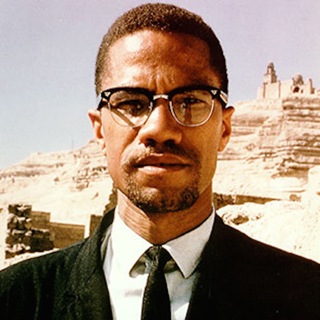
April 16th, 1963: "A Letter from Birmingham" is released

April 16th, 1963: "A Letter from Birmingham" is released

Martin Luther King held a peaceful, nonviolent protest in Birmingham, Alabama in 1963. It is commonly referred to as the Birmingham movement. Because of King’s harmonious approach to the issue, he gained supporters for it quickly, and, although peaceful, his protests posed a high risk for its volunteers. Previous to the Birmingham movement, hundreds were arrested for participating in stand-ins. A temporary anti-protest injunction was passed by the Supreme Court on April 10th, 1963, at regard of officials of Birmingham’s request. It required petitioners to acquire a permit in order to hold mass events on the streets. Most people felt as if the injunction attacked their basic rights. It was discriminatory and it restricted freedom of speech without reason. The law was unjust and unconstitutional. The majority of protesters intended to violate the law and hold parades without permits. Despite the danger of leading a protest, King felt that it was necessary to take a faithful leap. He led one thousand african american people into the business district of the city. On April 12th, 1963, King was arrested for violating Alabama’s law forbidding public parades. He remained in The Birmingham City Jail for eleven days. Following his release on bail, a letter from a birmingham jail was written and released on April 16th, 1963. King outlined the injustices in the city and the extreme actions taken following the nonviolent campaign. He defended his nonviolent campaign to resist racism for everybody. It was published in various articles such as The American Friends Service Committee and Christianity and Crisis, as well as fifty thousand copies printed as pamphlets. The city charged him for being impatient, and he responded by claiming that when they felt the sense of ‘nobodiness’ that he felt, they would understand why he could not wait. He also called the laws unjust and unconstitutional, and claimed that human progress happens over time with hard work and sacrifice. He compared himself to other great extremists, such as Jesus and Abraham Lincoln. King’s letter led many down a path of revolution. Just over a week after King’s arrest and release on bail, one thousand more african american students attempted to march into downtown Birmingham. Hundreds were arrested on site, and hundreds more gathered the following day. Police officers beat protesters violently with clubs and hoses. Violence created an uproar when four young girls died in a bombing at the 16th Street Baptist Church. These images appeared on the news, triggering international outrage. King responded by instilling courage into volunteers and their families. He said that participants were not just achieving a job for themselves and America, but for all of mankind. His letter helped reignite the Birmingham movement and campaign. It helped African American citizens gain the recognition and attention that they needed, while acting as a source of courage in the face of brutality. Overall, MLK’s ‘Letter From a Birmingham Jail’ was extremely influential in the progression of African American’s in a racially unjust society.

Det här avsnittet är hämtat från ett öppet RSS-flöde och publiceras inte av Podme. Det kan innehålla reklam.

Avsnitt(20)

Freedom Rides - May 4th, 1964 Max Ranney

Freedom Rides - May 4th, 1964 Max Ranney

Over the course of the Civil Rights movement there were many events that lead to the eventual improvement of civil rights. However, one event that is seen as a breaking point for the movement were the...

1 Juni 20173min

August 28th 1963 March On Washington By Sam Katz

August 28th 1963 March On Washington By Sam Katz

Sam Katz Mael P.3 US History II May 2, 2017 Background on the March on Washington; The March On Washington was a giant gathered march to help protest for civil rights for African Americans. The lead...

1 Juni 20173min

August 6, 1965: Voting Rights Act

August 6, 1965: Voting Rights Act

August 6, 1965: Voting Rights Act by DHS US History II

14 Maj 20172min

MLK assassination

MLK assassination

MLK assassination by DHS US History II

4 Maj 201710min

June 28, 1969 -- The Stonewall Inn Riots

June 28, 1969 -- The Stonewall Inn Riots

June 28, 1969 -- The Stonewall Inn Riots by DHS US History II

3 Maj 20175min

June 11, 1963: Civil Rights Address

June 11, 1963: Civil Rights Address

Luke Bernier Mr. Mael 4/30/17 U.S. History II How the Civil Rights Address Movement Affected Civil Rights The Civil Rights Address was a speech given by John F. Kennedy, following the famous sta...

3 Maj 20174min

March 7, 1965: Bloody Sunday | Selma, Alabama

March 7, 1965: Bloody Sunday | Selma, Alabama

During 1961 and 1964, the Student Nonviolent Coordinating Committee (SNCC) had led a voting registration campaign in Selma, the seat of Dallas County, Alabama, a small town with a record of consistent...

3 Maj 20174min

September 15, 1963: 16th Street Baptist Church Bombing

September 15, 1963: 16th Street Baptist Church Bombing

In the 1960s, Birmingham, Alabama was one of the most racially segregated cities in the United States. By 1963, Birmingham had earned the nickname “Bombingham” because homemade bombs set of in homes a...

3 Maj 20176min

Populärt inom Utbildning

historiepodden-se
rss-bara-en-till-om-missbruk-medberoende-2
det-skaver
harrisons-dramatiska-historia
sektledare
johannes-hansen-podcast
roda-vita-rosen
nu-blir-det-historia
allt-du-velat-veta
rss-viktmedicinpodden
sa-in-i-sjalen
not-fanny-anymore
i-vantan-pa-katastrofen
rss-max-tant-med-max-villman
rss-foraldramotet-bring-lagercrantz
rikatillsammans-om-privatekonomi-rikedom-i-livet
rss-om-vi-ska-vara-arliga
polisutbildningspodden
rss-dr-bjorklund
rss-traningsklubben