Noon Report Nightmares, Tech Overload, and an 83% Emission Reduction

Noon Report Nightmares, Tech Overload, and an 83% Emission Reduction

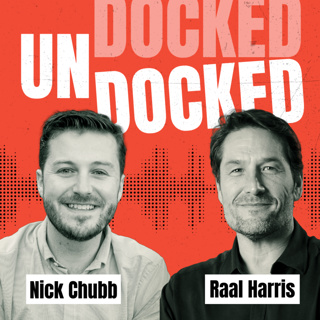
In this episode, Nick Chubb and Raal Harris dig into the growing complexity of reporting, data standards, and tech overload across the maritime industry. They open with OrbitMI’s new vessel reporting and analysis tool, designed to show shipowners how well their data aligns with industry standards, and why fragmented reporting regimes continue to frustrate crews and operators alike. Nick outlines how standardisation-by-nudging may work better than forcing a single format, especially when many operators still juggle five or six noon-report variations at once.


The discussion then broadens into digital stress, fragmented workflows, and tech fatigue. Drawing from ISWAN and broader workplace studies, Raal highlights how over-digitisation, poor UX, and under-supported rollouts are increasing workload, reducing wellbeing, and even pushing some seafarers to consider leaving the profession. Nick argues that many of these issues could be avoided if IT leaders spent more time observing how systems are actually used on board, especially by engineers carrying the heaviest reporting burden.


They also explore whether seafarers should understand more of the underlying data and system logic behind modern tools, much like navigators once have to deeply understand GPS after early incidents involving false positions.


The pair discuss the limits of innovation capacity, the risks of too-frequent standard updates, and why eight different software systems on a ship, each with different menus and interfaces, inevitably overwhelm crews.


From there, Nick brings two standout stories:

Steelcorr's AI-powered paint maintenance app, now rolling out with Ardmore, which uses smartphone photos to detect rust, predict biofouling, and optimise paint consumption, potentially saving money, time, and workload on one of the most labour-intensive deck tasks.

Olympic Subsea’s extraordinary 83% emissions reduction, achieved by combining batteries with advanced digital tools to run far fewer generators during dynamic positioning. While limited to offshore vessels, the result hints at what’s possible when digital optimisation, electrification, and real-time power management converge.


Episode Partner

This episode is brought to you by Sedna, the intelligent email platform built for the shipping industry. Sedna turns high-volume communication into structured, auditable workflows that improve efficiency, compliance, and collaboration across fleets and offices. Learn more at sedna.com.

Det här avsnittet är hämtat från ett öppet RSS-flöde och publiceras inte av Podme. Det kan innehålla reklam.

Avsnitt(56)

Are We Making Seafaring Harder Than It Needs to Be? With Steven Jones

Are We Making Seafaring Harder Than It Needs to Be? With Steven Jones

Steven Jones joins Nick Chubb and Raal Harris to examine what the latest Seafarers Happiness Index reveals about life at sea, crew relationships, shore-based wellbeing.Chapters02:16 The origins of the...

6 Aug 57min
The Trust Problem Behind Digital Training Records and Maritime’s Third Mobile Ecosystem

The Trust Problem Behind Digital Training Records and Maritime’s Third Mobile Ecosystem

Mintra’s integration with Norway’s competence registry opens a wider discussion about digital training records, trust and interoperability in maritime. Nick and Raal revisit failed technology forecast...

30 Juli 50min

The Battle for Shipbuilding Capacity and Private Equity Targets Vessel Operations

The Battle for Shipbuilding Capacity and Private Equity Targets Vessel Operations

Nick and Raal explore shipbuilding’s geopolitical revival, friendshoring, autonomous vessel insurance, and the risks of an overheated global orderbook cycle ahead for shipping. They also examine how s...

23 Juli 58min

Freedom of Navigation Under Fire, China's Unexpected Green Push, and Trusting AI at Sea

Freedom of Navigation Under Fire, China's Unexpected Green Push, and Trusting AI at Sea

Freedom of navigation comes under renewed pressure as proposals to charge for transit through the Strait of Hormuz raise profound questions about international maritime law. The conversation then turn...

16 Juli 53min

Compliance Over Competence, Human APIs, and Cognitive Load

Compliance Over Competence, Human APIs, and Cognitive Load

This week, Nick and Raal explore two new research reports examining the gap between maritime systems as they're designed and how they're actually used at sea. They discuss cognitive overload on modern...

9 Juli 54min

$600 Ship Data Collection, Digital Literacy, and Preventive Healthcare

$600 Ship Data Collection, Digital Literacy, and Preventive Healthcare

Nick and Raal discuss leadership change at Hafnia, falling costs for onboard vessel data collection, the continuing debate over software ecosystems versus single platforms, digital literacy and STCW r...

2 Juli 57min

Adaptive Learning and the Death of the Manager: UnDocked Live from Bergen

Adaptive Learning and the Death of the Manager: UnDocked Live from Bergen

Nick and Raal mark Undocked’s first live episode from Bergen with two competing visions for AI in maritime: scalable human expertise and the decline of middle management. The discussion explores perfo...

25 Juni 34min

The End of Easy Globalisation: Bergen Maps the New Maritime Order

The End of Easy Globalisation: Bergen Maps the New Maritime Order

Nick and Raal report from Bergen after Undocked’s first live stage appearance, capturing interviews with Michael Beckley, Sabrina Chao, Andreas Enger, Julian Bray, Pia Melling and Göran Persson. Acros...

18 Juni 1h 26min

Populärt inom Teknik

uppgang-och-fall
market-makers
rss-laddstationen-med-elbilen-i-sverige
skogsforum-podcast
elbilsveckan
 och-bilen-gar-bra
bli-saker-podden
rss-uppgang-och-fall
natets-morka-sida
rss-veckans-ai
rss-en-ai-till-kaffet
developers-mer-an-bara-kod
hej-bruksbil
rss-technokratin
rss-milpodden
solcellskollens-podcast
rss-it-sakerhetspodden
algoritmen
ai-sweden-podcast
rss-fabriken-2