Hybrid Heartbeat: Quantum-Classical Computing's Cooperative Future

Hybrid Heartbeat: Quantum-Classical Computing's Cooperative Future

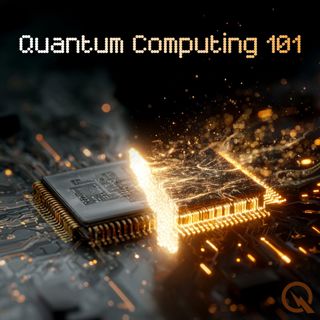
This is your Quantum Computing 101 podcast.

I’m Leo, your Learning Enhanced Operator, and today I’m broadcasting from a lab that hums like a beehive of frozen lightning—cryostats whispering, racks of GPUs roaring, and a quantum chip colder than deep space pulsing with microwaves.

You’ve probably seen the headlines this week: QuantWare in Delft just announced its VIO-40K architecture, packing 10,000 superconducting qubits on a 3D-scaled processor—roughly 100 times the current industry standard. QuantWare’s CEO, Matt Rijlaarsdam, said this “removes the scaling barrier,” and I’ll be honest: when I saw that, my first thought was, “Perfect. Now we can really test hybrid workflows at scale.”

Because the most interesting story today isn’t quantum versus classical; it’s the quantum–classical hybrid that’s quietly becoming the new supercomputer.

Picture this: on one side, a classical HPC cluster bristling with NVIDIA GPUs; on the other, a trapped-ion or neutral-atom QPU shimmering under laser light. Quantinuum and NVIDIA are literally wiring this up right now, using CUDA-Q and NVQLink so a quantum job and a GPU kernel can talk to each other in a single, seamless workflow. In that pipeline, classical code does the heavy lifting—data prep, simulation, gradient calculations—while the quantum chip dives into the hard kernel: phase estimation for quantum chemistry, or QAOA for ugly combinatorial optimization.

Here’s how it feels from my console. I submit a job: a hybrid variational algorithm for a catalyst design problem. First, classical GPUs chew through hundreds of candidate ansätze, pruning the junk. Then we push a distilled set of quantum circuits to the QPU. It returns noisy measurement statistics; the classical optimizer slams them into a gradient-based loop, updates parameters, and pushes a new circuit right back. It’s like tag-team wrestling at femtosecond timescales.

That’s today’s most interesting hybrid solution: cooperative intelligence-sharing loops where quantum and classical systems iteratively refine a shared solution, each doing what physics made them best at—classical for wide, fast arithmetic; quantum for deep, entangled exploration of enormous state spaces.

Meanwhile, other labs are closing the hardware gaps that make this dance possible. At Sandia and the University of Colorado Boulder, researchers just demonstrated a tiny optical phase modulator—about 100 times thinner than a human hair—that uses microwave vibrations to sculpt laser light with exquisite precision. It consumes about 80 times less power than many commercial modulators, which is exactly what you need if you’re going to run thousands, maybe millions, of optically controlled qubits in a hybrid data center instead of a one-off physics experiment.

So as markets swing and AI models race for more compute, I see a different indicator: the growing entanglement between CPUs, GPUs, and QPUs. Not a quantum computer replacing your laptop, but a global, hybrid organism where quantum is the strange, powerful heart.

Thanks for listening. If you ever have questions or topics you want discussed on air, just send an email to leo@inceptionpoint.ai. Don’t forget to subscribe to Quantum Computing 101. This has been a Quiet Please Production, and for more information you can check out quiet please dot AI.

For more http://www.quietplease.ai


Get the best deals https://amzn.to/3ODvOta

This content was created in partnership and with the help of Artificial Intelligence AI

Avsnitt(286)

Fugaku Meets Heron: How Japan's Quantum-Classical Supercomputer Fusion Cracked Chemistry's Hardest Problems

Fugaku Meets Heron: How Japan's Quantum-Classical Supercomputer Fusion Cracked Chemistry's Hardest Problems

This is your Quantum Computing 101 podcast.Imagine this: just two days ago, on February 18, 2026, RIKEN and IBM flipped the switch on a quantum revolution right here in Japan. Their pre-exascale super...

20 Feb 3min

Euro-Q-Exa Unveiled: How 54 Qubits Just Merged With Classical Supercomputing to Crack Real World Problems

Euro-Q-Exa Unveiled: How 54 Qubits Just Merged With Classical Supercomputing to Crack Real World Problems

This is your Quantum Computing 101 podcast.Imagine this: just two days ago, on February 16, 2026, researchers at Spain's CSIC and Delft University of Technology cracked the code on reading Majorana qu...

18 Feb 3min

Quantum Hybrids Crack the Code: How IBM's QeMCMC Solves Problems Classical Computers Can't Touch

Quantum Hybrids Crack the Code: How IBM's QeMCMC Solves Problems Classical Computers Can't Touch

This is your Quantum Computing 101 podcast.Imagine this: just days ago, on February 11, 2026, researchers at QuTech in Delft and CSIC in Spain cracked the readout code for Majorana qubits in a Nature ...

16 Feb 3min

Quantum Goes Sovereign: How Hybrid SuperQ Hubs and Majorana Qubits Are Cracking the Code in 2026

Quantum Goes Sovereign: How Hybrid SuperQ Hubs and Majorana Qubits Are Cracking the Code in 2026

This is your Quantum Computing 101 podcast.Imagine this: just days ago, on February 11, 2026, researchers at QuTech in Delft unveiled single-shot parity readout for Majorana qubits in Nature—a breakth...

15 Feb 3min

Quantum Meets Classical: How QACG Framework Solves Impossible Problems Without Waiting for Perfect Qubits

Quantum Meets Classical: How QACG Framework Solves Impossible Problems Without Waiting for Perfect Qubits

This is your Quantum Computing 101 podcast.Picture this: you're standing in a laboratory where quantum and classical computing shake hands like old rivals finally recognizing each other's worth. That'...

13 Feb 3min

IBM's 117-Qubit Breakthrough: How Quantum-Classical Hybrids Are Solving Real Problems Today

IBM's 117-Qubit Breakthrough: How Quantum-Classical Hybrids Are Solving Real Problems Today

This is your Quantum Computing 101 podcast.Imagine this: just days ago, on February 10th, IBM Quantum researchers Kate V. Marshall, Daniel J. Egger, and Michael Garn unveiled a quantum-classical hybri...

11 Feb 2min

H-QNN Breakthrough: How WiMi's Hybrid Quantum Neural Network Just Turbocharged AI Image Recognition in 2026

H-QNN Breakthrough: How WiMi's Hybrid Quantum Neural Network Just Turbocharged AI Image Recognition in 2026

This is your Quantum Computing 101 podcast.Imagine this: just days ago, on February 6th, WiMi in Beijing unveiled their Hybrid Quantum-Classical Neural Network—H-QNN for short—and it's rewriting the r...

9 Feb 4min

Hybrid Quantum Computing Breakthrough: How D-Wave and Anduril Boosted Missile Defense by 12 Percent in 2025

Hybrid Quantum Computing Breakthrough: How D-Wave and Anduril Boosted Missile Defense by 12 Percent in 2025

This is your Quantum Computing 101 podcast.Imagine this: just days ago, on February 6th, D-Wave, Anduril, and Davidson Technologies unveiled a quantum-classical hybrid powerhouse that shredded missile...

8 Feb 3min

Populärt inom Politik & nyheter

svenska-fall
aftonbladet-krim
p3-krim
rss-krimstad
flashback-forever
blenda-2
rss-sanning-konsekvens
politiken
aftonbladet-daily
rss-vad-fan-hande
rss-krimreportrarna
motiv
spar
grans
rss-frandfors-horna
rss-flodet
svd-ledarredaktionen
dagens-eko
olyckan-inifran
rss-aftonbladet-krim