Philippe Huneman, "Why?: The Philosophy Behind the Question" (Stanford UP, 2023)

Philippe Huneman, "Why?: The Philosophy Behind the Question" (Stanford UP, 2023)

Why did triceratops have horns? Why did World War I occur? Why does Romeo love Juliet? And, most importantly, why ask why? In Why?: The Philosophy Behind the Question (Stanford UP, 2023), philosopher Philippe Huneman describes the different meanings of "why," and how those meanings can, and should (or should not), be conflated. As Huneman outlines, there are three basic meanings of why: the cause of an event, the reason of a belief, and the reason why I do what I do (the purpose). Each of these meanings, in turn, impacts how we approach knowledge in a wide array of disciplines: science, history, psychology, and metaphysics. Exhibiting a rare combination of conversational ease and intellectual rigor, Huneman teases out the hidden dimensions of questions as seemingly simple as "Why did Mickey Mouse open the refrigerator?" or as seemingly unanswerable as "Why am I me?" In doing so, he provides an extraordinary tour of canonical and contemporary philosophical thought, from Plato and Aristotle, through Descartes and Spinoza, to Elizabeth Anscombe and Ruth Millikan, and beyond. Of course, no proper reckoning with the question "why?" can afford not to acknowledge its limits, which are the limits, and the ends, of reason itself. Huneman thus concludes with a provocative elaboration of what Kant called the "natural need for metaphysics," the unallayed instinct we have to ask the question even when we know there can be no unequivocal answer. Philippe Huneman is Research Director at the Institut d'Histoire et de Philosophie des Sciences et des Techniques, CNRS/ Université Paris I Panthéon Sorbonne and the author of several books in French and English, including Philosophical Sketches of Death in Biology: An Historical and Analytic Investigation (2022). Morteza Hajizadeh is a Ph.D. graduate in English from the University of Auckland in New Zealand. His research interests are Cultural Studies; Critical Theory; Environmental History; Medieval (Intellectual) History; Gothic Studies; 18th and 19th Century British Literature. YouTube channel. Learn more about your ad choices. Visit megaphone.fm/adchoices Support our show by becoming a premium member! https://newbooksnetwork.supportingcast.fm/critical-theory

Avsnitt(2208)

Pre-Reading

Pre-Reading

In this episode of High Theory, Milan Terlunen talks to Kim about Pre-Reading. There are many books we will never read and films we will never watch, but it turns out we know quite a bit about them in...

30 Mars 20min
Mark Pennington, "Foucault and Liberal Political Economy: Power, Knowledge, and Freedom" (Oxford UP, 2025)

Mark Pennington, "Foucault and Liberal Political Economy: Power, Knowledge, and Freedom" (Oxford UP, 2025)

Foucault and Liberal Political Economy: Power, Knowledge, and Freedom by Mark Pennington This highly original and innovative book is the first to comprehensively engage the ideas of the French social...

30 Mars 58min

Ainehi Edoro, "Forest Imaginaries: How African Novels Think" (Columbia UP, 2026)

Ainehi Edoro, "Forest Imaginaries: How African Novels Think" (Columbia UP, 2026)

Forests in fiction are often understood simply as settings, symbols, or remnants of a premodern past. Yet many African novelists have turned to the forest to experiment with worldbuilding and to imagi...

30 Mars 1h 2min

Emmanuel Ofuasia, "Ìwà: the Process-Relational Dimension to African Metaphysics" (Springer, 2024)

Emmanuel Ofuasia, "Ìwà: the Process-Relational Dimension to African Metaphysics" (Springer, 2024)

Correction: In the interview, the host mistakenly mentioned that Prof. Ofuasia is teaching the University of Pretoria. In reality, Prof Ofuasia is currently a decoloniality research associate at the U...

29 Mars 1h 31min

Thomas Hegghammer and Diego Gambetta eds., "Fight, Flight, Mimic: Identity Mimicry in Conflict" (Oxford UP, 2024)

Thomas Hegghammer and Diego Gambetta eds., "Fight, Flight, Mimic: Identity Mimicry in Conflict" (Oxford UP, 2024)

Time spent and words spent—what does each signal? Deceptive mimicry—the manipulation of individual or group identity—includes passing off as a different individual, as a member of a group to which on...

28 Mars 1h 5min

The Criminal Record Complex: Risk, Race, and the Struggle for Work in America

The Criminal Record Complex: Risk, Race, and the Struggle for Work in America

Most employers in the United States routinely conduct criminal background checks on job applicants, weeding out those with criminal convictions—and thus denying opportunities to those who need them m...

26 Mars 54min

Hsuan L Hsu, "Olfactory Worldmaking" (U Minnesota Press, 2026)

Hsuan L Hsu, "Olfactory Worldmaking" (U Minnesota Press, 2026)

Smell is a vital, if underappreciated, medium through which we inhabit and imagine the world. In Olfactory Worldmaking (University of Minnesota Press, 2026), Dr. Hsuan L. Hsu traces how olfactory expe...

24 Mars 26min
Prolepsis

Prolepsis

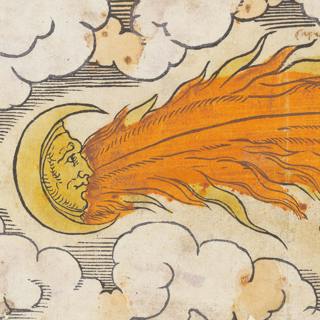
In this episode of High Theory, Gloria Fisk talks to Kim about Prolepsis. Defined by Gerard Genette in the 1970s, prolepsis is a flash forward, the opposite of analepsis, a flash back. Initially the p...

23 Mars 16min

Populärt inom Vetenskap

p3-dystopia
dumma-manniskor
svd-nyhetsartiklar
kapitalet-en-podd-om-ekonomi
doden-hjarnan-kemisten
allt-du-velat-veta
rss-ufo-bortom-rimligt-tvivel-2
rss-vetenskapsradion
bildningspodden
det-morka-psyket
rss-vetenskapsradion-2
paranormalt-med-caroline-giertz
medicinvetarna
sexet
rss-spraket
dumforklarat
har-vi-akt-till-mars-an
rss-experimentet
barnpsykologerna
vetenskapsradion