Prolepsis
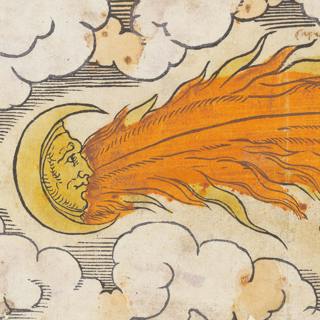
In this episode of High Theory, Gloria Fisk talks to Kim about Prolepsis. Defined by Gerard Genette in the 1970s, prolepsis is a flash forward, the opposite of analepsis, a flash back. Initially the province of high modernism, this rhetorical device has become a well-worn trope with a surprising aptitude for representing violence in our current moment. Fisk shows us how prolepsis dramatizes the workings of structural violence in narrative form. In the episode, Gloria references Stokely Carmichael and Charles Hamilton’s Black Power: The Politics of Liberation (Random House 1967) and Michael Dango's Crisis Style: The Aesthetics of Repair (Stanford UP 2021). The transcript lives here as a WordDoc and here as a PDF. Gloria Fisk writes about contemporary literature in a global context, with a particular interest in the novel. She works as an associate professor of English at Queens College, CUNY. Her areas of interest include the critical debates surrounding world literature in the U.S. as well as novel theory, postcolonial studies, translation theory, and critical writing. In her first book, Orhan Pamuk and the Good of World Literature (Columbia UP 2018), Gloria reads the Turkish novelist Orhan Pamuk as a case study in the unevenness of Western canons’ expansion across the eastern border of Europe. She theorizes the ways the Turkish novelist arrives among his readers in the U.S. and Europe, where he meets a standard for literary value that that emerges in tandem with him. In this episode, we discuss her current book project, in which Gloria theorizes the ethics and politics of prolepsis in contemporary world literature. Her project asks why so many novels that reach Anglophone readers today begin with a scene of terrible violence — a chemical spill, maybe, or untimely death at sea; incarceration, or a terrorist attack — to narrate in retrospect the paths that converge to create it? This use of prolepsis is historically specific to the contemporary period, so Gloria sets out to explain why. She shows that proleptic representations of violence were rare in Western literary traditions until the turn of the twenty-first century, but they have become ubiquitous now, because they work well to express new anxieties and hopes about the limits of our political communities, within and beyond the nation. The working title of her book is We Know How This Will End: Prolepsis, Tragedy, and the Representation of Structural Violence on a Global Scale. Look forward to seeing it in print! The image for this episode is an anonymous illustration from a 1554 broadsheet depicting celestial phenomenon over Salon-de-Provence. It was found for High Theory by Lily Epstein on the Public Domain Image Archive. Learn more about your ad choices. Visit megaphone.fm/adchoices Support our show by becoming a premium member! https://newbooksnetwork.supportingcast.fm/critical-theory

Det här avsnittet är hämtat från ett öppet RSS-flöde och publiceras inte av Podme. Det kan innehålla reklam.

Avsnitt(2290)

Recall This Book x The Caste Pod: a Crossover episode with Ajantha Subramanian

Recall This Book x The Caste Pod: a Crossover episode with Ajantha Subramanian

In the spirit of Hannah Arendt's natality principle (that new things are always and should always be being born, each one unique and endowed with limitless potential) we at RTB love it when a new podc...

16 Juli 1h

Luna Sabastian, "Fascism in India: Race, Caste, and Hindutva" (Harvard UP, 2025)

Luna Sabastian, "Fascism in India: Race, Caste, and Hindutva" (Harvard UP, 2025)

Fascism swept the world in the 1920s and 1930s, but not only because of the seductive rhetoric of Mussolini, Hitler, and their collaborators. In India as well, a distinctive brand of fascist thought ...

16 Juli 36min

Heidegger in Ruins

Heidegger in Ruins

Martin Heidegger’s sympathies for the conservative revolution and National Socialism have long been well known. As the rector of the University of Freiburg in the early 1930s, he worked hard to reshap...

13 Juli 0s

Monika Kirloskar-Steinbach, "Freedom to Know: Creating Community with Ambedkar, Du Bois, Iqbal, Ramabai and Tagore" (Edinburgh UP, 2025)

Monika Kirloskar-Steinbach, "Freedom to Know: Creating Community with Ambedkar, Du Bois, Iqbal, Ramabai and Tagore" (Edinburgh UP, 2025)

Freedom to Know: Creating Community with Ambedkar, Du Bois, Iqbal, Ramabai and Tagore (Edinburgh University Press, 2025) asks how a (world) community can be created to allow structural minorities eq...

9 Juli 55min

Alexandre Frenette, "Blame the Intern: On (Not) Breaking Into the Creative Economy" (Princeton UP, 2026)

Alexandre Frenette, "Blame the Intern: On (Not) Breaking Into the Creative Economy" (Princeton UP, 2026)

Who gets to be a creative worker? In Blame the Intern: On (Not) Breaking Into the Creative Economy, (Princeton University Press, 2026) Alexandre Frenette, an Assistant Professor of Sociology at Vande...

6 Juli 43min

Gajendran Ayyathurai, "Tamil Buddhism and Brahminism in Modern India: Deep Resistance Against Caste" (Oxford UP, 2026)

Gajendran Ayyathurai, "Tamil Buddhism and Brahminism in Modern India: Deep Resistance Against Caste" (Oxford UP, 2026)

Tamil Buddhism and Brahminism in Modern India: Deep Resistance Against Caste (Oxford University Press, 2026) explores Tamil Buddhism in modern India, focusing on its emergence as a response to caste...

4 Juli 1h 36min

Joseph Turow, "The Problem with Personalization: How Advertisers Learned to Make and Break Us from Ancient Times to the AI Age" (U Chicago Press, 2026)

Joseph Turow, "The Problem with Personalization: How Advertisers Learned to Make and Break Us from Ancient Times to the AI Age" (U Chicago Press, 2026)

A respected voice on technology shows how seemingly simple ads help dismantle democracy and public discourse. Whether you’re intentionally shopping or casually browsing social media, something is f...

3 Juli 1h 7min

Kate Bayliss, "Privatising Humanity: How Our Essential Human Needs Became Financial Assets" (Manchester UP, 2026)

Kate Bayliss, "Privatising Humanity: How Our Essential Human Needs Became Financial Assets" (Manchester UP, 2026)

Privatising Humanity: How Our Essential Human Needs Became Financial Assets (Manchester UP, 2026) is the latest book from Dr Kate Bayliss, a Senior Research Fellow in the Department of Economics at...

1 Juli 48min

Populärt inom Vetenskap

p3-dystopia
dumma-manniskor
allt-du-velat-veta
bildningspodden
kvalificerat-hemligt-poddradio
svd-nyhetsartiklar
rss-vetenskapsradion-2
det-morka-psyket
sexet
rss-ufobortom-rimligt-tvivel
rss-vetenskapsradion
medicinvetarna
rss-spraket
paranormalt-med-caroline-giertz
vetenskapsradion
rss-kriminologerna
rss-arkeologi-historia-podden-som-graver-i-vart-kulturlandskap
rss-broccolipodden-en-podcast-som-inte-handlar-om-broccoli
hacka-livet
barnpsykologerna