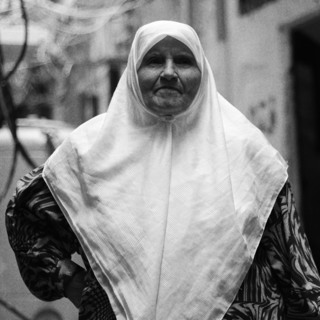
Nakba #16 - Fayza Abed Bayrakji
Överlevarna30 Dec 2025

Nakba #16 - Fayza Abed Bayrakji

1946 “My father owned a lot of land where he grew grapes, figs, olives, and other crops. We also had livestock. Many people worked for us during the harvest season. My father died when I was three years old. I remember the olive harvests. The men stood on ladders picking olives, and the ones that fell to the ground were gathered by the women and carried back to the village. There were no Jews living in our village. They lived in the neighboring town of Nahariya. There was a doctor there whom one of my sisters-in-law visited. She underwent a minor eye operation there. We had many Jewish friends in Nahariya: Shlomo, Auerbach, and Jitzchak. They worked together with my brothers. They were Palestinian Jews, not like the Jews who came from Russia and Poland.” - Did you go to school? “No, we did not have a school for beginners in the village, only for older children. There were only four girls in my village who studied.” 1948 “The Israelis demanded that the village mukhtar surrender. If he did not, we would be expelled. Auerbach, my brothers’ Jewish friend, advised us not to leave the village. But if we were forced to flee, he promised he would help us return. When the mukhtar refused to surrender, the Israelis attacked the village with heavy artillery. The men defended the village for a week against the Israeli army. One of my brothers sought out Auerbach to ask him to keep his promise. He objected, saying that because they had fought the Israelis for a week, his promise was no longer valid. The Israelis killed 45 people, mostly elderly people and women. Kuwaykat was surrounded and eventually fell. The Israelis gave us safe passage eastward so that we could flee in that direction. We fled during the night. Young resistance fighters returned the next day and found elderly people killed in the streets. Their bodies were dragged to the well and lowered into it so that wild animals would not eat them. One old man was found killed in his home. He was buried outside the house. We walked on foot to the other side of the Lebanese border. After a month, some kind of ceasefire was declared, so we returned to Kuwaykat to collect our belongings. But the Israelis broke the agreement, and we were forced to flee a second time. Once again, we fled on foot. Again, we arrived in a village on the Lebanese side of the border. My brother bought three fig trees from a man so that the Lebanese would not say that we had stolen their trees. The trees became our homes. A few years later, we moved to Beirut and to Burj al-Barajna. At that time, it was nothing but desert. I have lived here ever since.” - Who bears responsibility for your situation? “It is like the story of Yusuf in the Qur’an, where his brothers conspired against him. Arabs, Jews, and the English—all of them conspired against us. In the past, we lived with dignity and honor in our land. We used to invite Jews into our homes and share our food with them. If Israel were to open its borders, I would want to return and work the land. I want to sit in my own country and build my own house. I do not need electricity. I have hidden an antique oil lamp that I could take with me. I would rather be eaten by snakes than remain here. Lebanon is not our land. We want our land back.”

Det här avsnittet är hämtat från ett öppet RSS-flöde och publiceras inte av Podme. Det kan innehålla reklam.

Avsnitt(323)

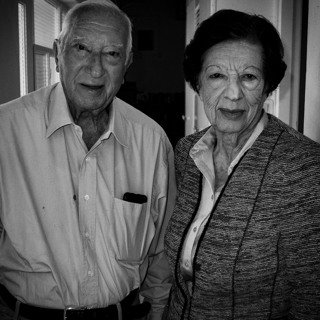
Nakba #58 - George Baramki Khury och Laura Khury

Nakba #58 - George Baramki Khury och Laura Khury

George Baramki Khury (GBK): “My sister Laura and I lived in al-Quds, near the Mandelbaum Gate. We had two houses, one on each side of St. George Street. I attended St. George’s School. It was a boys’ ...

8 Feb 36min
Det judiska Högalid #31 - Herbert Trus

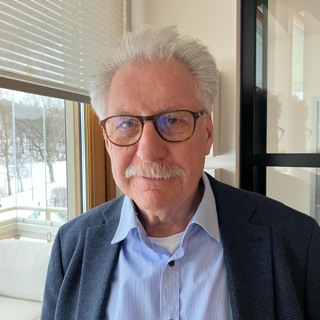
Det judiska Högalid #31 - Herbert Trus

- Min farmor, Sarah Trus, mördades 1942 i förintelselägret Treblinka. Jag hade velat träffa henne, säger Herbert Trus.

6 Feb 1h 46min
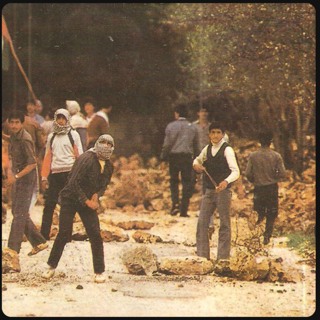
Nakba #57 - The song that cost her son 6 months in jail

Nakba #57 - The song that cost her son 6 months in jail

Samia Nasir Khury recounts: “In 1993, during the First Intifada, my son produced a song and had it copied onto cassette tapes. I paid for the copying, and he borrowed my car to deliver the cassettes. ...

2 Feb 4min
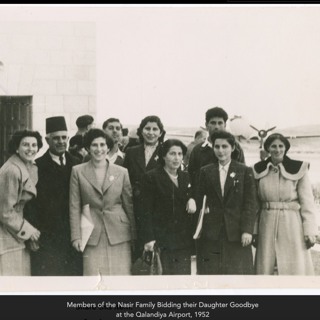
Nakba #56 - Samia Nasir Khury

Nakba #56 - Samia Nasir Khury

“My father worked as a governor for the British government, and the rest of the family followed him. He was later transferred to Safad. There we had good relations with our Jewish neighbors. That was ...

1 Feb 40min
Nakba #55 - Muhammad Mahmud Harb

Nakba #55 - Muhammad Mahmud Harb

1946 “I used to help my father out in the fields. We grew tomatoes, cucumbers, and watermelons. We took the vegetables on our donkeys to the markets in Yafa and Mulabbis. When I had time off, I played...

1 Feb 1h 18min
Nakba #54 - ‘Abd al-Munim Fayiz Sa‘ad

Nakba #54 - ‘Abd al-Munim Fayiz Sa‘ad

Nakba #54 - ‘Abd al-Munim Fayiz Sa‘ad by Överlevarna

31 Jan 53min
Nakba #53 - Subhia Salman al-Natur

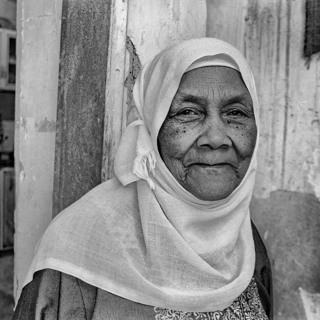
Nakba #53 - Subhia Salman al-Natur

1939 “My father was a farmer and we had cows. He sold the milk. My mother was from the city, from Jaffa, so she never milked the cows—neither did I. My father died when I was three years old. At that ...

31 Jan 48min
Det judiska Högalid #30 - Yvonne Leff

Det judiska Högalid #30 - Yvonne Leff

- Mamma fick inte gifta sig med någon som inte var jude. Det var en omöjlighet. Men hon blev aldrig kär i någon av de judiska killarna. När hon var 40 år träffade hon Valter Jansson. De gifte sig och ...

30 Jan 1h 39min

Populärt inom Utbildning

historiepodden-se
det-skaver
rss-bara-en-till-om-missbruk-medberoende-2
allt-du-velat-veta
nu-blir-det-historia
harrisons-dramatiska-historia
roda-vita-rosen
sektledare
johannes-hansen-podcast
not-fanny-anymore
rss-viktmedicinpodden
sa-in-i-sjalen
i-vantan-pa-katastrofen
rss-foraldramotet-bring-lagercrantz
rikatillsammans-om-privatekonomi-rikedom-i-livet
rss-sjalsligt-avkladd
rss-om-vi-ska-vara-arliga
rss-relationsrevolutionen
rss-dr-bjorklund
rss-basta-livet