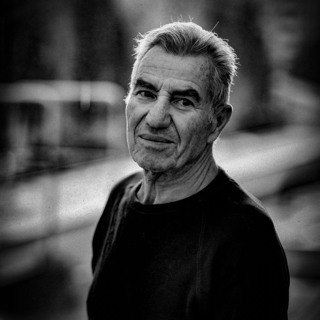
Nakba #20 - Lee Mahmud Musa
Överlevarna31 Dec 2025

Nakba #20 - Lee Mahmud Musa

1943 “My father was a simple man who worked in all kinds of construction jobs. He was the kindest person in the world. Every time my mother chased us, he yelled at her. My father also had a cart from which he sold boiled corn. Sometimes I went with him. The cart was set up about fifty meters uphill from the clock tower in Jaffa.” 1948 “My father was cycling uphill when he was shot in the arm. But he had no plans to leave Jaffa. My mother panicked and screamed at us: ‘The Jews are killing us! Run!’ She grabbed my brother and me and we ran along a dried-up riverbed. Many people were fleeing. We reached Nahalin, north of Lydda. There we stayed with my maternal grandparents and uncles. It was hell. The first evening we had to go out and beg for bread. We slept on mattresses on the floor—no beds. That was what it meant to be a refugee. Everyone lived like that. Wealthy families wouldn’t take us in. ‘Go to hell,’ they said. We stayed in Nahalin for two years. During that time, I didn’t go to school. 1950 “With the help of the UN, we returned to my father in Jaffa. My father was at home when we arrived. We hadn’t seen each other for more than two years. He was the same as ever.” 1956 “I stopped going to school when I was thirteen and started working in a shoemaker’s shop run by some Jews from Iraq. They were all communists. They discussed politics and I listened. That’s how I got my political education. When Nasser came to power in Egypt in 1952, the Iraqi Jews celebrated, because Nasser was against imperialism. When Israel attacked Nasser in 1956, they opposed it. They wanted Israel to support the Egyptian people in order to build peace. That’s when I understood that the conflict had nothing to do with religion. As long as a Jew criticizes Zionism, he has a human heart. As long as a Muslim criticizes Saudi Arabia, he has a human heart.” 1967 “After a few years I left the shoemaker’s shop and joined the communist youth movement. The members were both Jews and Arabs. A party comrade helped me get a job as an elevator mechanic. I repaired elevators at a hospital in Jaffa. On the first day of the war, my comrade was fired. Then I quit as well. I started working at a hotel in Eilat, but the police forbade me from working there. In Tel Aviv I worked at a restaurant, where I was called a dirty Arab. I began calling myself Moishe to avoid trouble. Eventually I decided to emigrate to Sweden. My mother tried to stop me at any cost. But my father came into my bedroom on the last night and asked if I had enough money. He wanted to give me money, even though he needed it himself.” (starts crying) 1969 “I went to visit my parents in Jaffa. I rented a car and took my parents and siblings to Tiberias. I planned to take them to the Golan Heights, but I changed my mind and turned back. Instead, we went down to Lake Tiberias and ate fish at a restaurant. I gave back what little I could. When I was about to leave, I was stopped at the airport. I ended up in a room with four intelligence soldiers who interrogated me for an hour. They cursed, kicked, and beat me. They wanted to know why I had been in the Golan Heights. Meanwhile, the passengers were sitting on the plane waiting. When I boarded, people stared at me as if I were a terrorist.” 1973 “I went to Israel to attend one of my sisters’ weddings. At the airport I was taken to a room where a man explained that they were arresting me because I had a gun, which was of course a lie. Then the military arrived, blindfolded me, and drove me to a prison. In prison I was interrogated every day. They wanted to know which Palestinian movement I belonged to. When I refused, they started kicking me. They stripped me naked and beat me until I collapsed on the floor. ‘What are you doing here, you dirty Arab?’ one of the guards shouted, pressing his boot against my face. I was imprisoned for fifteen days. I missed my sister’s wedding. My return ticket had expired, so I had to buy a new one.”

Det här avsnittet är hämtat från ett öppet RSS-flöde och publiceras inte av Podme. Det kan innehålla reklam.

Avsnitt(332)

Det judiska Kristianstad #48 - Semmy Rülf

Det judiska Kristianstad #48 - Semmy Rülf

- Pappa var gabai i synagogan i Kristianstad. Ofta saknade de en man, så pappa gick in på Grand Hotell och ringde mamma och så jag fick cykla i väg till synagogan klockan åtta på lördagsmorgonen, gömm...

17 Juli 1h 43min
Det judiska Högalid #47 - Isse Albert

Det judiska Högalid #47 - Isse Albert

På 1950-talet var det många som talade jiddisch på Lindvallsplan 4. En av de var min morbror Isse. Han föddes i polska Rajgrod 1926. Han fick namnet Jisrael Mordechai Albert. På 1930-talet utvandrade ...

10 Juli 12min
Andra generationen #91 - Lennart Weiss

Andra generationen #91 - Lennart Weiss

- De som har levt i det förgångna lever vidare i mig, säger Lennart Weiss.

3 Juli 1h 42min
Nakba #63 - Lars Wåhlin

Nakba #63 - Lars Wåhlin

- Vi var främmande kroppar i det här samhället, säger Lars Wåhlin, svensk FN-soldat stationerad i Gaza-remsan, 1960. Intervjuare: Lotta Schüllerqvist och Bernt Hermele Bakgrund: 1956 skapade FN, för ...

24 Juni 1h 24min
Det judiska Högalid  #46 - Fred Kudrén

Det judiska Högalid #46 - Fred Kudrén

Är det bara ett halvår sen Mikael dog? - Ja. Hur känns det idag? - Det är svårt, till exempel när man letar i bilder. Men det är också konstigt, för jag har inte spelat in någonting med hans röst, säg...

12 Juni 2h 1min
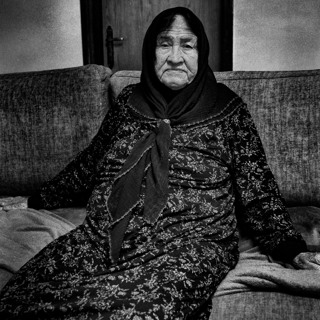
Nakba #62 - Amina Ali Hammoud

Nakba #62 - Amina Ali Hammoud

”I was 14 when the jews attacked our village. My parents prohibited me to go outside, but I ran outside anyway to look at the soldiers. Then I ran back to my mother och explained the Israelis looked j...

8 Juni 27min

Det judiska Högalid #45 - Josephine Schneider

Det judiska Högalid #45 - Josephine Schneider

Josephine Schneider om varför det tog så lång tid att göra radiodokumentären ”Judehuset som försvann”: - Jag tyckte det var skitjobbigt att göra en judisk grej, att komma ut som jude i en slags offent...

5 Juni 17min
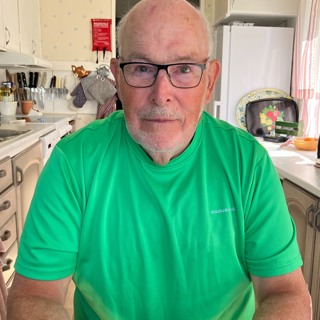
Det judiska Högalid #44 - Tom Granditsky

Det judiska Högalid #44 - Tom Granditsky

- Man ska väl inte prata skit om sin mamma, men när jag var liten och skrek kunde hon säga till pappa: “Ta hand om honom nu, det är du som ville ha honom”, säger Tom Granditsky. - Det är väl inte så r...

29 Maj 1h 49min

Populärt inom Utbildning

historiepodden-se
det-skaver
rss-bara-en-till-om-missbruk-medberoende-2
harrisons-dramatiska-historia
not-fanny-anymore
nu-blir-det-historia
rss-viktmedicinpodden
johannes-hansen-podcast
allt-du-velat-veta
rikatillsammans-om-privatekonomi-rikedom-i-livet
sex-pa-riktigt-med-marika-smith
i-vantan-pa-katastrofen
rss-basta-livet
rss-traningsklubben
sa-in-i-sjalen
sektledare
vi-gar-till-historien
rss-ar-det-rimligt
roda-vita-rosen
rss-sjalsligt-avkladd