Nakba #40 - Mahmud al-Hissi

Nakba #40 - Mahmud al-Hissi

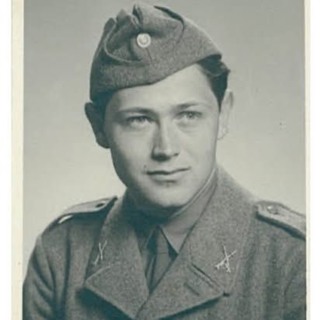
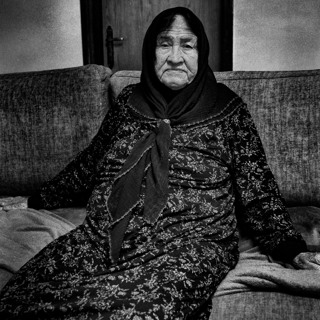
“We lived in a house in al-Hilwa in Jaffa, next to the Jabaliya Mosque. Jaffa was largely Arab, but we also had some neighbors who were Palestinian Jews. My parents have told me that people celebrated together and even married each other. My father was a fisherman and had his own boat. We also had a citrus grove in al-Nabi Rubin, a village located eleven or twelve kilometers south of Jaffa. Our land was about 4,000 square meters and included a farmhouse. The orchards lay next to the river, so irrigation was never a problem. Once a year, during the harvest season, pilgrims came to al-Nabi Rubin, to the tomb of the Prophet Rubin. Over time this developed into large popular festivals with up to 50,000 visitors. The Rubin Carnival lasted for three months, during which people celebrated honeymoons, got married, or circumcised boys. People came here to vacation. At the same time, commerce developed and people began trading livestock, carpets, clothes, furniture, and handicrafts. After the Second World War, European Jews arrived in Jaffa. They wanted to take over. My father Muhammad and my uncle Faris helped organize the armed resistance, which guarded our neighborhoods at night. My younger brother Sobhi and I often brought food to my father and uncle at their defense posts. They were stationed at the front. Their post blocked the entire street with light-brown sandbags. Once, when my brother and I had gone to the market, a man came running. In his hand he was holding a human head by the hair. I grabbed my brother’s hand and ran back home to our mother. When we decided to leave Jaffa, my father and uncle dug a very large hole outside the house in the courtyard. They placed all our valuables there—gold, money, jewelry, and furniture. They expected that we would soon return. We went down to the beach. There were boats there, and we boarded one of them. There were so many of us that the water almost reached over the gunwale. I was afraid the boat would sink. My father and uncle were not with us; they stayed behind at the front. We sailed south to Hiribya, where we had relatives. We stayed there for a few weeks. But the war followed us, and we were driven away from there as well. We fled south on foot to Jabalia, a desert area in the northern Gaza Strip. We had relatives there too. They gave us tents so that we could live on their land. My brother and I played outside all day long. Men were constantly arriving. When Jaffa fell, many resistance fighters were killed. My father survived and came to us, but he was never the same person again. He was a broken man. We lived in extreme poverty. For four years we lived in tents until UNRWA provided us with a house in al-Shati, north of Gaza City. That was in 1952. In 1956, during the Suez Crisis, the Israelis took control of the Gaza Strip from Egypt. They imposed a total curfew on the camp for about a week. We heard gunfire. At one point some Egyptian soldiers fleeing passed by. They wanted our civilian clothes. My father took their uniforms and weapons and buried them behind our house. When the curfew was lifted and I opened the door, a dead man was lying outside. I was shocked and screamed that there was a dead person outside our door. Some people helped remove the body. Right next to our house there was a forest, which we passed through on our way to school. One day I discovered a blanket lying under a tree. A friend and I ran over and lifted it. Underneath lay two dead Egyptian soldiers. My father was taken in for interrogation by the Israeli military. They wanted to question him about his activities in Jaffa ten years earlier. He was gone for fourteen days and returned even more shattered. We heard that the Israelis had carried out a massacre in Khan Yunis, in the south. One of my aunts lived there, and we were worried about her and her family. My brother and I took a taxi there. Our aunt’s family had survived, but she told us that 200 people had been killed by the Israelis.”

Det här avsnittet är hämtat från ett öppet RSS-flöde och publiceras inte av Podme. Det kan innehålla reklam.

Avsnitt(323)

Det judiska Högalid #43 - Bernt Hermele

Det judiska Högalid #43 - Bernt Hermele

Nyligen var det någon, jag tror det var Bengt Hamberg, som föreslog att jag själv skulle bli intervjuad i ett avsnitt av podden. Jag tyckte väl inte att det kändes helt nödvändigt. Men så plötsligt da...

12 Maj 38min

Det judiska Högalid #42 - Erwin Salamon

Det judiska Högalid #42 - Erwin Salamon

- Jag träffade Marie, som inte är judinna, nyårsafton 1970, säger Erwin Salamon. Vad tyckte mamma och pappa om det? - Mamma sa: ”Jag skulle föredra om du hittade en judisk flicka”. Då fick jag ett ras...

8 Maj 1h 21min

Det judiska Högalid #41 - Håkan Blomqvist

Det judiska Högalid #41 - Håkan Blomqvist

- Jag älskade mina farföräldrar. Men de var antisemiter, de avskydde judar. Och de fortsatte att göra det även efter andra världskriget. Det var en obegriplighet för mig, säger Håkan Blomqvist. - Farf...

29 Apr 1h 41min

Det judiska Högalid #40 - Bengt Hamberg

Det judiska Högalid #40 - Bengt Hamberg

- Jag vågade aldrig fråga mina föräldrar, hur flydde de undan Förintelsen och hur de kom till Sverige? Det skäms jag för än i dag, säger Bengt Hamberg.

17 Apr 1h 21min

Det judiska Högalid #39 - Arno Katzorek

Det judiska Högalid #39 - Arno Katzorek

- Vi bodde på Klippgatan och det kom ett samtal och jag hör hur min pappa börjar gråta jättehögt. Han får veta att hans syster blivit överkörd av en spårvagn i Göteborg. Jag kan ha varit sex, sju år, ...

11 Apr 1h 48min

Nakba #61 - Zakia Islam Nofal Al-Badawi

Nakba #61 - Zakia Islam Nofal Al-Badawi

1947 "Four Jewish men came to the village: Simcha, Meir, David, and Shmuel. They wanted to buy our land. Some agreed to sell, others refused. The men began to cultivate the land and set up a cart to ...

4 Apr 54min

#64 Zakia Islam Nofal Al-Badawi

#64 Zakia Islam Nofal Al-Badawi

#64 Zakia Islam Nofal Al-Badawi by Överlevarna

4 Apr 54min

Det judiska Högalid #38 - Kenneths bar mitzva 1961

Det judiska Högalid #38 - Kenneths bar mitzva 1961

En bandinspelning som min pappa, Arthur Hermele, gjorde från min bror, Kenneths z"l, bar mitzvah-fest, 1961. Som jag minns det var det på Hollandersalen, Judiska Centret, Nybrogatan 19. Under kvällen ...

27 Mars 1h 56min

Populärt inom Utbildning

historiepodden-se
det-skaver
rss-bara-en-till-om-missbruk-medberoende-2
allt-du-velat-veta
nu-blir-det-historia
harrisons-dramatiska-historia
roda-vita-rosen
sektledare
johannes-hansen-podcast
not-fanny-anymore
rss-viktmedicinpodden
sa-in-i-sjalen
i-vantan-pa-katastrofen
rss-foraldramotet-bring-lagercrantz
rikatillsammans-om-privatekonomi-rikedom-i-livet
rss-sjalsligt-avkladd
rss-om-vi-ska-vara-arliga
rss-relationsrevolutionen
rss-dr-bjorklund
rss-basta-livet