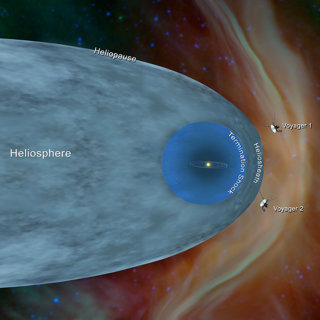
Voyager and the heliopause: Exploring where the Sun gives way to the stars

Voyager and the heliopause: Exploring where the Sun gives way to the stars

What does it really mean to enter interstellar space, and what have we learned since humanity first crossed the invisible boundary between our Sun and the stars?

In this episode of Planetary Radio, we explore the science of the heliosphere and the realm beyond with Linda Spilker, project scientist for the Voyager mission at NASA Jet Propulsion Laboratory. Drawing on decades of experience with the twin spacecraft, Spilker shares how Voyager reshaped our view of the Solar System’s outer frontier, from the nature of the heliopause to the unexpectedly rich structure of the local interstellar medium.

We unpack what Voyager 1 and Voyager 2 have taught us about charged particles, magnetic fields, and cosmic rays beyond the Sun’s protective bubble, and why those measurements have upended earlier ideas about where the Solar System truly ends. Spilker also reflects on the mission’s extraordinary longevity, the ingenuity required to keep the spacecraft communicating across the vastness of space, and what Voyager’s legacy means for future journeys between the stars.

Then, in What’s Up, Bruce Betts, chief scientist at The Planetary Society, places Voyager in context, showing how long-lived missions shape the bigger picture of space science and why observing longer can lead to some of our most profound discoveries.

Discover more at: https://www.planetary.org/planetary-radio/2026-voyagers-and-the-heliopause

See omnystudio.com/listener for privacy information.

Avsnitt(1329)

Epic Spaceman: Making cosmic scale human

Epic Spaceman: Making cosmic scale human

When his filmmaking career stalled during the pandemic, Toby Lockerbie turned to the one place that had never stopped inspiring him: the Universe. With no background in visual effects, he taught himse...

19 Nov 202559min
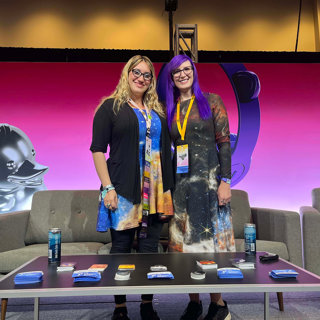
The Planetary Society goes to TwitchCon 2025

The Planetary Society goes to TwitchCon 2025

The Planetary Society heads to TwitchCon 2025 to explore how scientists and educators use livestreaming to share the excitement of discovery. We begin with Moohoodles, one of Twitch’s pioneering space...

12 Nov 20251h 1min

Space Policy Edition: Should a (potential) biosignature revive Mars Sample Return?

Space Policy Edition: Should a (potential) biosignature revive Mars Sample Return?

In 1996, a controversial claim of fossilized life in a Martian meteorite ignited a golden age of Mars exploration. Nearly 30 years later, a potential biosignature detected by the Perseverance rover at...

7 Nov 20251h 21min

Do Aliens Speak Physics?

Do Aliens Speak Physics?

If we ever meet intelligent extraterrestrials, will we even be able to talk about physics? Physicist Daniel Whiteson of UC Irvine and cartoonist Andy Warner join Sarah Al-Ahmed to explore one of scien...

5 Nov 202559min
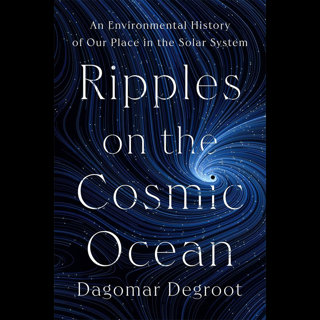
Ripples on the Cosmic Ocean

Ripples on the Cosmic Ocean

What happens in space doesn’t stay in space. Historian Dagomar Degroot joins Planetary Radio host Sarah Al-Ahmed to explore how shifting solar cycles, volcanic eruptions on Venus, Martian dust storms,...

29 Okt 20251h 9min
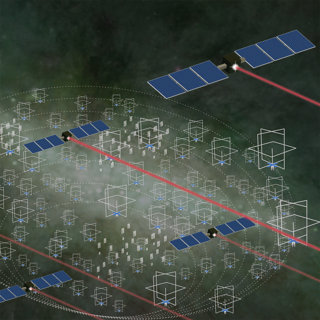
2025 NASA’s Innovative Advanced Concepts Symposium: Part 2 — Hopping robots and the search for exoplanet magnetospheres

2025 NASA’s Innovative Advanced Concepts Symposium: Part 2 — Hopping robots and the search for exoplanet magnetospheres

In this second installment of Planetary Radio’s coverage from the 2025 NASA Innovative Advanced Concepts Symposium in Philadelphia, Pennsylvania, host Sarah Al-Ahmed highlights more of the technologie...

22 Okt 20251h 1min
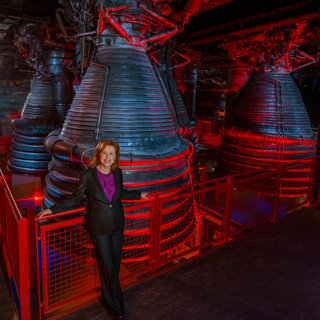
Book Club Edition: Space Craze by Margaret Weitekamp

Book Club Edition: Space Craze by Margaret Weitekamp

The American fascination with spaceflight and what we might find out there began long before any human left Earth. It’s Dr. Margaret Weitekamp’s job to collect, document, and preserve the cultural art...

17 Okt 202555min
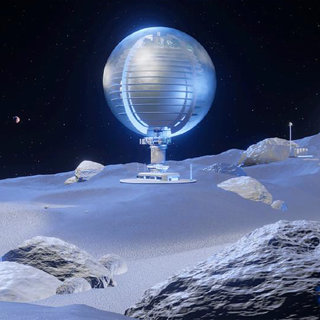
2025 NASA’s Innovative Advanced Concepts Symposium: Part 1 — Lunar glass and starshades

2025 NASA’s Innovative Advanced Concepts Symposium: Part 1 — Lunar glass and starshades

Each year, NASA’s Innovative Advanced Concepts program (NIAC) funds visionary ideas that could shape the future of space exploration. In this first of two episodes from the 2025 NIAC Symposium in Phil...

15 Okt 202553min

Populärt inom Vetenskap

dumma-manniskor
p3-dystopia
allt-du-velat-veta
svd-nyhetsartiklar
kapitalet-en-podd-om-ekonomi
medicinvetarna
rss-vetenskapsradion
hacka-livet
det-morka-psyket
sexet
paranormalt-med-caroline-giertz
rss-spraket
dumforklarat
rss-ufo-bortom-rimligt-tvivel-2
rss-ronden
ufo-sverige
vetenskapsradion
rss-vetenskapsradion-2
rss-tidslinjen-podcast
naturmorgon